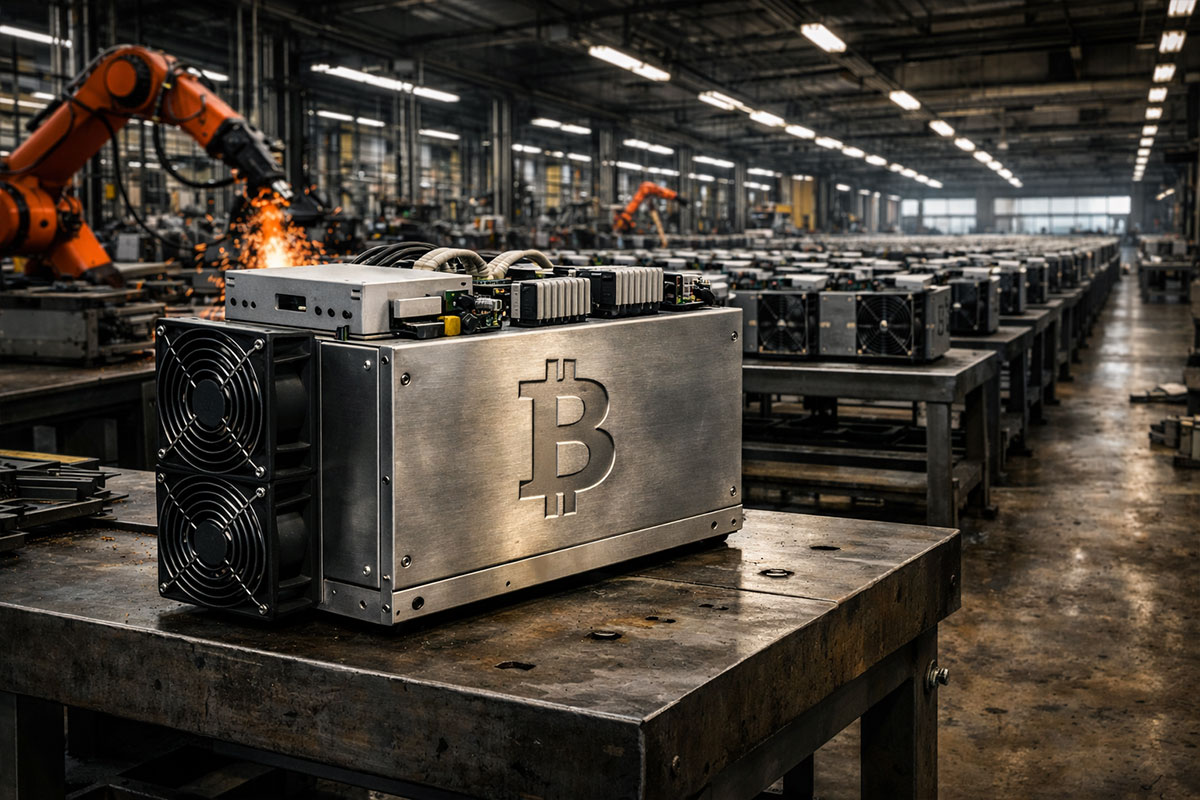
Analysis of the Mined in America Act: Addressing Supply Chain Vulnerabilities in Bitcoin Mining
The United States currently possesses approximately 38% of the global Bitcoin mining capacity, a position predominantly supported by specialized hardware manufactured in China. Recent legislative proposals aim to address this critical dependency, which poses significant national security concerns.
The Legislative Initiative: Mined in America Act
On March 30, 2026, Senators Bill Cassidy and Cynthia Lummis introduced the Mined in America Act, a strategic legislative framework designed to mitigate the United States’ reliance on foreign-produced mining equipment. The core components of the bill include:
– Certification of mining facilities engaged in domestic operations.
– Financial and technical support for domestic hardware manufacturing.
– Codification of President Donald Trump’s Strategic Bitcoin Reserve into law.
The overarching objective of this legislation is to diminish what the senators identify as an industrial vulnerability attributable to the country’s dependence on Chinese manufacturers for mining hardware.
Current Landscape and Supply Chain Dependency
According to Cassidy’s office, approximately 97% of Bitcoin mining hardware is sourced from China. The Hashrate Index’s January 2026 update corroborates that U.S. Bitcoin mining capacity remains at roughly 37% to 38% of the global total, translating to an operational throughput of approximately 400 exahashes per second. This juxtaposition underscores a significant supply chain gap: while the United States leads on the operational front, it depends heavily on adversary-linked manufacturers for essential mining apparatus.
The Mined in America Act seeks to operationalize this recognition by establishing a voluntary “Mined in America” certification administered by the Department of Commerce. Certified facilities would be encouraged to phase out equipment linked to foreign adversaries, fostering a more self-reliant domestic landscape.
Additionally, the National Institute of Standards and Technology (NIST) and the Manufacturing Extension Partnership are expected to facilitate domestic manufacturing initiatives by leveraging existing federal energy and rural development programs. Such measures are anticipated to bolster local industry while simultaneously aligning with ongoing federal policy objectives.
Strategic Implications of Codifying the Bitcoin Reserve
The legislation also aims to formalize what has previously been an executive action—the Strategic Bitcoin Reserve—into statutory law. Established under Trump’s executive order in March 2025, this reserve utilizes forfeited government-held Bitcoin and mandates that any future acquisition strategies must be budget-neutral, thereby imposing no additional financial burden on taxpayers.
This transition from an executive directive to a legally binding framework enhances the reserve’s stability and significance beyond any single administration. For the first time, it integrates hardware sourcing considerations with federal financial instruments, thereby elevating its importance within national economic policy discourse.
The Rationale Behind Legislative Action
In late 2024, U.S. authorities commenced seizing Chinese-made mining equipment at ports due to compliance issues with Federal Communications Commission (FCC) regulations and customs enforcement protocols. These actions provided tangible evidence supporting claims regarding hardware dependence. Furthermore, they raised critical questions about the implications for an industry whose operational components are increasingly intertwined with governmental financial policies.
The repercussions of these customs actions transformed theoretical concerns about supply chain vulnerabilities into documented instances of enforcement, compelling stakeholders to reconsider their operational strategies amidst rising tensions between international trade policies and national security imperatives.
Economic Considerations and Industry Landscape
The economics surrounding Bitcoin mining further complicate this scenario. A report from CoinShares indicates that current network hash prices range between $30 and $35 per petahash per day. With roughly 15% to 20% of global mining operations facing losses at these price points, any disruption in hardware supply can exacerbate financial pressures on operators who are already struggling with thin margins.
The recent guidance issued by the Securities and Exchange Commission (SEC) regarding protocol mining clarifies regulatory stances on cryptocurrency activities and coincides with a broader White House initiative aiming to bolster U.S. digital asset leadership. Consequently, crypto infrastructure is increasingly recognized as a vital component of national industrial policy.
Challenges Ahead: Defining “American” Hardware
A critical question arising from this initiative pertains to what constitutes “American” hardware in an era where Chinese manufacturers are establishing production footholds within U.S. borders—often as a means of circumventing tariffs. Moreover, U.S.-based firms like Auradine are advocating for domestically designed application-specific integrated circuits (ASICs), emphasizing the complexities inherent in defining domestic production standards.
Future Outlook: The Potential Impact of the Mined in America Act
The Mined in America Act enjoys substantial bipartisan support, indicating a growing recognition of Bitcoin mining as a sector deserving focused policy attention akin to that afforded to crucial industries such as semiconductors and critical minerals. The bill’s success could lead to:
– An expansion of domestic and domestically assembled mining rig capacity.
– A reduction in upstream concentration risk associated with foreign suppliers.
– Enhanced competitiveness for U.S.-based manufacturers against their international counterparts.
Conversely, should the legislation falter or remain merely symbolic without significant adoption among miners, it may fail to alter existing purchasing patterns heavily influenced by price, performance, and availability considerations.
Conclusion: Assessing Vulnerabilities and Strategic Responses
While Washington’s ambitions reflect an urgent desire to fortify national security through enhanced control over critical infrastructure components, there exists a palpable gap between policy aspirations and actual industrial capabilities necessary for execution. The introduction of the Mined in America Act serves as an important step towards documenting supply chain vulnerabilities within Bitcoin mining hardware but underscores a pressing need for substantive action that addresses these challenges effectively.