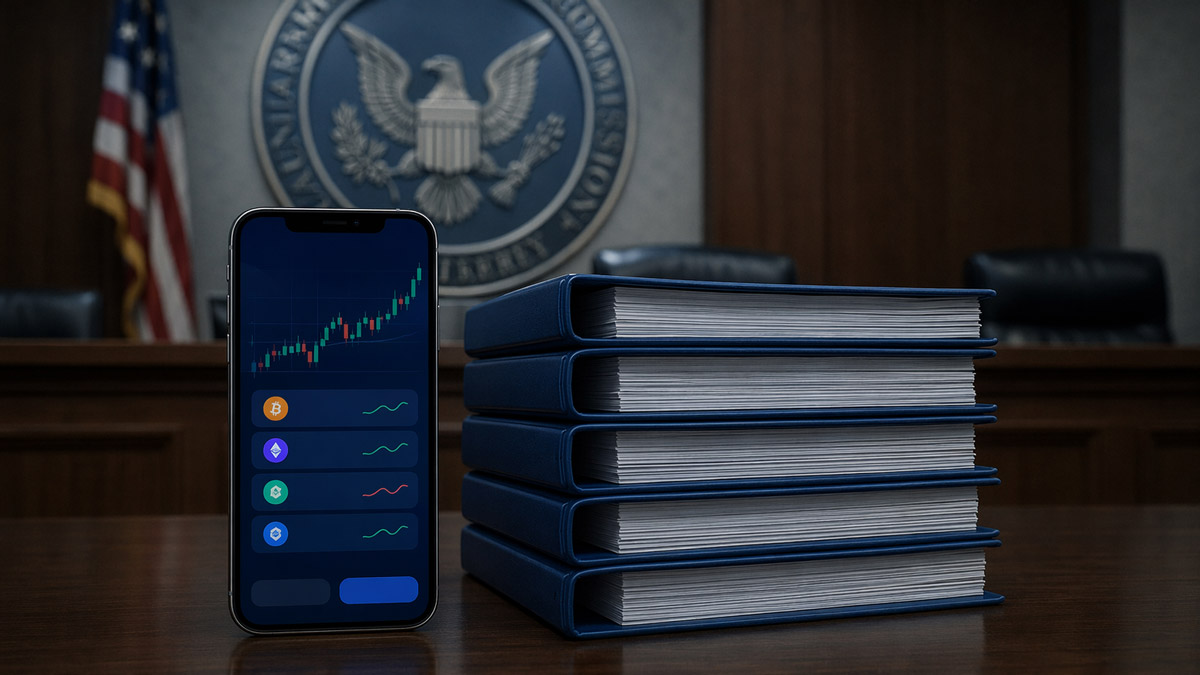


Advancements in Cryptocurrency Regulation: SEC’s April 13 Initiative
The Securities and Exchange Commission (SEC) has taken significant strides in advancing the regulatory framework governing the cryptocurrency market, as evidenced by its statement issued on April 13. This move was executed unilaterally by the SEC, circumventing the need for Congressional action.
Overview of the SEC’s Statement on Covered User Interfaces
The SEC’s Division of Trading and Markets recently published a staff statement that delineates operational boundaries for Covered User Interfaces (CUIs). These CUIs encompass a range of platforms, including websites, browser extensions, wallet-linked applications, and mobile services that facilitate self-custodial transactions involving crypto asset securities.
The SEC has indicated that it will not object to the operations of these providers without broker-dealer registration under Section 15 of the Exchange Act, contingent upon adherence to stringent behavioral and disclosure protocols.
Significance of the SEC’s Position
This development marks a pivotal moment as it constitutes the first explicit guidance from the SEC regarding how wallet-linked cryptocurrency trading applications can function within the regulatory landscape without necessitating full broker licenses. However, this operation is permissible only if these platforms eschew execution, custody, and any activities resembling decentralized finance (DeFi) operations. This regulatory clarity opens a narrow pathway for tangible product launches while simultaneously signaling that larger, comprehensive protocols remain ensnared in a different regulatory paradigm pending further legislative or commission action.
Operational Implications of the SEC Statement
To qualify as a Covered User Interface Provider, an entity must enable users to:
– Customize transaction parameters.
– Refrain from soliciting specific trades.
– Utilize pre-disclosed and verifiable routing logic.
– Present execution alternatives based on objective criteria such as price or transaction speed.
The statement explicitly acknowledges distributed ledger trading systems—including automated market maker (AMM) liquidity pools and liquidity aggregators—as potential venues for these interfaces, elucidating how self-custodial interfaces for crypto asset securities can operate while remaining exempt from broker status.
Defining Operational Boundaries
The operational scope defined by the SEC establishes critical limitations. Any interface that engages in negotiating transaction terms, holding user assets, executing or settling transactions, arranging financing, conducting independent valuations, or processing trade documentation falls outside the purview of this statement. Additionally:
– Compensation linked to specific products, venues, routes, or counterparties disqualifies a provider from this exemption.
– The permitted activities are confined to objective route displays and user-directed parameter settings.
Any engagement in execution or discretionary routing categorizes a provider as a broker under regulatory definitions.
A Sequential Regulatory Approach by the SEC
The April 13 statement is part of a sequential approach taken by the SEC. Prior initiatives included:
– **January 30**: The publication of guidance concerning tokenized securities aimed at clarifying federal securities laws’ applicability to crypto assets.
– **March 17**: An interpretive outline concerning crypto asset law as a significant stride towards regulatory clarity, complementing Congressional efforts to reform market structure.
Commissioners Hester Peirce and Jamie Selway characterized the April 13 release as an incremental advancement in establishing infrastructure for tokenized securities and enhancing crypto market structure.
Consequently, ongoing discussions around exemptions for limited trading of certain tokenized securities have been initiated, with indications that any forthcoming exemptions may be narrow in scope.
The Future Landscape of Tokenized Securities
As the regulatory framework takes shape, two potential futures emerge concerning product design within this domain.
The Optimistic Outlook: Navigating Regulatory Constraints
In an optimistic scenario, should the SEC follow up its April 13 neutral interface statement with a bounded AMM pilot program—one that includes caps and governance mechanisms for on-chain tokenized securities trading—this could enable operational capacity within a well-defined regulatory framework. Developers who align their interfaces with these neutral software standards would be positioned advantageously to facilitate on-chain securities trading prior to legislative finalization.
The Pessimistic Outlook: Risk of Stagnation
Conversely, there exists a risk of product paralysis at the precipice of innovation. The lack of legal force behind the statement may lead cautious organizations to view this interim framework as too vulnerable for substantive development. Consequently, many interfaces may remain informational or minimally functional, deferring serious tokenized securities trading to traditional financial structures led by incumbents like DTCC and large banking institutions.
The Legislative Variable: A Call for Statutory Clarity
The disclaimer embedded within the SEC’s document underscores its provisional nature—highlighting that staff views lack legal enforceability unless acted upon by the Commission. Current dialogues within Congress regarding cryptocurrency market structure have progressed slowly; however, no new markup dates have been established following postponements due to bipartisan negotiations.
Key stakeholders have articulated divergent perspectives regarding necessary regulatory adjustments:
| Stakeholder | Desired Outcome | Importance |
|————-|—————-|————|
| SEC Staff | Narrow operating room under existing authority | Facilitates immediate market movement |
| Crypto-native Industry | Conditional AMM relief and effective tokenized-securities frameworks | Seeks practical deployment ahead of legislative completion |
| Incumbent Financial Infrastructure/SIFMA | Permanent rulemaking with comparable investor protections | Advocates for stability and traditional safeguarding measures |
| Congress | Statutory market-structure framework | Essential for lasting regulatory certainty |
Chairman Paul Atkins has consistently positioned Project Crypto as complementary to legislative initiatives. The April 13 statement serves as a tangible framework around which industry participants can build while underscoring the necessity for more durable legislative action to solidify these advancements into permanent practice.