Progression and Implications of the CLARITY Act: A Legislative Analysis
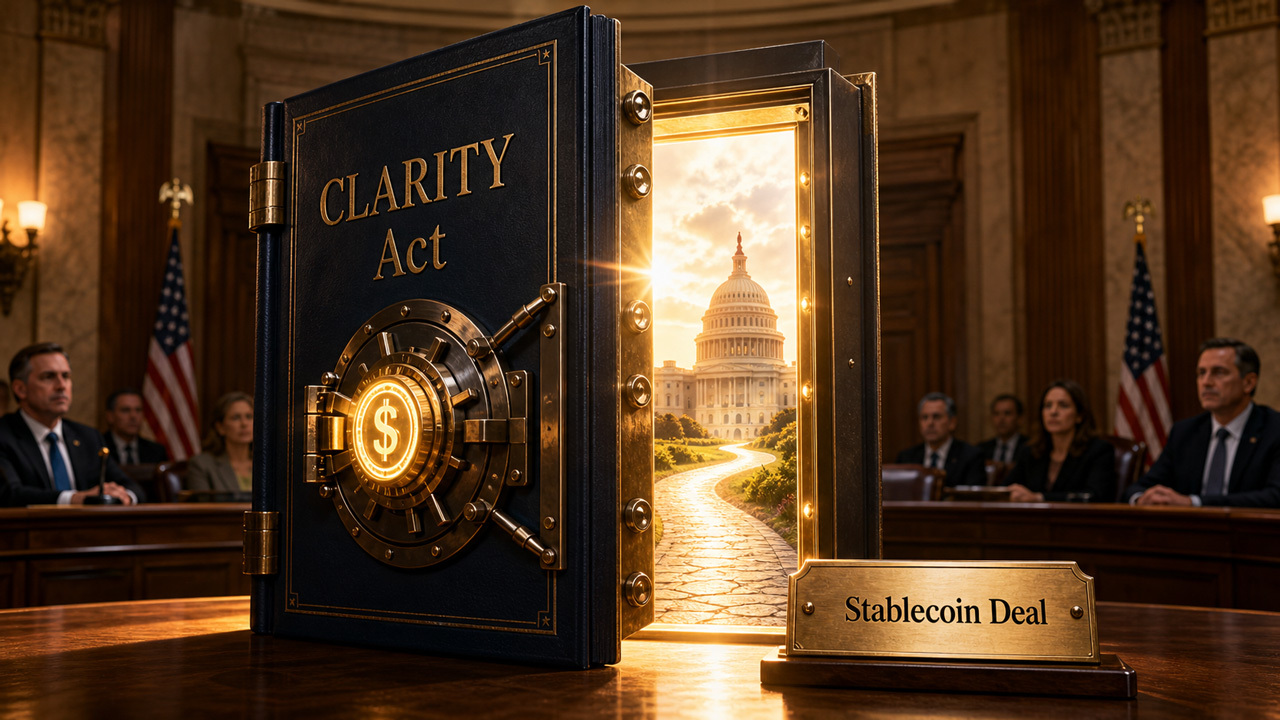
The Digital Asset Market Clarity Act, colloquially referred to as the CLARITY Act, is poised to undergo its next procedural evaluation, following the recent release of a compromise framework concerning stablecoin rewards by Senate negotiators. This development has engendered heightened expectations that the Senate Banking Committee may convene to deliberate on the measure in the week commencing May 11.
Alex Thorn, the head of research at Galaxy Digital, articulated that the unveiling of legislative text by Senators Thom Tillis and Angela Alsobrooks serves as an encouraging indicator that a markup session may be imminent. While such a compromise had been anticipated, the formal publication of the document significantly enhances the likelihood of a near-term committee vote.
The timing of this legislative movement has emerged as a pivotal consideration for the future of the CLARITY Act, particularly after protracted negotiations surrounding whether cryptocurrency enterprises are permitted to offer customer rewards linked to stablecoins.
Current Legislative Status
As of the latest updates, the Senate Banking Committee has yet to indicate a scheduled markup for May on its public agenda. The contrast between an early-May markup and potential delays may critically determine whether Congress can deliver the measure to President Donald Trump ahead of an election calendar that could overshadow Senate proceedings.
Stablecoin Rewards: The Central Point of Contention
The progression of the CLARITY Act has faced significant impediments since January, primarily due to contentious debates over stablecoin rewards. Financial institutions have expressed concerns that these rewards could function analogous to interest on deposits, thereby diverting capital away from regulated lenders and undermining their capacity to finance loans.
Conversely, representatives from the cryptocurrency sector contend that a broad prohibition would merely insulate banks from competition while hindering incentives for consumers associated with payment systems, loyalty programs, or platform engagements. This impasse prompted a postponement in discussions by the Senate Banking Committee earlier this year, necessitating an organized effort led by the White House to catalyze legislative advancement.
In response to these divergences, Senators Tillis and Alsobrooks have brokered a revised legislative draft that incorporates more robust language aimed at curtailing yield-like products. The newly proposed language establishes an overarching prohibition on rewards structured in a manner economically or functionally equivalent to traditional bank deposit interest. Moreover, it mandates regulatory authorities to formulate comprehensive guidelines for stablecoin operations, encompassing disclosure requirements and an enumeration of permissible reward activities.
Faryar Shirzad, Chief Policy Officer at Coinbase, emphasized that this compromise preserves American consumers’ ability to earn rewards through genuine engagement with cryptocurrency platforms and networks. Shirzad articulated:
“We protected what matters – the ability for Americans to earn rewards based on real usage of crypto platforms and networks. We also ensured the U.S. can be at the forefront of the financial system – which in this competitive geopolitical era is paramount. That’s important for innovation, consumers, and America’s national security.”
Notably, Coinbase’s previous opposition to earlier drafts underscores a significant shift within industry dynamics; however, it remains uncertain whether this shift will translate into Democratic backing for the bill.
Continuing Resistance from Traditional Banking Institutions
Despite recent progress toward compromise, it is anticipated that established banking entities will persist in their efforts to counteract any advancements concerning stablecoin rewards. Thorn has cautioned that banks may escalate their opposition tactics in light of these developments.
The American Bankers Association (ABA), in concert with 52 state banking associations, recently initiated proactive measures by submitting a joint letter to the Office of the Comptroller of the Currency (OCC). This coalition is advocating for stringent enhancements to proposed regulations derived from an earlier legislative initiative known as the GENIUS Act, aiming to ensure an unassailable prohibition on stablecoin yield practices.
In a separate correspondence addressed to OCC officials, the ABA articulated concerns that most payment stablecoins are disseminated through intermediary channels rather than directly by issuers. They argue that permitting any form of yield through these third parties could fundamentally contravene Congressional intent and consequently weaken traditional deposit bases that underpin lending operations across households and small businesses.
The banking associations are consequently advocating for targeted regulatory amendments designed to eliminate perceived loopholes. They are urging that OCC broaden its definition of “related third party” to encompass distribution partners and promoters effectively; thereby ensuring that economically equivalent yield arrangements are comprehensively obstructed regardless of their superficial labeling or structural presentation.
The ABA has explicitly warned that allowing a narrowly defined yield ban could lead to widespread circumvention tactics that would materially diminish community lending capabilities and disrupt global funding markets in ways that pose systemic risks.
The May Markup: A Crucial Legislative Milestone
In light of these dynamics, advocates for the CLARITY Act are framing May as a decisive deadline for rekindling discussions within the Senate Banking Committee. The week commencing May 11 presents itself as a critical juncture for assessing whether the legislation possesses viable momentum this calendar year.
A markup during this week would facilitate deliberation and potential amendments prior to voting on forwarding the bill to the full Senate. While this procedural step does not equate to final passage, it is indispensable; absent this progression, legislative efforts will remain stalled at the committee level where disputes regarding stablecoin rewards and regulatory authority have already consumed extensive negotiation time.
The pathway toward enactment necessitates several sequential actions: a favorable vote from the Senate Banking Committee, subsequent approval from the full Senate, reconciliation with similar measures from other committees (notably Senate Agriculture), alignment with provisions passed by the House concerning the CLARITY Act, and ultimately presidential ratification.
This sequence underscores the importance of timing; thus far, proponents assert that a markup within mid-May would afford lawmakers a narrow yet feasible route toward consideration in late May or June. A robust bipartisan vote within committee ranks would also serve as a catalyst for justifying floor time allocation while signaling a departure from ongoing disputes over stablecoin yields as primary determinants of legislative viability.
Conversely, delays extending beyond mid-May would engender adverse political ramifications. Each week lost pushes discussions closer toward August recess and impending midterm campaign pressures—during which appropriations and nominations are likely to dominate legislative priorities.
Such circumstances would afford banking interests increased latitude for opposition mobilization while enabling skeptics within Congress to revisit other contentious provisions—thereby complicating reconciliation efforts before recess.
Senator Cynthia Lummis has cautioned that failure to enact this legislation within 2023 could relegate comprehensive market-structure reforms until 2030—a scenario underscoring substantial risks facing cryptocurrency advancements should Congressional control shift post-midterm elections or if committee leadership undergoes transformation in subsequent years.
For market participants, this evolving situation signals not merely an assurance of passage but rather delineates an impending test—a pivotal moment defining whether Washington’s ambitions for cryptocurrency regulation will garner sufficient political support for advancement within this legislative calendar year.