
preferred on

Canadian Government’s Proposal to Eliminate Crypto ATMs: An Analytical Perspective
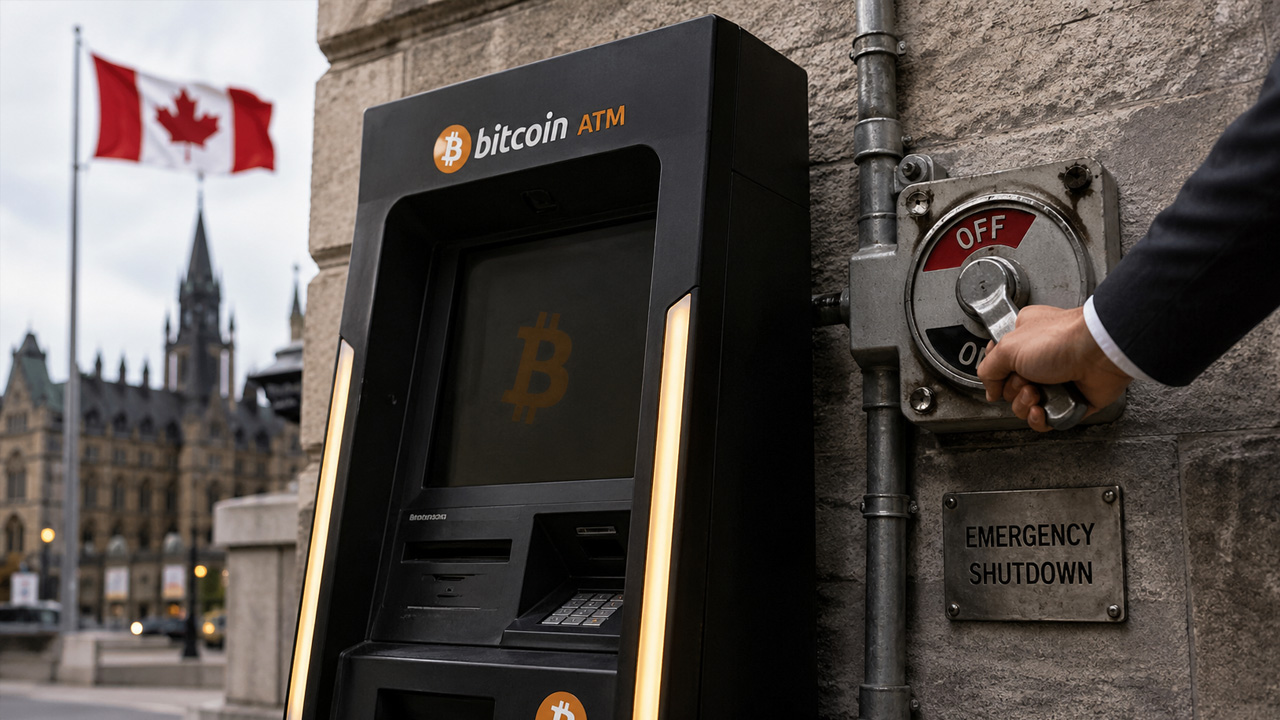
The nascent cryptocurrency ecosystem has witnessed a significant paradigm shift as Canada, the pioneer of the first cryptocurrency automated teller machine (ATM) in April 2013, contemplates an outright ban on these machines. The initial installation, which enabled users to convert cash into Bitcoin with unprecedented ease, has burgeoned into a network of nearly 4,000 such machines across the country—an unparalleled density on a global scale. However, the recent Spring Economic Update 2026 issued by the federal government outlines a proposal to eradicate these machines entirely.
This proposed legislative maneuver is not an impulsive reaction; rather, it is a response to alarming statistics indicating that Canadians incurred losses exceeding $704 million due to fraud in 2025 alone. Cumulatively, from 2022 to the present, reported losses have surpassed $2.4 billion. The government’s assertion that only 5 to 10 percent of fraudulent incidents are reported suggests that actual figures might be substantially higher than documented.
Within this context, officials have characterized crypto ATMs as a “primary method for scammers to defraud victims and for criminals to launder illicit cash.” Such language casts a damning shadow over an operational framework that has largely functioned within compliance regulations originally designed for traditional currency exchange entities.
The Role of Crypto ATMs in Facilitating Fraud
To comprehend the rationale behind Ottawa’s preemptive measures against crypto ATMs prior to addressing other facets of the cryptocurrency landscape, it is essential to consider how regulatory bodies convey risk and identify politically actionable targets. Crypto ATMs are not only ubiquitous—positioned strategically in convenience stores, gas stations, and shopping malls—but they also present minimal barriers to entry for users. Most transactions under $1,000 necessitate only a phone number for engagement. Unlike traditional banking environments where human oversight can mitigate fraudulent activities, these machines lack such safeguards.
This duality of visibility and low verification thresholds renders crypto ATMs particularly susceptible to legislative intervention. Regulators can easily articulate the associated risks without requiring the public’s understanding of complex financial mechanisms such as decentralized finance (DeFi) or stablecoin dynamics. This straightforwardness transforms into a liability for the industry at large.
An internal analysis conducted by FINTRAC (Financial Transactions and Reports Analysis Centre of Canada) in 2023 corroborated that Bitcoin ATMs likely remain “the primary method” employed by fraudsters for collecting and laundering funds from victims. Despite this unsettling finding lingering in the background while operators continued their expansion efforts, specific regulations tailored to this sector have yet to materialize.
The Implications of Regulatory Inaction
Efforts by major media outlets, such as CBC News, to engage with Finance Minister François-Philippe Champagne and FINTRAC regarding proactive measures yielded no responses. The Spring Economic Update effectively serves as an implicit answer that these institutions were reluctant to provide publicly.
The industry’s compliance record complicates any potential defense against this proposal. Testimonies from former employees within Canadian crypto ATM companies revealed that fraudulent activities through these machines are widely recognized within the sector. Approximately half of these individuals expressed skepticism regarding their former employers’ viability without transactions associated with fraudulent activities.
If substantiated, such allegations necessitate a reexamination of compliance measures. While strategies—such as warnings, cooling-off periods, and identity verifications—can mitigate fraud risks at the margins, they do not tackle a business model that may inherently rely on unethical transactions.
The FBI has consistently flagged crypto ATM scams as an escalating trend over recent years. In contrast, California introduced transaction caps at $1,000 per day in 2023 as a preventative measure against irreversible transfers. Ottawa’s proposed ban represents a more categorical approach than these earlier responses.
Identifying Stakeholders: Who Loses When Access is Restricted?
The government’s proposal includes an important nuance: Canadians would retain access to digital assets via other regulated channels such as established money services businesses already subjected to oversight frameworks. This delineation suggests that the proposed ban functions primarily as a restriction on unattended cash-to-crypto transactions rather than an outright prohibition on cryptocurrency access itself.
Nevertheless, this distinction may prove inconsequential for certain demographic segments reliant on crypto ATMs due to their underbanked status or dependence on cash transactions. Some individuals may prefer these machines for small purchases to avoid identity verification processes associated with regulated exchanges or simply for their convenience.
A comprehensive ban would consequently remove a crucial legal access point for vulnerable populations without providing an adequate alternative. Statistics from the Canadian Anti-Fraud Centre indicate that victims reported losses amounting to $14.2 million from scams involving crypto ATMs in 2024, with losses exceeding $4.2 million within the initial three months of 2025 alone.
These figures likely represent only a fraction—5 to 10 percent—of actual incidents, underscoring the tangible ramifications of such fraudulent activities. This raises critical questions regarding whether the concentration of harm justifies eliminating a channel that also facilitates legitimate uses; however, Canada’s government has reached the conclusion that it does.
Regulatory Precedents and Broader Implications
The Canadian government’s decision aligns with previous regulatory actions within its jurisdiction; Bybit’s exit from Canada and subsequent fines imposed upon Bybit and KuCoin for securities violations illustrate a regulatory environment willing to accept diminished access as collateral damage stemming from enforcement efforts. This pattern signifies that when compliance issues are deemed sufficiently severe by authorities, remediation takes precedence over product availability.
A Comprehensive Regulatory Playbook: Canada’s Model for Global Consideration
If enacted, Canada’s prohibition would constitute one of the most exhaustive responses to crypto ATM fraud globally among major economies. The United Kingdom effectively curtailed crypto ATMs in 2021 by mandating that all operators register with the Financial Conduct Authority (FCA). As of 2026, no operator has obtained this registration status, rendering each machine effectively illegal and subjecting them to enforcement actions.
Australia took a more measured approach; AUSTRAC implemented per-transaction cash limits in mid-2025 following a joint review concentrating on fraud prevention and consumer protection measures. The UK’s strategy achieved removal through bureaucratic friction rather than legislative measures, while Australia’s response adopted graduated controls aimed at managing risks over time.
Conversely, Canada’s approach is markedly direct and emerges concurrently with governmental initiatives aimed at establishing a Financial Crimes Agency with a budget allocation of $352.7 million over five years dedicated to tracing illicit financial flows.
The logic underpinning this proposal merits serious consideration beyond its immediate implications: when retail cryptocurrency products become synonymous with fraud—particularly targeting vulnerable groups—the prevailing response from Canadian authorities is one of immediate withdrawal from the market.
This regulatory posture diverges significantly from historical practices encountered by the industry and encompasses more than just ATMs situated in convenience stores; prepaid crypto cards, self-custody applications, stablecoin on-ramps, and any product characterized by user-friendly interfaces alongside minimal verification requirements may equally fall under scrutiny within this evolving political risk framework.
Canada’s burgeoning regulatory precedent suggests that once products become associated with fraudulent activity in public discourse, their operational existence may be jeopardized.
The nation that once inaugurated the world’s first Bitcoin ATM could soon emerge as the first major economy to render them entirely illegal—a striking reversal signaling notable shifts worthy of attention beyond Canada’s borders.