The Iran Conflict: Disrupting the Underlying Mechanisms of Global Trade
The recent geopolitical tensions surrounding Iran have ushered in a paradigm shift in the global economic landscape, initially marked by fluctuations in crude oil prices. As the price of oil has dipped below $90 per barrel, an interesting juxtaposition emerges with Bitcoin’s concurrent rally. This apparent correlation, however, belies a more profound and consequential disruption occurring within the intricate layers of global trade, particularly affecting shipping logistics, energy supplies, agricultural inputs, and financial channels.
Economic Implications Beyond Oil Prices
The ramifications of the conflict extend far beyond the immediate fluctuations in oil prices. The underlying mechanisms that facilitate trade—namely shipping routes, gas supplies, fertilizers, aviation logistics, petrochemical production, and trade financing—are experiencing significant strain. These sectors are crucial as they determine delivery schedules, influence input costs, dictate working capital requirements, govern factory operations, and ultimately affect food production and freight capacity. When disruptions infiltrate these foundational layers of the economy, the repercussions reverberate throughout global markets.
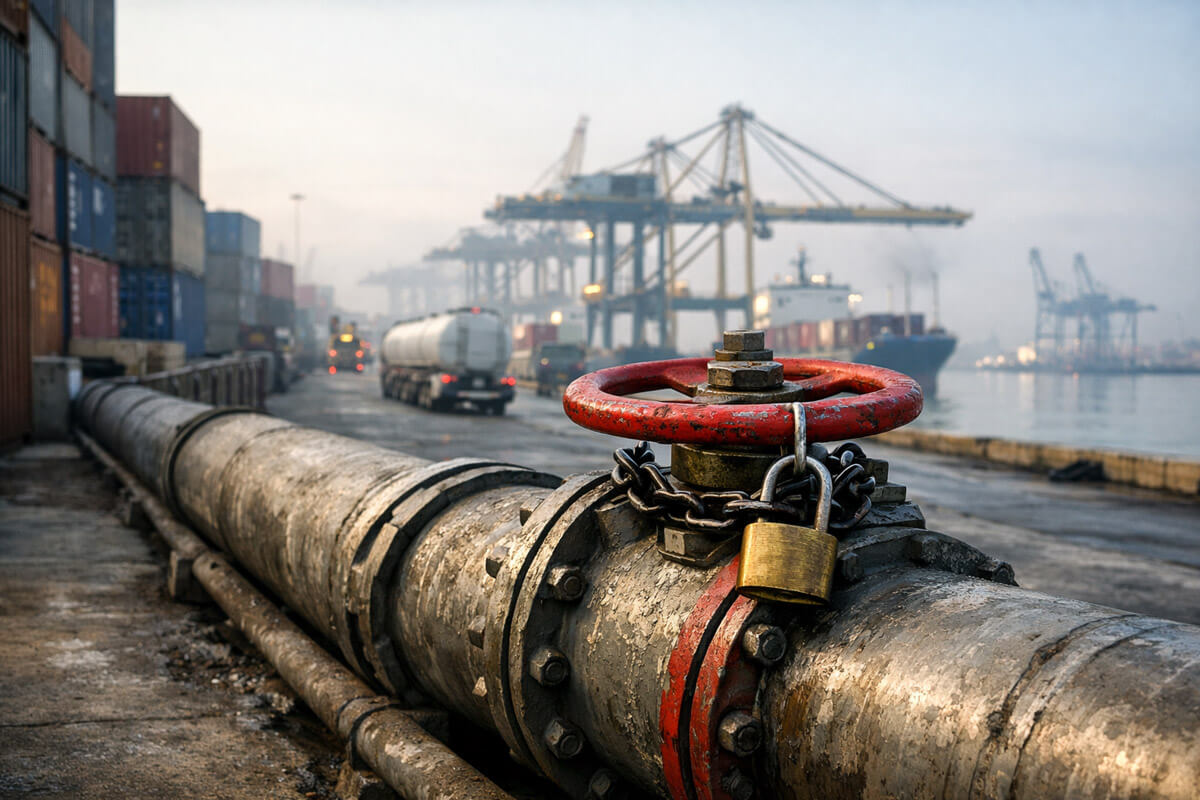
Recent reports from the International Maritime Organization (IMO) indicate a worrying trend: commercial vessels navigating the Strait of Hormuz have faced repeated assaults since late February, resulting in fatalities among civilian seafarers and the ongoing peril faced by thousands of crew members operating in this volatile region. Further corroboration comes from UNCTAD, which reported a dramatic decline in vessel traffic through Hormuz to single-digit figures shortly after the onset of hostilities—a clear indicator that physical trade flows are stalling. The distinction between a commodity shock and a transport shock is critical; while commodity shocks alter market expectations, transport shocks fundamentally affect the logistics of trade.
Global Trade Dynamics: A Widening Economic Rift
The broader economic consequences are already manifesting. For instance, China’s trade data for March reveals a sharp deceleration in export growth coupled with a surge in imports—a duality that signals rising input pressures alongside declining external demand. The International Monetary Fund (IMF) has similarly projected slower growth and persistent inflation as the conflict permeates through global pricing structures and transport networks. What initially appeared to be an energy crisis is evolving into a comprehensive supply-side disruption with tangible impacts on industrial productivity and financial stability.
Implications for Cryptocurrency Markets
In light of these developments, it is imperative to reassess how such macroeconomic shifts influence cryptocurrency markets. While short-term spikes in oil prices can often be absorbed by liquidity within financial markets when growth expectations remain stable, prolonged disruptions across critical sectors—including shipping logistics and industrial inputs—herald a different scenario. Such conditions foster tighter financial constraints, diminished risk appetites among investors, heightened volatility within emerging market currencies, and selective capital allocation across digital asset classes.
Nonetheless, Bitcoin may still capitalize on periods of geopolitical instability and sovereign distrust. Historically perceived as a digital store of value during tumultuous times, Bitcoin’s performance has outpaced that of gold year-to-date—a reflection of shifting investor sentiment toward higher-beta assets rather than traditional safe havens. Despite volatility surrounding ceasefire negotiations and macroeconomic uncertainty, Bitcoin’s price structure remains firm—a testament to its resilience amid adversity.
Shipping and Natural Gas: Transition from Commodity Stress to Physical Disruption
The current geopolitical tensions have laid bare vulnerabilities within merchant shipping networks. While tanker traffic garners significant attention due to its visibility in media narratives, the underlying issue revolves around operational confidence among stakeholders—including shipowners, charterers, insurers, and crews—who are now compelled to reassess risk levels associated with navigating conflict-prone corridors.
The IMO’s recent appeal for a safe-passage framework underscores the magnitude of this crisis. Even if navigation remains technically feasible, commercial activity can contract significantly if war-risk premiums escalate or if crews decline to traverse perilous routes due to safety concerns. Such hesitancy creates a drag on operational capabilities that persists long after diplomatic negotiations reach temporary resolutions; underwriting decisions invariably lag behind frontline developments.
Natural gas emerges as another critical conduit for disruption. According to UNCTAD, the Strait of Hormuz serves as a vital artery for global liquefied natural gas (LNG) shipments—particularly affecting Asian importers reliant on LNG for power generation and chemical production. Reports indicate that disruptions are already manifesting within trade data; for instance, Reuters highlighted weaker gas imports into China during March amid growing concerns over supply stability. Similarly, ICIS has warned that India’s ammonia production could face severe challenges due to LNG supply uncertainties impacting imported feedstock economics.
Broader Impacts on Fertilizer and Petrochemicals
The implications extend deeply into fertilizer production and petrochemical industries—sectors often overlooked yet integral to food security and industrial output. UNCTAD reports that approximately one-third of global seaborne fertilizer trade transits through Hormuz; this substantial share raises the potential for second-order disruptions even without total collapse in shipping volumes.
Tightening supplies of ammonia and urea directly impact agricultural productivity; cost shocks typically materialize with a lag as planting decisions and input utilization adjust over time. The FAO’s warnings regarding food security risks further emphasize this channel’s significance. Escalating energy costs compounded by disrupted fertilizer supplies pose existential threats to agricultural systems far beyond the Gulf region.
The Potential Shift from Shock to Regime Change
The pivotal question now arises: Will this disruption stabilize as an acute shock or evolve into a new regime characterized by persistently elevated costs associated with energy transportation and goods movement? Should conditions in Hormuz remain constrained over time, the latter scenario appears increasingly plausible.
- Cautious Shipping Practices: Shipping behaviors may remain defensive long after access is restored formally due to lingering concerns about safety.
- Aviation Fuel Constraints: Recent warnings highlight potential jet fuel shortages should impaired flows persist; such shortages would reverberate through tourism and high-value freight sectors.
- Agricultural Pressures: The FAO has indicated that prolonged fertilizer shortages could severely impact crop economics as planting cycles approach.
- Tightening Financial Conditions: UNCTAD predicts escalating financial constraints across developing economies as disruptions persist—affecting currency stability and borrowing costs.
The interplay between these dynamics holds significant implications for cryptocurrency markets as well. As global liquidity tightens amidst escalating stresses on domestic financial systems—particularly where stablecoins serve as practical substitutes—Bitcoin may experience fluctuations reflective of geopolitical uncertainties while altcoins could struggle under adverse macroeconomic conditions.
In conclusion, it is evident that the Iran conflict has transcended its initial framing as merely an energy crisis; it is now ensconced within a broader narrative of systemic disruption affecting fundamental economic mechanisms worldwide. The ramifications will likely extend outward through food supply chains, freight operations, industrial margins, and external financing structures—ultimately reshaping market dynamics across various asset classes including cryptocurrencies.