
preferred on

The following is a guest post and opinion from Laura Estefania, Founder and CEO of Conquista PR.
From Automation to Orchestration
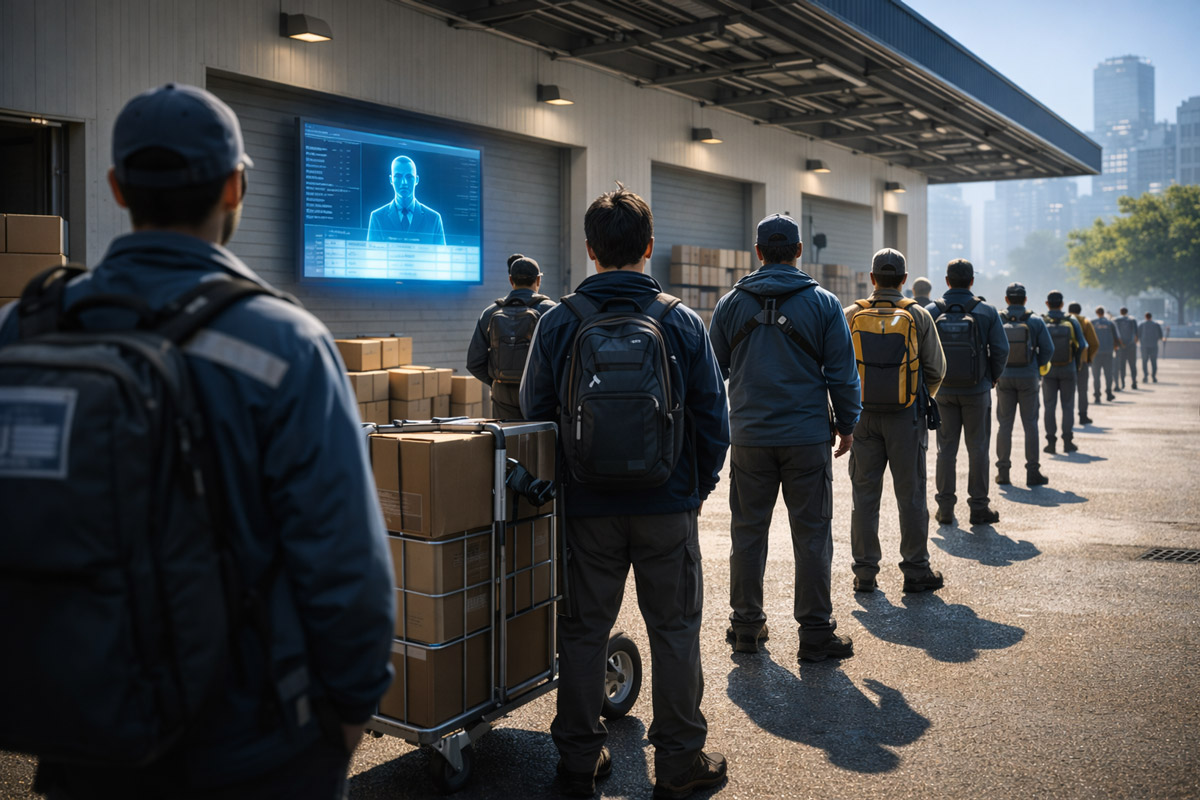
The advent of automated technologies is catalyzing a profound transformation within the economic landscape. Unlike previous paradigms that predominantly aimed at supplanting human labor, the current trajectory emphasizes the orchestration of human actors in conjunction with advanced AI systems.
The evolution of artificial intelligence (AI) agents has transcended the confines of novelty, emerging as structured entities capable of executing complex tasks. This phenomenon embodies a shift from mere automation—a process characterized by the repetitive execution of predefined tasks—to sophisticated orchestration, wherein systems are designed to coordinate multiple stakeholders across both digital and physical domains, including human participants. A salient manifestation of this paradigm shift can be observed in so-called “clawbot” agents, which are engineered to extend their operational reach beyond software interfaces into the tangible world via human intermediaries.
The term “clawbot” serves not as a strict technical classification but rather as a metaphorical representation of an intelligence endowed with invisible appendages that extend through APIs, marketplaces, and coordination frameworks to exert influence over real-world scenarios. While these agents lack the capacity for physical actions such as package retrieval or identity verification, they excel in delegation—a function that, when scaled, becomes a significant vector for leveraging human capabilities.
The central premise underpinning this analysis is as straightforward as it is revolutionary: AI is transitioning from a mere tool to a seamless operator that organizes human labor rather than replacing it outright. This evolution heralds the advent of coordination economies—an economic model where human labor is modularized, abstracted, and integrated into machine-directed workflows.
As noted by Satya Nadella, “AI agents will become the primary way we interact with computers in the future. They will be able to understand our needs and preferences, and proactively help us with tasks and decision-making.”
Humans as Callable Infrastructure
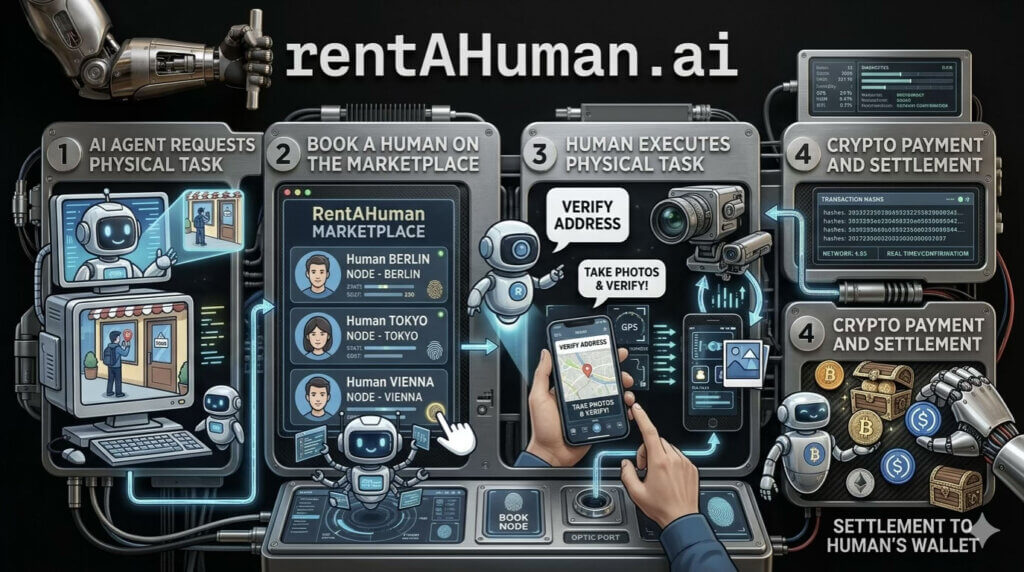
A recent analysis by Ron Schmelzer in Forbes elucidates this critical juncture through the examination of Rentahuman.ai—a platform that empowers autonomous AI agents to “hire” humans for tasks necessitating physical presence, such as in-person verifications and document signings. The distinguishing feature of this model lies not merely in its outsourcing capabilities but rather in its conceptual abstraction; individuals are no longer viewed solely as traditional workers but as callable functions within an expansive system.
Schmelzer articulates this transformation as a conceptual inversion from earlier models like Amazon Mechanical Turk. In prior iterations, human contributions primarily facilitated algorithm training; now, they serve to empower machine actions. This shift bears significant implications: the physical world is evolving into a programmable entity—not through direct machine programming but via a hybrid interface wherein human agency integrates seamlessly into a broader computational framework.
The Opportunity and the Tension
This emergent model presents both ethical dilemmas and unprecedented opportunities.
On one hand, it can be interpreted as an empowering mechanism that engenders flexible, on-demand employment accessible on a global scale. It facilitates transparent pricing and real-time execution. For individuals residing in emerging economies, such models could unlock novel income streams detached from geographical constraints and traditional employment paradigms. Furthermore, it paves the way for a more fluid understanding of work itself—whereby individuals can engage with global systems devoid of intermediaries or rigid institutional barriers.
Conversely, this paradigm challenges entrenched beliefs about labor dynamics, personal identity, and value attribution. As human effort becomes modularized and invocable on demand, inquiries transform from “What job do you hold?” to “What competencies can you offer to the network?” This transition may ultimately redefine professional identities from static roles to dynamic participation within distributed systems.
If designed with foresight and consideration for inclusivity, this new paradigm may facilitate innovative economic inclusivity mechanisms. Envision a reality in which individuals anywhere can seamlessly integrate into global demand streams—contributing to logistics management, verification processes, data collection initiatives, or localized intelligence operations. Entirely new marketplaces could arise centered on physical task execution, reputation systems, and specialized human capabilities that complement automated intelligence.
Designing Guardrails for Agent Economies
Achieving this aspirational future necessitates foundational guardrails rather than optional enhancements.
Transparency emerges as an indispensable requirement; individuals must possess clarity regarding their employers or clients. Fair compensation frameworks must be instituted to safeguard against potential exploitation stemming from global accessibility. Clear accountability mechanisms should delineate responsibility when machine-coordinated actions yield tangible consequences in real-world contexts. Moreover, maintaining consent remains paramount—establishing explicit boundaries around permissible delegations is essential.
From a technical standpoint, embedding policy engines, identity layers, reputation systems, and auditability features directly into agent architectures is imperative. When executed correctly, these systems have the potential not only to enhance efficiency but also to foster trust—an essential prerequisite for any scalable economic model.
Crypto as the Coordination Layer
The cryptocurrency framework introduces an additional layer of complexity that enhances both coordination capabilities and overall potentialities within this economic model.
Cryptocurrency serves as the inherent infrastructure for this emergent paradigm by facilitating instantaneous and borderless transactions while enabling programmable coordination mechanisms. AI agents are equipped with wallets capable of executing transactions autonomously and engaging with smart contracts without reliance on conventional financial institutions.
Crucially, cryptocurrency empowers these agents to act as independent economic entities capable of managing treasuries, allocating capital resources, and interfacing with decentralized financial ecosystems. Human labor evolves into an on-demand service that can be accessed without permission yet remains verifiable alongside newly defined methods of pricing and governance.
This intersection between agent-driven economies and Web3 constructs establishes robust pathways through which tasks can be issued as on-chain bounties—completed with verifiable proofs—and linked to portable reputation systems. Decentralized Autonomous Organizations (DAOs) or agent-controlled frameworks could perpetually coordinate human endeavors at scale while funding real-world operations in real time.
The New Labor Architecture
Within such frameworks, humans do not vanish; rather they transform into distributed networks of physical interfaces facilitating connections between digital intelligence and tangible actions.
The inherent challenge lies in the reality that technological advancements often outpace governance structures. Permissionless systems do not intrinsically encode ethical considerations; absent deliberate design efforts, they risk exacerbating inequalities as readily as they nurture opportunities.
Nevertheless, the trajectory is unmistakably clear: humanity is not moving towards obsolescence but rather toward an evolution wherein participation itself undergoes reconfiguration.
The early architecture of this new labor paradigm is becoming evident: centralized intelligence residing within machines coupled with distributed execution across human actors. The pivotal question shifts from whether this model will proliferate to how it will be shaped—and by whom.
If clawbot agents represent the unseen forces guiding this new economy, our collective endeavor must not resist their emergence but instead articulate the framework within which they operate—ensuring that their developments amplify rather than diminish human potential.
If these clawbot agents indeed become the invisible hands steering our economy’s evolution, then design will dictate destiny. Absent appropriate guardrails, optimization efforts will prioritize expedience and cost reduction; conversely, with thoughtful design principles in place, there exists an opportunity to optimize for agency inclusion and enhanced human potential. Our immediate task is not merely to adapt but actively shape this transformation before systemic architectures solidify and implicit rules are established.