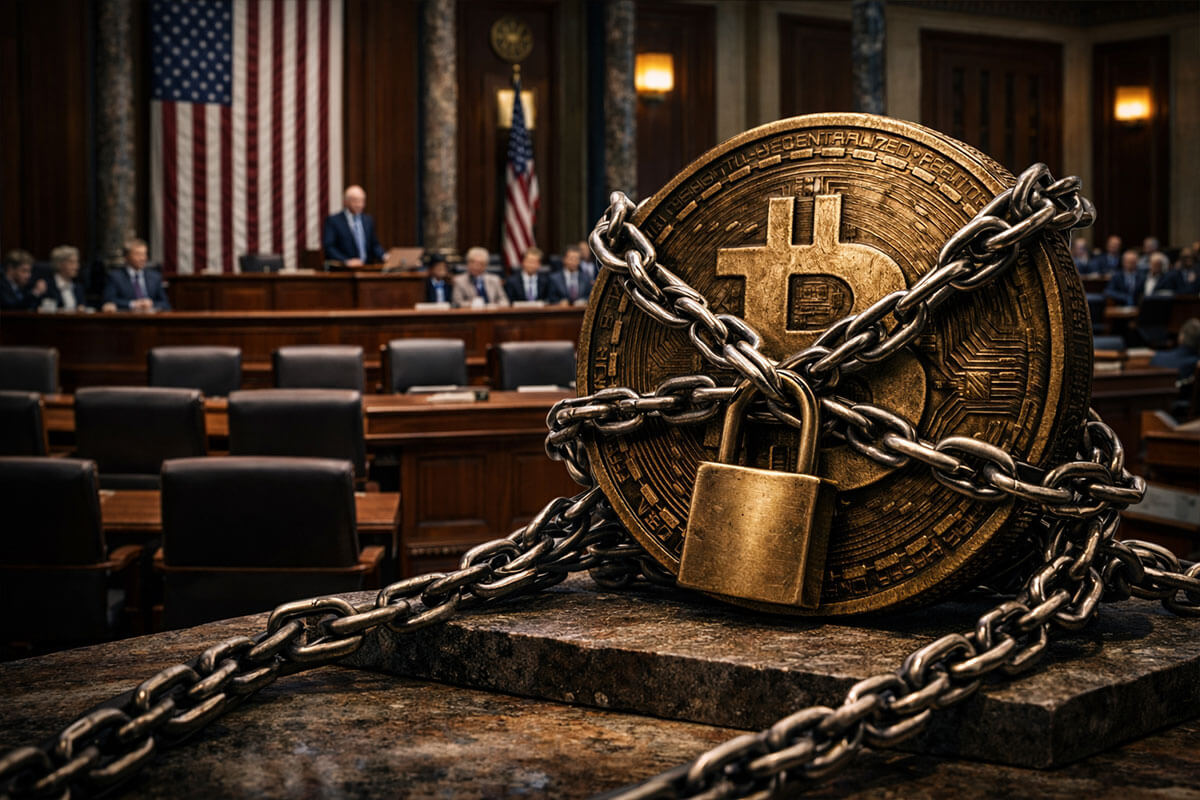
Regulatory Developments in Digital Currency: Implications for Bitcoin and Stablecoins
The regulatory landscape surrounding digital currencies in the United States is undergoing significant transformation, as a concerted effort emerges from lawmakers, regulators, and the executive branch to establish a more structured framework for digital dollar transactions. This evolving paradigm presents distinct ramifications for Bitcoin, which is increasingly being delineated into a separate category within the broader financial ecosystem.
Convergence of Regulatory Efforts
Over the previous year, U.S. legislative and regulatory bodies have exhibited a unified trajectory toward the establishment of a comprehensive regulatory framework for digital assets. Notably, the GENIUS Act has progressed through the Senate, incorporating provisions related to payment stablecoins, reserve requirements, consumer protection measures, and enhancements to cross-border transaction efficiency.
The White House’s recent report on digital assets characterizes dollar-backed stablecoins as heralding a “next wave of innovation in payments,” directly linking them to the expansion of U.S. monetary influence. Treasury Secretary Scott Bessent subsequently articulated that this legislative framework effectively establishes an “internet-native payment rail” for the U.S. dollar.
Furthermore, the Office of the Comptroller of the Currency (OCC) has proposed operational guidelines that translate these political intentions into a coherent structural framework. This proposed rule delineates the roles of permitted issuers, reserve management protocols, redemption processes, custodial responsibilities, supervision standards, and approval mechanisms under federal jurisdiction.
Implications for Bitcoin’s Position
The alignment of these regulatory efforts is unmistakable. The U.S. government aims to develop a regulated digital dollar that can traverse established legal frameworks, bolster demand for U.S. Treasury securities, and facilitate more rapid, cost-effective, and globally compliant transaction mechanisms. However, this shift does not negate Bitcoin’s existence; rather, it categorizes Bitcoin into an alternative lane within the financial landscape.
Stablecoins are being strategically positioned as instruments akin to traditional money. In contrast, Bitcoin retains its status as a scarce external asset—its value deriving from its separation from state liabilities and its independence from the dollar’s monetary structure.
This raises critical inquiries regarding market dynamics:
If federal authorities are enhancing legal and tax infrastructures for digital dollars, what implications does this hold for Bitcoin’s long-standing aspiration to evolve into a widely used transactional medium in major developed markets?
The answer appears increasingly unfavorable for Bitcoin’s intended use case as transactional currency. Despite its attributes of scarcity, portability, and resistance to censorship, Bitcoin’s recent price fluctuations complicate simplistic comparisons to “digital gold.” Moreover, prevailing policy trends continue to fortify a dichotomy: stablecoins are designated for daily transactions while Bitcoin is relegated to functions involving savings and collateralization—a more limited role than initially envisioned by early proponents of Bitcoin.
The Emergence of Stablecoins: A Structured Approach to Digital Cash
The initial foundation of this regulatory architecture is characterized by explicit state interest. The White House report unequivocally positions dollar-backed stablecoins as pivotal technologies in payment systems. The underlying message is clear:
- Dollar stablecoins possess the potential to enhance U.S. financial leadership.
- They can facilitate real-time cross-border transactions.
- They are essential for maintaining the relevance of the dollar amidst the globalization of digital finance.
Treasury’s post-enactment communication regarding the GENIUS Act reinforces this perspective from a market structure standpoint. It frames stablecoins as novel conduits for the dollar economy while simultaneously increasing demand for U.S. government debt through reserve holdings. A recent economic brief published by the Richmond Federal Reserve aligns with this sentiment, positing that reserve-backed stablecoins could amplify rather than diminish demand for dollars and Treasury securities.
Operational Implementation and Taxation Considerations
The subsequent layer involves practical implementation strategies articulated in the OCC’s proposed rule. This rule clarifies parameters surrounding who is authorized to issue payment stablecoins within the United States, how reserves should be managed, redemption mechanics, supervisory standards applicable to issuers, and custodial frameworks.
This level of clarity signals an institutional commitment to advancing capital formation through legal certainty in product design and distribution channels. A payments instrument gains credibility when stakeholders—issuers, banks, custodians—can anticipate operational pathways with greater precision.
The third layer pertains to taxation frameworks affecting digital assets. The PARITY Act discussion draft proposes special tax considerations for qualifying regulated payment stablecoins pegged exclusively to the U.S. dollar while concurrently introducing wash-sale rules applicable across digital asset transactions.
This legislative sequencing underscores a strategic preference: regulatory simplification is primarily directed toward facilitating routine use of regulated digital dollars while imposing stricter tax obligations on broader digital asset categories—including Bitcoin exposure.
Redefining Roles: Stablecoins vs. Bitcoin
This emerging framework culminates in a discernible pattern: The United States is fostering an ecosystem conducive to cryptocurrency that extends the dollar’s influence while deepening Treasury demand within conventional oversight structures. Such policies inherently favor instruments characterized by price stability, transparency in reserves, issuer accountability, and well-defined redemption processes—criteria that Bitcoin fundamentally lacks due to its nature as a decentralized monetary asset with no sovereign issuer.
This distinction lies at the heart of ongoing discourse surrounding digital currencies. Washington’s current trajectory enhances the likelihood that regulated digital dollars will transition toward normalization as everyday currency on-chain while simultaneously confining Bitcoin’s narrative predominantly within its established identity as “digital gold.”
Narrowing Payment Functions of Bitcoin Amidst Sustained Scarcity
Bitcoin’s role within this evolving framework is nuanced rather than binary; it reflects complexities beyond simplistic ideological positions.
- The maximalist view posits that state preference for stablecoins ultimately validates Bitcoin’s value proposition by underscoring governments’ inherent inclination towards sovereign money.
- The dismissive perspective claims that advancements in stablecoin regulation leave Bitcoin marginalized as merely a speculative artifact.
Current evidence does not wholly substantiate either extreme viewpoint. Bitcoin continues to embody a robust monetary proposition as a scarce asset; it facilitates settlement outside conventional banking hours and offers resistance against long-term debasement while enabling cross-border portability devoid of issuer risk. However, conditions conducive to transforming Bitcoin into an accessible transactional medium for mainstream consumers are increasingly elusive.
Legislative proposals such as Senator Cynthia Lummis’s 2025 digital asset tax initiative reflect an awareness among lawmakers regarding compliance burdens created when routine transactions trigger taxable events—a recognition that represents a practical impediment rather than merely an ideological one.
The PARITY draft concomitantly prioritizes relief measures for regulated payment stablecoins while leaving open possibilities for future treatment adjustments concerning other digital assets—a dynamic that maintains fluidity in long-term regulatory strategies.
Clarifying Market Identity: Stability vs. Scarcity
The immediate preference articulated by policymakers is unequivocal: Washington seeks first to standardize payment tokens—specifically those aligned with the U.S. dollar—thereby establishing a clear delineation between functions associated with stablecoins and those earmarked for Bitcoin.
This development bears direct implications on Bitcoin’s narrative trajectory. The term “digital gold” has historically served multiple purposes:
- It conveys scarcity.
- It signifies autonomy from sovereign monetary systems.
- It highlights long-term holding tendencies over transactional utility.
- It invites comparisons with traditional assets capable of preserving value across varying regimes—even amidst short-term volatility.
Recent fluctuations in Bitcoin’s market performance complicate any simplistic application of such labels. Notably, correlations between gold and Bitcoin do not consistently hold across all risk environments; Bitcoin exhibits heightened volatility sensitivity compared to gold’s more traditional stability attributes.
This distinction necessitates careful consideration while concurrently acknowledging that Washington’s agenda surrounding stablecoins may inadvertently fortify Bitcoin’s identity as “digital gold” by reducing one of its previously contested ambitions—namely its aspiration to function as regulated digital cash for everyday transactions.
This paradigm shift could serve to clarify Bitcoin’s role among mainstream users possessing some exposure to cryptocurrencies:
- Transactional Layer: Stablecoins are optimized for payments—including remittances and exchange settlements—facilitating seamless mobility of digital dollars within established economic structures.
- Savings Layer: Conversely, Bitcoin assumes a role focused on scarcity preservation—serving as an asset held for treasury diversification and macroeconomic hedging over extended timeframes rather than facilitating routine commercial exchanges.
The Dichotomy: Monetary Reach versus Distance
This outcome encapsulates inherent tensions within the emerging cryptocurrency landscape:
- Narrowing Use Cases: As states and financial institutions construct increasingly efficient digital-dollar infrastructures, Bitcoin’s broad monetary aspirations may become constricted.
- Clarified Scarcity Proposition: Conversely, by refining its role within this framework, investors may gain enhanced clarity regarding Bitcoin’s enduring value proposition amid global economic shifts.
A more streamlined use case can still support substantial value accumulation when its application remains globally legible and increasingly institutionalized—a parallel often drawn with gold itself—which maintains significant relevance in reserves despite not dominating transactional capacities.
A Broader Contextual Reflection
The deeper significance extends beyond mere crypto branding; Washington’s preference emphasizes monetary reach through regulated payment mechanisms that extend the dollar into diverse realms including software applications and cross-border networks—all while maintaining essential reserve backing and supervisory oversight provisions.
This architecture serves governmental interests by bolstering international financial influence while safeguarding demand for U.S.-based instruments—effectively centralizing economic activity within established intermediaries.
The language articulated by both Congress regarding expedited transactions and the White House’s focus on innovation aligns seamlessly with these objectives—as evidenced by ongoing discussions surrounding fiscal policy aimed at reinforcing dollar supremacy on global financial stages.
Contrasting Value Propositions:
- Bitcoin: Its value proposition emerges precisely where governmental monetary authority ceases—the asset epitomizes scarcity through design without reliance on issuer redemption assurances or participation within Treasury markets aimed at stimulating funding mechanisms.
- Sovereign Perspectives: From governmental viewpoints, these characteristics render Bitcoin less advantageous as an instrument conducive to monetary expansion; conversely, such traits may enhance its attractiveness among investors who seek alternatives amidst burgeoning state-driven digitization efforts.
A Conclusion on Complementary Roles
This evolving dynamic carries significant weight as stablecoins and Bitcoin are increasingly categorized into complementary rather than directly competing roles—one aligned closely with state-sponsored monetary systems while another retains independence alongside sovereign currencies as an external reserve asset.
This categorization could alleviate longstanding ambiguities within crypto markets where divergent narratives have historically conflated payments technology with speculative investment opportunities and anti-sovereign alternatives alike.
The Future Outlook:
- Simplification Benefits: Capital markets tend to price cleaner categorizations more efficiently; similarly, regulatory bodies exhibit greater confidence when engaging with clearly defined categories of assets.
- Divergent Pathways: Therefore, U.S. advancements concerning stablecoin regulation may result in two concurrent outcomes—facilitating significantly enhanced usability within everyday economic activities while simultaneously reinforcing Bitcoin’s distinct identity rooted in scarcity attributes and financial sovereignty independence.
This identity will undoubtedly face rigorous examinations moving forward; notably:
- The ability of Bitcoin’s inherent scarcity alone to sustain substantial long-term valuation amidst evolving macroeconomic climates;
- The necessity for its correlation with other risk assets to diminish over time sufficiently enough to uphold reserve-like demand;
- An acknowledgment that governmental enthusiasm appears increasingly concentrated on blockchain-enabled dollars rather than endorsing payment systems reliant upon Bitcoin frameworks alone.
Culminating Analysis:
A critical analytical question emerges: it is no longer merely whether Washington embraces cryptocurrencies conceptually but rather which segments within this multifaceted landscape it seeks to amplify strategically moving forward—currently pointing toward robust support for digital dollars geared towards extending existing monetary frameworks while relegating Bitcoin’s role primarily within discussions surrounding scarcity-driven investment propositions without immediate prospects for mainstream transactional integration into daily economic life.