Legal Counteroffensive by World Liberty Financial Against Justin Sun
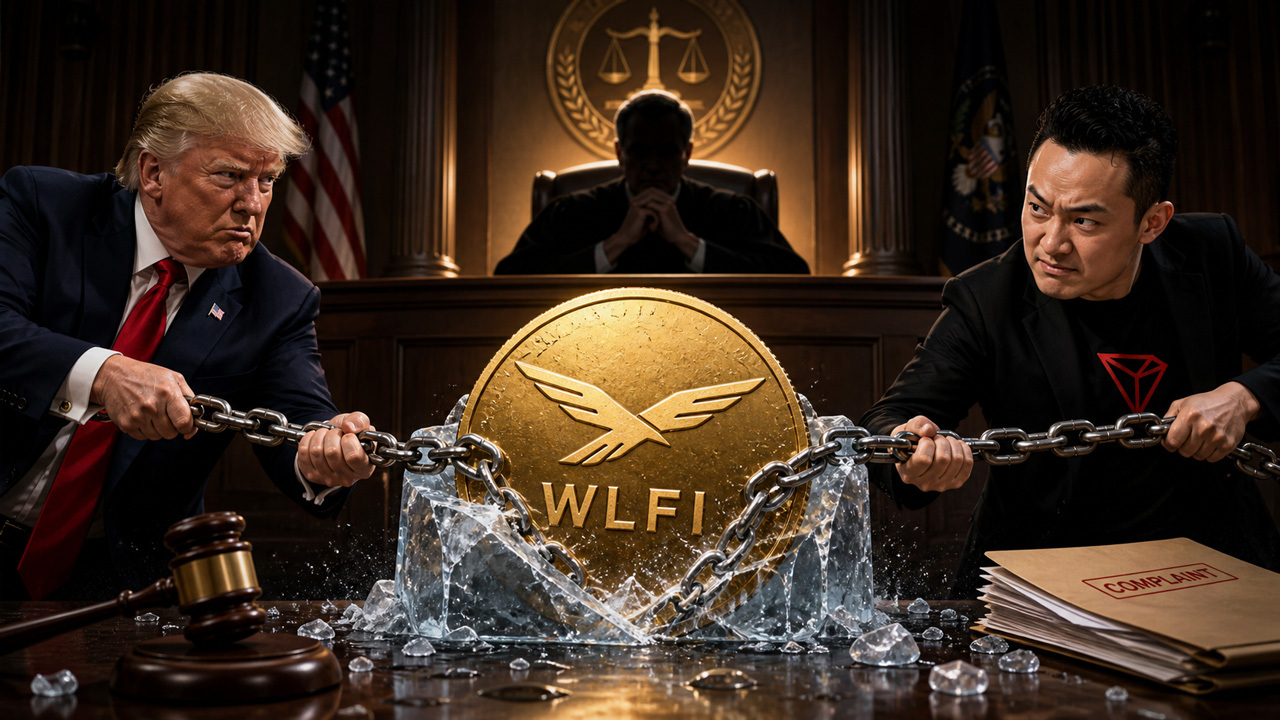
World Liberty Financial, Inc. (WLFI) has initiated a significant legal counteroffensive against Justin Sun, a prominent billionaire within the cryptocurrency sector, alleging defamation following Sun’s litigation against WLFI over the freezing of tokens purportedly valued at over $1 billion. This legal maneuver not only escalates an ongoing dispute but also transforms Sun from an early major supporter of WLFI into its most visible adversary.
Background of the Dispute
The lawsuit, lodged in a Florida state court, asserts that Sun disseminated falsehoods to his extensive audience on social media platform X after WLFI instituted restrictions on tokens associated with him. In response, Sun has characterized the lawsuit as a “meritless PR stunt,” asserting his commitment to defend his actions in court.
Key aspects of the dispute include:
– Allegations by WLFI that Sun violated token agreements and engaged in prohibited transfers.
– Claims of misconduct surrounding WLFI’s public trading debut, including potential short-selling activities.
– A counter-narrative from Sun, who contends that WLFI unjustifiably froze his assets and stripped him of governance rights.
No judicial ruling has yet been rendered concerning these allegations.
Transformation from Ally to Adversary
Sun’s engagement with World Liberty dates back to a period preceding the public tradeability of WLFI tokens. According to WLFI, Blue Anthem—an entity wholly owned by Sun—acquired 2 billion non-transferable WLFI tokens for $30 million in November 2024. Subsequently, Blue Anthem reportedly received an additional 1 billion tokens linked to an advisory role and further acquired approximately 1 billion more in January 2025. This significant investment positioned Sun as a key stakeholder during a crucial phase of the venture’s development.
However, the relationship deteriorated when WLFI imposed restrictions on tokens affiliated with Sun prior to the public trading launch. Consequently, Sun asserts that these restrictions severely limited his ability to transact and engage in governance matters. Conversely, WLFI maintains that such transfer limitations were explicitly outlined from the outset and that Sun was cognizant of the company’s authority to enforce them.
Allegations of Market Misconduct by World Liberty
The allegations presented in WLFI’s complaint extend beyond reputational harm; they implicate potential market misconduct by Sun and his affiliates. Specifically, WLFI accuses these entities of:
– Engaging in undisclosed straw purchases of WLFI tokens.
– Violating contractual agreements concerning token transactions.
– Conducting short selling or related activities contrary to their advisory role and significant locked-token positions.
A notable incident cited involves transactions conducted on August 31, 2025, wherein an HTX-associated wallet transferred substantial amounts of USDT to a Binance deposit address shortly before WLFI’s public trading commenced. Following these events, WLFI experienced a decline in value, while short positions surged—a scenario WLFI interprets as indicative of deliberate market manipulation.
Sun has denied any wrongdoing and contends that World Liberty is attempting to retroactively legitimize its actions concerning the asset freeze.
Contestation Over Control Mechanisms
In his counter-suit filed in April, Sun scrutinizes the control mechanisms utilized by World Liberty regarding token management. He alleges that despite marketing efforts portraying WLFI as a decentralized initiative, the company retained disproportionate power over token holders through embedded functions within the smart contract that permitted asset freezes without adequate disclosure or due process.
World Liberty counters this assertion by stating that such powers were disclosed clearly within the terms of sale and related agreements. Furthermore, they argue that Sun had previously endorsed their governance mechanisms upon learning about them.
This dispute embodies a critical legal question: Were investors sufficiently informed about the issuer’s authority to impose restrictions on token transfers? Moreover, did World Liberty operate within its contractual rights when enforcing such prohibitions?
Interrelation with Stablecoin Strategies
The ongoing legal battle is further complicated by claims regarding World Liberty’s stablecoin initiatives. Sun alleges that he faced pressure from World Liberty to bolster USD1—a dollar-backed stablecoin—through financial contributions and promotional efforts on the Tron network. He contends that following his refusal to comply with these demands, the company retaliated by freezing his assets.
WLFI has vehemently denied this characterization, asserting instead that the asset freeze was strictly linked to alleged misconduct concerning their token agreements rather than any perceived retaliation tied to stablecoin promotion.
The significance of this stablecoin contention cannot be overstated; USD1 is integral to World Liberty’s revenue-generating model predicated on cash-like financial instruments such as Treasury bills. For a venture leveraging the Trump brand within the competitive crypto landscape, widespread adoption of USD1 may hold greater strategic importance than merely trading WLFI tokens.
Political and Regulatory Context
This legal confrontation is underscored by broader political and regulatory implications due to World Liberty’s affiliations with Trump family members and Justin Sun’s contentious regulatory history. As one of the most prominent cryptocurrency ventures associated with Donald Trump and his family, World Liberty occupies a unique position within both political discourse and financial markets. The venture was co-founded by Trump alongside his sons, with bylaws stipulating that a substantial percentage of token-sale revenues are allocated to them.
Simultaneously, Justin Sun’s previous settlement with the U.S. Securities and Exchange Commission (SEC) over allegations including fraud and unregistered securities sales adds another layer of scrutiny to his standing in this dispute. While these factors may not directly influence the merits of either party’s claims, they undoubtedly amplify public interest beyond what would typically accompany a contractual conflict between a token issuer and investor.
Unresolved Legal Questions Ahead
As it stands, two conflicting narratives dominate the legal landscape surrounding this case. On one hand, Justin Sun contends that World Liberty perpetuated a façade of decentralization while secretly retaining powers enabling it to control investor assets arbitrarily. On the other hand, World Liberty argues that Sun was fully aware of contractual stipulations yet sought to undermine their legitimacy following enforcement actions against him.
The forthcoming judicial proceedings will hinge upon evidence yet untested in court—including:
– The specific language used in token agreements.
– The nature and implications of smart contract modifications.
– Conditions surrounding the freezing of Sun’s assets.
– Allegations pertaining to coercion regarding USD1.
– Claims involving manipulation through short-selling activities.
– The classification of Sun’s public statements as opinion or defamatory assertions.
For holders of WLFI tokens, this legal battle elucidates a fundamental tension within cryptocurrency finance: while tokens may trade on public blockchains, they remain subject to private agreements, issuer-controlled smart contracts, and legal rights enforceable outside blockchain protocols.