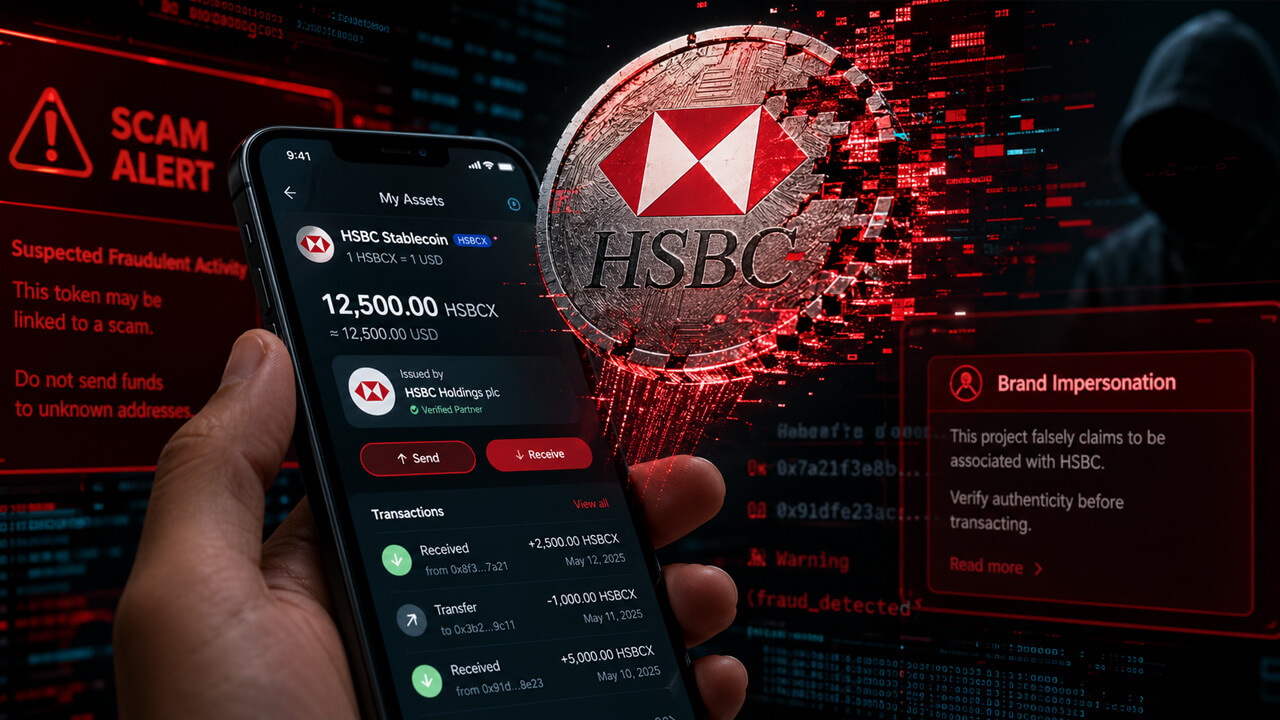
Analysis of a Sophisticated Stablecoin Scam: The Case of “HKDAP” and “HSBC”
In the realm of digital assets, the emergence of deceptive schemes has become increasingly sophisticated, challenging even seasoned investors and regulatory bodies. One such instance, recently highlighted by the Hong Kong Monetary Authority (HKMA), underscores a novel form of fraud that leverages institutional branding to ensnare unsuspecting consumers. This report delves into the implications of this phenomenon, characterized by the fraudulent tokens bearing the tickers “HKDAP” and “HSBC.”
Overview of the Regulatory Alert
On April 28, 2026, the HKMA issued a regulatory alert cautioning the public about the aforementioned tokens, which surfaced in the market without any affiliation to licensed stablecoin issuers. Notably, both HSBC and Anchorpoint Financial confirmed they had not launched any regulated stablecoins as of that date. This scenario exemplifies a fundamentally different type of scam within the stablecoin sector—one that does not rely on typical fraudulent tactics such as unrealistic return promises or anonymity.
Institutional Branding as a Mechanism for Deception
The institutional credibility associated with established financial entities like HSBC serves as a deceptive vehicle for fraud. The historical trust built over decades allows scammers to exploit these names without needing to fabricate elaborate schemes typical of conventional scams. Ordinary consumers, perhaps unaware of the actual licensing status of these tokens, may easily fall victim to such scams due to the weighty reputation carried by these brands.
Contextual Background
The HKMA’s decision to grant its inaugural stablecoin issuer licenses to HSBC and Anchorpoint on April 10, 2026, marked a significant milestone in Hong Kong’s digital asset landscape. With only 5.6% of applicants receiving licenses under the Stablecoins Ordinance—effective August 2025—the rigorous nature of this regulatory framework was evidenced. Central to this framework are principles such as:
- Full reserve backing
- Identity-verified wallets
- Ongoing disclosure requirements
Implications for Public Trust and Regulatory Framework
The existence of fraudulent tokens during a preparatory phase for legitimate products poses significant risks to public confidence in Hong Kong’s regulatory ecosystem. As HSBC prepares to launch a Hong Kong dollar-denominated stablecoin in late 2026—fully backed by high-quality liquid assets—these scams threaten reputational damage at a critical juncture.
Regulatory Preparedness and Challenges
Despite prior warnings from the HKMA regarding entities misrepresenting their licensed status, the appearance of these fraudulent tokens indicates substantial challenges inherent in legal deterrence mechanisms. The penalties outlined in the Stablecoins Ordinance—including fines up to HK$5 million and potential imprisonment for unauthorized issuance—are rigorous; however, they may not be sufficient to deter determined fraudsters.
The Authentication Dilemma in Digital Finance
The ongoing challenge for both HSBC and Anchorpoint extends beyond immediate reputational concerns; it encapsulates a broader dilemma regarding consumer authentication within an increasingly complex digital finance landscape. In traditional banking, brand integrity is fortified through robust regulatory oversight and consumer protections. Conversely, in crypto markets, token identifiers can be replicated with alarming ease, creating an environment ripe for exploitation.
The Need for Proactive Measures
The implications of this authentication problem necessitate that institutions prioritize consumer education and verification mechanisms as core components of their product offerings. Essential strategies include:
- Implementation of wallet-level verification systems for authentic tokens
- Maintenance of an accessible and up-to-date public registry of licensed issuers
- Collaboration with exchanges to identify and flag unauthorized uses of institutional names
- Sustained consumer outreach efforts aimed at fostering vigilant transactional practices
Concluding Remarks: A Global Perspective on Regulated Digital Assets
The ramifications of this incident extend well beyond Hong Kong’s borders, as jurisdictions worldwide endeavor to cultivate regulated frameworks for stablecoins. The burgeoning global market—valued at approximately $315 billion—continues to attract attention from both legitimate financial institutions and opportunistic scammers alike. With bank-branded alternatives still emerging within this landscape, it is imperative that regulatory bodies enhance their focus on consumer education and authentication measures to mitigate risks associated with brand imitation.
The HKMA’s existing initiatives—including the maintenance of a public register for licensed stablecoin issuers—constitute foundational steps toward safeguarding consumer interests. However, these measures must be coupled with active engagement strategies that ensure consumers recognize and utilize available resources before engaging in transactions involving digital assets.