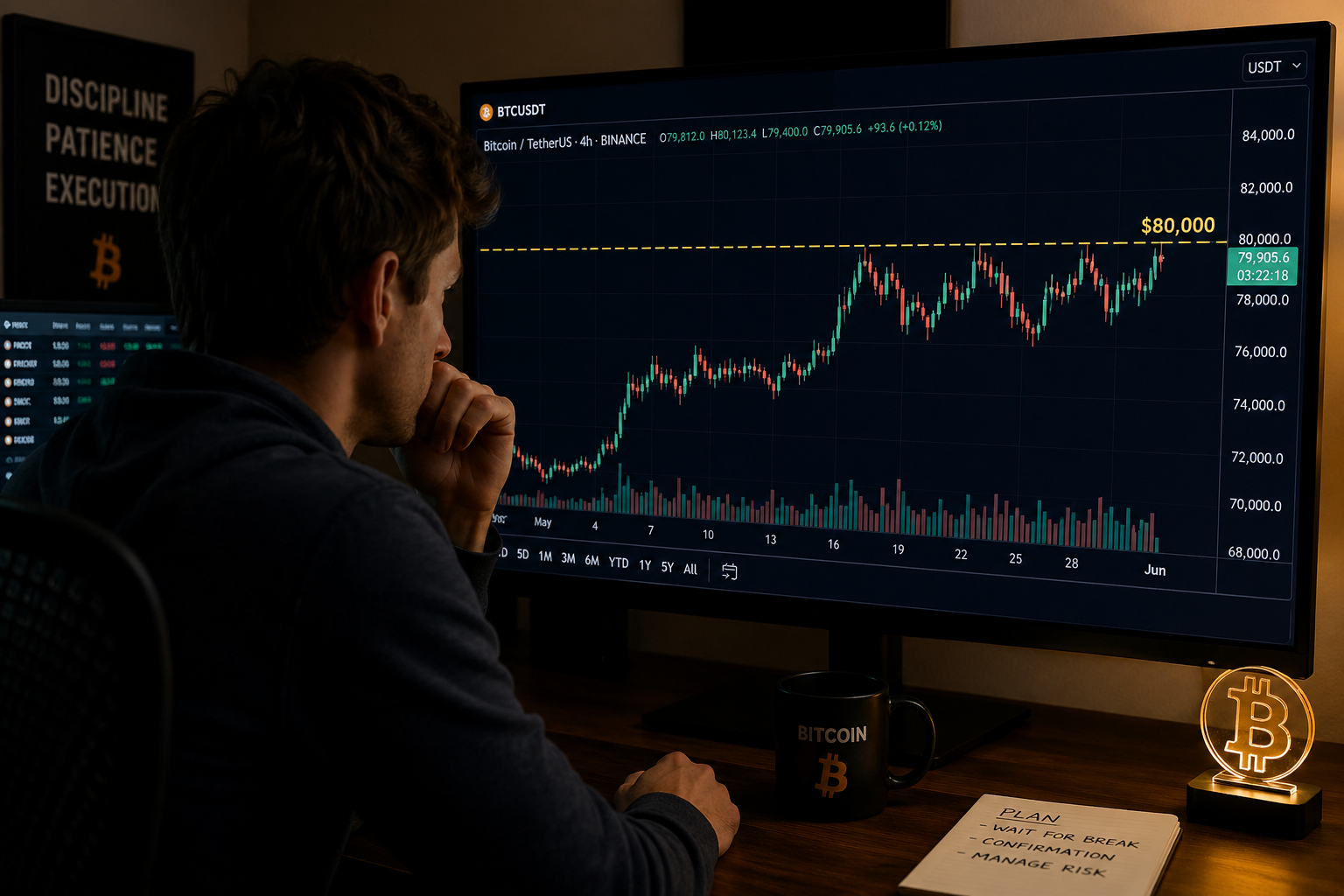
Bitcoin’s Ascendance Above $80,000: An Analytical Examination of Decoupling from the S&P 500
The recent surge of Bitcoin above the $80,000 threshold beckons a critical analysis of whether this divergence from the S&P 500 signifies a genuine macroeconomic regime shift or merely reflects the interplay of liquidity within disparate market frameworks. Following a prolonged period in which Bitcoin exhibited correlated directional movements with U.S. equities—characterized by volatility and systemic stress—the cryptocurrency appears to be undergoing a decoupling process from the AI-influenced trajectory of the S&P 500 index.
Market Dynamics and Divergence
This divergence manifested during a period characterized by pronounced pressure on traditional equities. The price of oil surged following renewed hostilities in the Middle East, Treasury yields experienced an uptick, and the U.S. dollar demonstrated firmness; conversely, U.S. stock indices witnessed declines from their prior peak levels. Notably, Bitcoin maintained its position near the $80,000 mark rather than conforming to the downward trend observed in the SPY index during similar oil price escalations.

The Complex Interplay of Market Variables
The prevailing data elucidates a market landscape that defies simplistic interpretations of asset behavior amidst stress. Bitcoin’s trading dynamics now appear intricately linked to an amalgamation of factors: an AI-driven risk appetite, demand associated with exchange-traded funds (ETFs), and geopolitical shocks related to oil prices that are compelling bond markets to regain their prominence.
The subsequent day introduced further complexities to this narrative. As oil prices eased and U.S. futures exhibited an uptick, the observed cross-market divergences seemed to pivot direction.
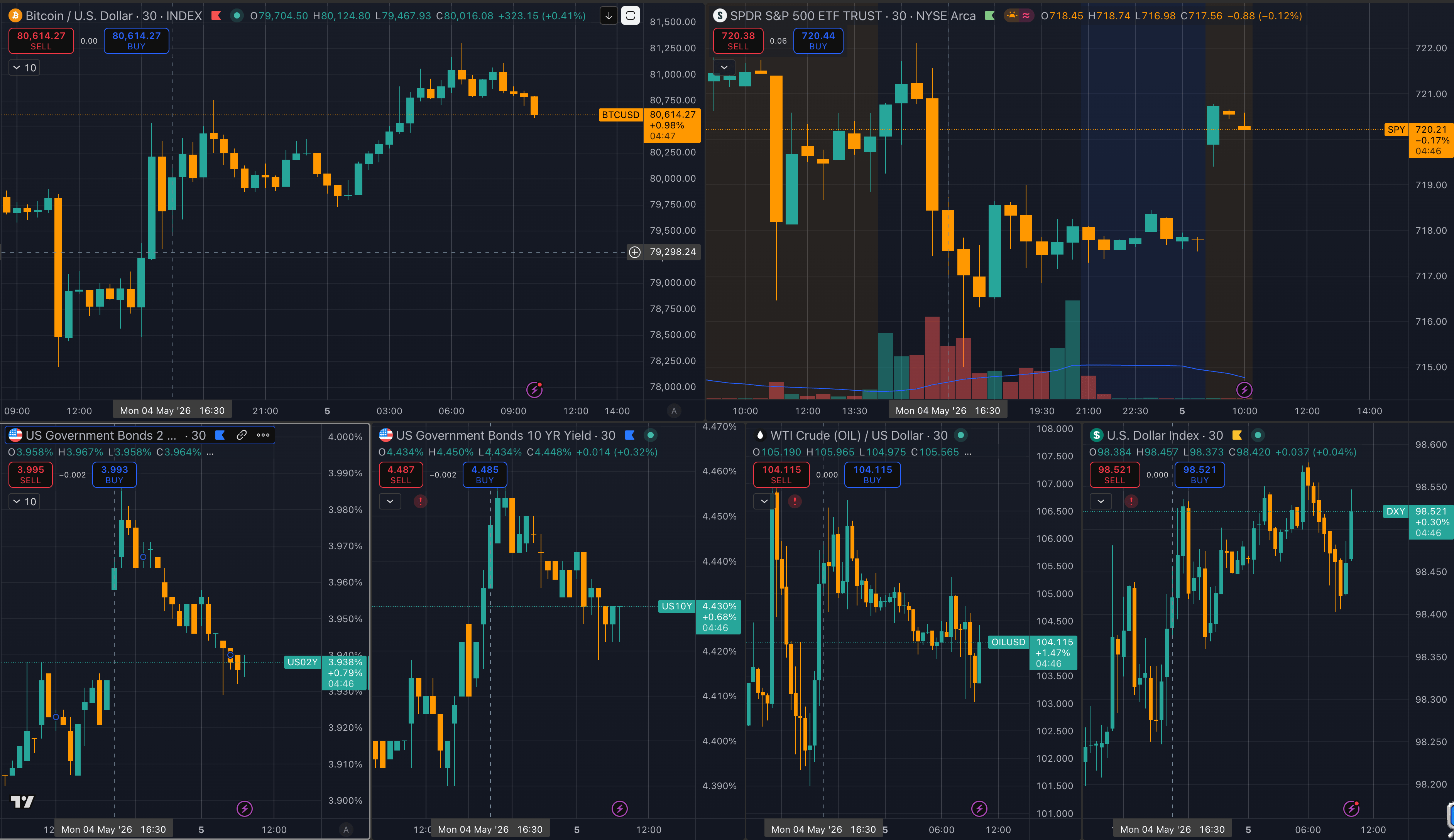
If Bitcoin can sustain its ascent while the SPY declines and subsequently soften as equities strengthen, it suggests that the narrative surrounding Bitcoin may not merely revolve around a singular correlation breaking but instead reflect an asset responsive to varying leading markets at distinct temporal intervals.
A Dichotomy Between Oil Shocks and Risk Appetite
The trading session on May 4 provided an authentic macroeconomic backdrop for this divergence: the S&P 500 experienced a decline of approximately 0.4%, while Brent crude oil surged by an astonishing 5.8% to settle at $114.44 amidst escalating tensions in the Middle East that complicated U.S. efforts to stabilize shipping routes through the Strait of Hormuz.
Within this context, Bitcoin found itself positioned distinctly apart from traditional equities; trading around $80,743 as of May 5—reflecting a more than 2% increase over a single day and over 20% over a thirty-day horizon—indicates significant market activity.
The overall cryptocurrency market capitalization stands at approximately $2.67 trillion with Bitcoin’s dominance nearing 60.6%. Such substantial figures suggest that movements in Bitcoin carry implications that transcend isolated altcoin fluctuations.
When Bitcoin exhibits resilience against traditional equity pressures during periods of geopolitical turmoil affecting oil prices and interest rates, it prompts inquiries regarding the presence of new market entrants or whether established correlations are deteriorating under evolving circumstances.
This interpretation gains traction considering recent analyses indicating non-blockchain drivers influencing market movements; for instance, Bitcoin’s resurgence past $80,000 was initially catalyzed by an Asia-driven AI risk trade supported by robust performance in semiconductor stocks prior to U.S.-market influences introducing pressures related to oil prices and Treasury yields.

This sequence underscores a complex interpretation where Bitcoin is responding not only to technology-driven impulses but also to geopolitical re-evaluations simultaneously.
The Oil Channel: A Macro Test for Financial Markets
The Strait of Hormuz constitutes a critical junction for global oil transit; approximately 20.9 million barrels per day flowed through this strait in the first half of 2025—accounting for nearly one-fifth of global petroleum liquid consumption and one-quarter of maritime crude oil trade.
This pivotal context expands beyond mere crude price fluctuations; any protracted disruption in this region has far-reaching implications for fuel pricing trends, inflationary pressures, central banking strategies, and overall asset valuation paradigms.

This shock is formidable enough to alter macroeconomic projections significantly; the World Bank has forecasted a projected surge in energy prices by approximately 24% throughout 2026—marking this disruption as potentially unprecedented in terms of historical oil supply shocks.
The World Bank’s April commodity outlook suggested scenarios where Brent crude could average between $95 and $115 depending on the severity or persistence of Middle Eastern instabilities impacting global supply chains.

The implications for Bitcoin are multifaceted: maintaining its position above $80,000 amidst rising oil prices and Treasury yields could indicate a more enduring macroeconomic demand profile for digital assets.
Conversely, it could signify a temporal lag where Asia-driven risk appetites continue to bolster Bitcoin before U.S.-based rate influences become fully manifest within market dynamics.
The same geopolitical shock may yield divergent outcomes for Bitcoin based on prevailing investor perceptions—if regarded as a liquid vehicle for hedging against monetary instability it could see increased demand amid inflationary concerns; conversely if viewed as a high-beta asset competing with cash or Treasuries then higher yields alongside a fortified dollar would exert downward pressure on its value.
A previous analysis published by CryptoSlate posited that Bitcoin serves as an agile marketplace for repricing geopolitical risks—especially in response to shifting dynamics concerning oil supplies along with expectations related to inflation rates and liquidity conditions.
This framework continues to be relevant; however, developments on May 4 elevate expectations considerably—the earlier pattern was relatively straightforward where escalation resulted in adverse effects while periods of relief spurred positive responses.
This time around exhibits resilience from Bitcoin while numerous escalation-linked factors moved contrary to typical risk asset behavior.
This nuanced dynamic introduces another variable into the equation: The Asia-centric AI trade provided initial bullish momentum for Bitcoin prior to U.S.-centric macroeconomic trading considerations dominating subsequent market sessions.
The proliferation of ETF structures along with retail exposure through public markets indicates that brokerage activity can influence Bitcoin alongside equities driven by technological advancements concurrently facing macroeconomic headwinds from inflationary pressures associated with oil shocks.
On May 5 during Asian and European trading hours—U.S Treasury yields strengthened alongside crude oil while Bitcoin remained near $81,000 with sustained strength in Asian chip stocks contributing positively towards overall risk sentiment within markets.
The result illustrates a market structure appearing uncorrelated within individual snapshots yet simultaneously reliant upon external influences dictating price movements across various asset classes.
The Future Trajectory Amidst Multiple Market Signals
The geopolitical situation surrounding Hormuz remains precarious; ongoing U.S attempts aimed at normalizing shipping routes have tested fragile ceasefires as indicated by Iranian warnings against such maneuvers amidst reports confirming transit activity involving American vessels.
If successful normalization occurs within shipping lanes through Hormuz those developments would likely alleviate upward pressure on oil prices thereby reducing rate shocks enabling Bitcoin’s pricing dynamics to realign more closely with ETF-driven demand alongside technological risk appetites whilst stabilizing around significant benchmarks such as $80K levels themselves.
Conversely should these diplomatic efforts falter or if retaliatory actions escalate further—a more rigorous test presents itself requiring sustained resilience from Bitcoin amidst high oil valuations paired with strong dollar performance coupled alongside elevated Treasury yields creating potential headwinds against typical bullish narratives surrounding cryptocurrencies specifically BTC acting independently against traditional equity pressures would signify evidence confirming non-equity driven bids manifesting within broader financial landscapes necessitating corroboration through consistent ETF inflows derivative positioning validations leading towards sustained acceptance above critical low-$80k thresholds.
| Signal | BTC Implication | Confirmation Criteria for Breakout |
|---|---|---|
| Oil Prices Remain Elevated Above Stress Thresholds | Market Pressure Transitions from Geopolitical Risk into Inflationary Concerns Surrounding Interest Rates | BTC Sustains Value Even Amidst Firm Yields & Strengthening Dollar Dynamics |
| Easing Oil Prices Post-Hormuz Developments | Palliation of Rate Shock Allowing Reassertion of Risk Appetite Across Markets | BTC Alongside Equities Exhibit Concurrent Upward Movement Without Crisis Demand Discernibly Driving Price Action |
| Sustained Strength Amongst AI & Semiconductor Stocks | BTC Likely Engaged As A Risk Asset Within Brokerage Accounts Influenced By Broader Technology Trends | BTC Performance Correlates Positively With Tech Sector Strength Despite Macro Headwinds Presently Impacting Market Sentiment |
| Deterioration In ETF Flows & Derivative Positioning Indicators | Pricing Movements Predicated Primarily On Positioning Rather Than Sustained Demand Drivers | Breach Below Significant Support Levels Indicative Of Macro Pressures Resurfacing Against Cryptocurrencies Overall Performance Metrics |
A Multi-Faceted Approach Required Moving Forward
The evolving geopolitical landscape surrounding Hormuz continues to present significant challenges for energy markets globally which ultimately influence cryptocurrency valuations as well including but not limited solely towards BTC performance metrics evaluated against various asset classes competing under highly volatile conditions dictated by external variables determining overall investment sentiment prevailing across diverse financial sectors simultaneously necessitating holistic analysis reiterating importance placed upon correlations breaking down as multiple distinct engines propel investment actions moving forward into uncertain terrain ahead requiring vigilance across all market participants engaged actively navigating complexities inherent therein whilst assessing risks involved comprehensively along all fronts influencing financial stability going forward into future engagements surrounding these critical economic indicators shaping narratives surrounding cryptocurrencies especially given their increasingly pivotal roles played relative toward broader economic contexts defining trajectories undertaken thereafter.