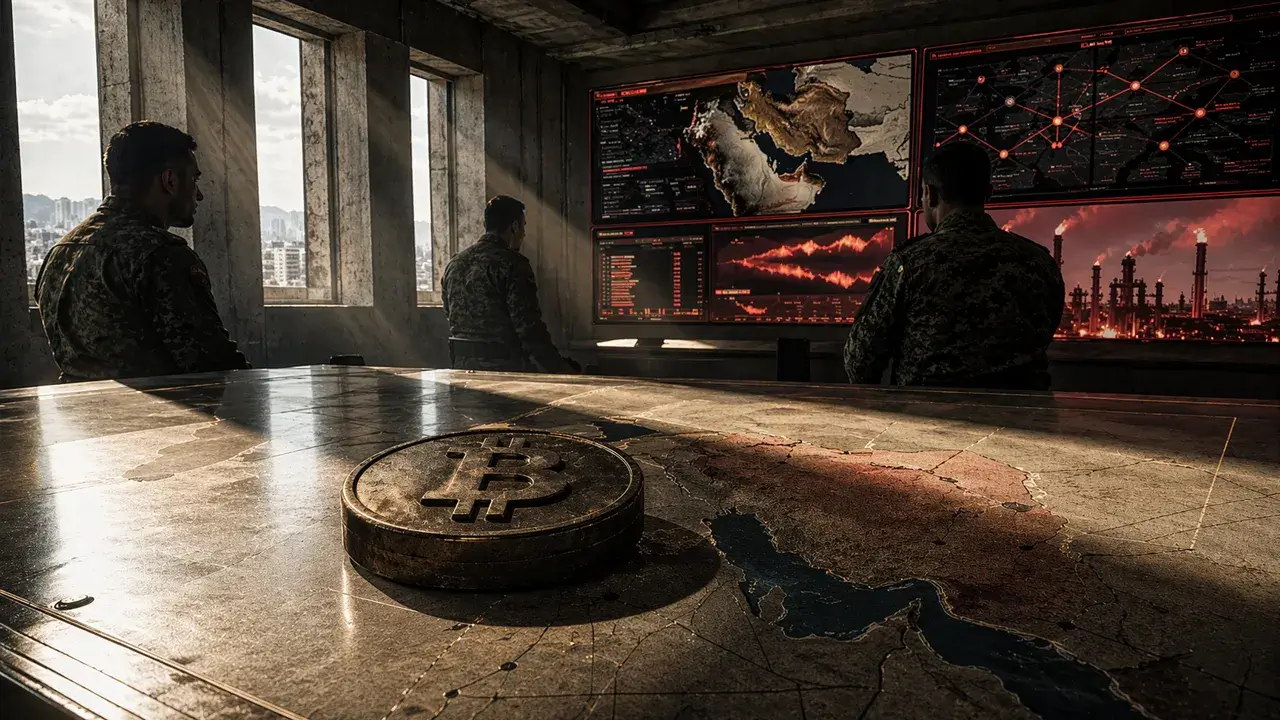


Geopolitical Dynamics and the Emergence of ‘Digital Oil’ in Tehran’s Discourse
In a moment characterized by heightened geopolitical tensions surrounding the Strait of Hormuz, Iranian Parliament Speaker Mohammad Bagher Ghalibaf employed a notably unconventional phrase, deriding “vibe-trading digital oil.” This remark, made during a live crisis, also included a critique of US Treasuries, thereby transforming a market discourse into an essential component of Iran’s wartime messaging strategy.
The superficial interpretation of Ghalibaf’s statement is relatively straightforward: an esteemed Iranian official seeks to deride speculative pricing mechanisms and assert the supremacy of tangible oil. However, the underlying implications warrant a more profound analysis. A state actor entrenched in regional conflict is now directly addressing the evolving landscape of risk assessment facilitated by cryptocurrency platforms.
This paradigm shift merits rigorous examination beyond mere linguistic nuances. Historically, oil has functioned as a potent instrument of military power, inflationary risk management, and political leverage.
Recent developments have recalibrated the channels through which such risks are articulated. As documented by CryptoSlate in late March, demand for continuous exposure to oil has intensified due to geopolitical upheavals occurring outside the operational hours of traditional financial markets.
In light of this reality, traders increasingly seek venues that remain operational during periods when conventional trading infrastructures are dormant.
The Significance of Iran’s Positioning within the Crypto Market Framework
The Iranian perspective transcends a mere intersection between geopolitics and cryptocurrency. Tehran’s discourse has evolved from viewing cryptocurrency as a mere tool for circumventing sanctions or as an ancillary payment method; it now engages with these digital assets as integral to market functionality. When a public official from a conflict zone invokes the term “digital oil,” it signifies that synthetic and crypto-linked financial instruments have gained sufficient visibility to actively participate in the informational battleground concerning price formation.
This assertion gains additional weight considering that the Strait of Hormuz is recognized as one of the world’s most critical maritime chokepoints. According to the International Energy Agency (IEA), approximately 20 million barrels per day transited this strait in 2025, constituting roughly one-quarter of global maritime oil commerce. Additionally, data from the U.S. Energy Information Administration indicates that flows through Hormuz accounted for over 25% of global seaborne oil trade and approximately 20% of overall oil consumption—figures that underscore the potential ramifications of any disruption in this region on fuel prices, shipping costs, inflationary expectations, and broader market volatility.
Ghalibaf has previously engaged with market-oriented rhetoric throughout this ongoing conflict. In a recent statement following increased U.S. pressure around Hormuz, he cautioned that American consumers would soon feel nostalgic for lower gasoline prices.
Moreover, reports indicate that Iran has contemplated utilizing Bitcoin-denominated payments for tanker transit, thus directly integrating BTC into discussions surrounding geopolitical chokepoints. Ghalibaf’s recent disparagement of “digital oil” further extends this narrative.
The Evolution of Market Dynamics During Geopolitical Turmoil
The central mechanism at play is both straightforward and robust: traditional oil markets operate under defined trading hours with established benchmarks and institutional foundations. However, conflict does not adhere to these temporal constraints; missile strikes, naval alerts, tanker disruptions, and diplomatic failures manifest at unpredictable intervals.
This dissonance generates a substantial gap between the emergence of risk factors and the re-opening of conventional trading platforms. Over recent months, crypto-native derivatives exchanges have emerged to bridge this chasm.
A salient case study is Hyperliquid, which saw its oil-linked perpetual contracts generate over $1.2 billion in 24-hour trading volume amid escalating tensions in March 2026—an indicator of traders’ growing reliance on these platforms for immediate exposure to oil markets prior to the reopening of mainstream exchanges. As reported by CryptoSlate, wartime trading dynamics propelled Hyperliquid’s token (HYPE) into the upper echelons of cryptocurrency rankings as traders leveraged its platform to express their oil-related sentiments continuously.
The Implications for Price Discovery and Market Sentiment
It is critical to note that while cryptocurrency platforms do not supplant traditional benchmarks such as Brent or WTI crude prices or legacy futures markets, they are beginning to shape initial tradable reactions when conventional systems are offline. In volatile markets, these preliminary reactions can exert considerable influence over market sentiment and frame trader expectations before established benchmarks recalibrate accordingly.
During periods of active conflict, these first-reaction pricing mechanisms can serve as preliminary indicators for broader macroeconomic movements. Ghalibaf’s rhetoric stands out precisely because it appears to dismiss a pricing mechanism that has become inconvenient for his narrative.
Tangible oil continues to dominate the real economy; however, synthetic and crypto-linked oil markets are increasingly facilitating the translation of fear, scarcity, and military risk into observable prices at times when traditional exchanges are inactive.
The Future Trajectories: Persistence or Retrenchment?
The current market landscape presents two potential trajectories: persistence or retrenchment. Should traders continue utilizing cryptocurrency infrastructures during geopolitical crises, platforms designed for continuous trading may solidify their roles in macro price discovery. Conversely, if hostilities diminish and trading volumes revert to pre-crisis norms, recent developments will still serve as critical evidence showcasing what transpires when legacy systems falter.
In either scenario, the previously held belief that oil markets, warfare dynamics, and macroeconomic risks exist within one realm while cryptocurrencies operate within another appears increasingly tenuous.
The Role of Bitcoin within Geopolitical Risk Assessment
Bitcoin occupies a nuanced position within this evolving landscape—not merely through analogy but as a logical consequence within a broader economic framework. BTC operates one step removed from direct oil transactions yet remains intimately connected; fluctuations in oil prices invariably influence inflation expectations and broader investor appetite for risk assets.
The latest energy data highlights this interconnectedness: according to the IEA’s April Oil Market Report, global oil demand is projected to contract by 80,000 barrels per day this year—a stark reversal from previous growth projections due to disruptions tied to conflicts affecting energy infrastructure.
This contraction is exacerbated by an anticipated decline in global oil supply—a staggering drop by 10.1 million barrels per day—resulting from geopolitical tensions surrounding Hormuz—the largest disruption on record.
The Ripple Effects on Monetary Policy and Bitcoin Valuation
The implications extend beyond energy sectors; escalating oil prices contribute to mounting inflationary pressures which can subsequently delay or attenuate expectations for easing monetary policies. This dynamic serves as a conduit back to Bitcoin; when market participants push rate cuts further into the future due to heightened inflation risks, speculative assets such as BTC often mirror these shifts in sentiment.
This relationship elucidates why Bitcoin may garner increased attention amidst geopolitical instability while simultaneously functioning as a risk asset during pronounced inflationary pressures. As indicated by CryptoSlate’s latest data on BTC performance, Bitcoin exhibited resilience with minimal fluctuations over various timeframes—a testament to its situational adaptability within prevailing macroeconomic conditions.
The Broader Market Implications Beyond Speculation
While Hyperliquid presents itself as the more immediate vehicle for expressing wartime market shifts directly linked to oil exposure, Bitcoin remains entrenched within a larger macroeconomic framework rather than operating independently above it. The distinction lies not merely in speculative behavior but reflects an evolving paradigm wherein continuous access to macroeconomic risks becomes increasingly recognized as an independent business model within financial ecosystems.
Conclusion: Navigating Complex Intersections Between Conflict and Finance
The human dimension underlying these dynamics may often elude notice; while most individuals might never engage directly with crypto-based oil contracts, they will inevitably experience the repercussions if wartime risks sustain pressure on energy prices or jeopardize supply chains—factors that prompt central banks toward more stringent monetary policies.
Ghalibaf’s public discourse regarding price formation underscores an essential truth: price formation serves as an arena where conflict translates into tangible costs borne by consumers. In this context, the discourse surrounding “digital oil” becomes emblematic of broader struggles over who ultimately shapes initial market responses during times of crisis.
If current trends persist, the future landscape for cryptocurrencies may evolve into one less characterized by isolation from traditional finance but rather reflective of an expanded global financial system—especially during moments when conventional infrastructures are inactive amid heightened pressures. Conversely, should these trends dissipate post-crisis stabilization; recent developments will stand as critical case studies illustrating how military conflicts can catalyze significant shifts towards crypto-driven financial mechanisms—whereby Iran’s response highlights both vulnerability and opportunity in navigating complex intersections between geopolitics and finance.