
The Current Landscape of XRP Exchange-Traded Funds: An Analytical Overview
As XRP exchange-traded funds (ETFs) approach their inaugural monthly net outflow since their launch in late 2025, a significant shift in market dynamics has emerged. This phenomenon disrupts the momentum that had positioned these funds as one of the most robust early product launches within the cryptocurrency space, particularly when compared to Bitcoin.
Recent data from SoSoValue reveals that four principal XRP ETFs have experienced net redemptions totaling $28 million this month. This trend is further substantiated by CoinShares, which documents XRP-linked global funds as the poorest-performing asset class in March, with net outflows amounting to $130 million. The following figure illustrates this downward trajectory:
This downturn follows a launch phase that had propelled cumulative net inflows to approximately $1.2 billion within just four months, thereby establishing XRP as a focal point among altcoin ETFs distinct from Bitcoin and Ethereum. Nevertheless, a solitary negative month does not definitively indicate a withdrawal of institutional interest; rather, it underscores a deceleration in initial demand and suggests that sustained engagement will necessitate more substantive support beyond initial enthusiasm.
Fund Flows Decelerate While Institutional Interest Persists
Despite the subdued performance observed in March, the broader institutional interest surrounding XRP ETFs remains intact. A recent filing with the SEC by Goldman Sachs disclosed over $152 million in exposure across four spot XRP ETFs, thereby affording the token a level of traditional financial endorsement that many competing altcoins have yet to achieve.
Moreover, the March outflows do not fully encapsulate the extent to which asset managers, banks, custodians, and trading firms are positioning themselves within the XRP ecosystem and its underlying network. An analysis by EY and Coinbase revealed that 18% of institutional investors surveyed were already allocated to XRP, with an additional 25% indicating plans to augment their allocations in 2026.
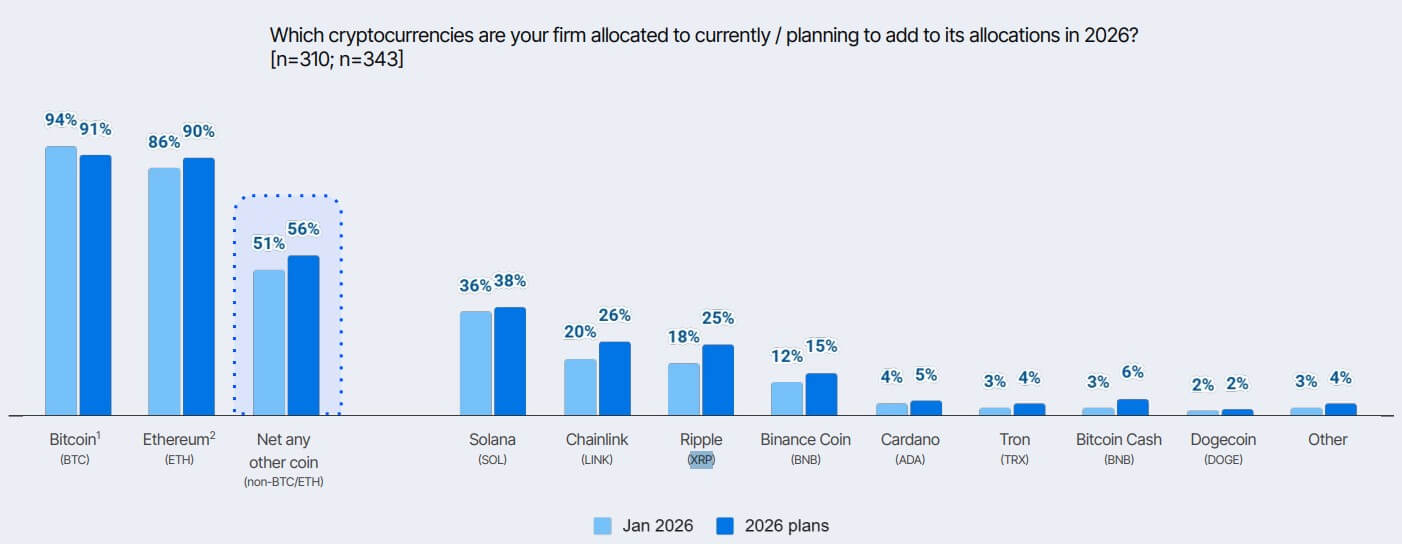
The survey results further indicate that a substantial majority of institutional respondents—73%—intend to increase their digital asset allocations within the year. Of those planning additional investments, 65% cited enhanced regulatory clarity and confidence in compliance frameworks as pivotal factors influencing their decisions. The report highlights an increasing emphasis among institutional investors on regulated instruments, custody capabilities, trading infrastructure, and tokenization mechanisms compared to previous years.
Institutional Infrastructure Development and Regulatory Compliance
The findings illustrated that a significant portion of institutional participants—69%—aim to prioritize trading capabilities over the next biennium, while custodial services take precedence for 76% of asset owners and managers surveyed. Concurrently, regulatory compliance and security considerations have surged in importance as institutions assess potential custodial partnerships.
This evolving landscape allows for sustained demand for XRP even amid waning ETF subscriptions. It reflects a strategic transition among institutions from initial exploratory investments toward comprehensive infrastructure decisions that will solidify their long-term commitment to specific tokens.
Ripple’s Expanding Role Within Institutional Finance
The aforementioned dynamics underscore Ripple’s efforts to expand its operational footprint beyond mere payment solutions over the past year. The company’s portfolio now encompasses diverse offerings such as custody solutions, stablecoin issuance, treasury management tools, and prime brokerage services. This diversification provides institutions with numerous entry points into both the XRP ecosystem and the XRP Ledger (XRPL), extending far beyond single-product reliance.
Ripple’s strategic acquisition of GTreasury for $1 billion aims to enhance its foothold within corporate finance. Furthermore, Ripple Prime—born from its acquisition of Hidden Road—facilitates prime brokerage services encompassing clearing and financing for various digital assets including XRP and RLUSD. Consequently, the exposure associated with XRP is now more multifaceted than previous ETF inflows might suggest; March’s outflow may simply reflect Ripple’s intention to seize greater control over the institutional transaction landscape—encompassing execution services through custody solutions and treasury operations.
In this paradigm, XRP’s value proposition is increasingly decoupled from monthly fund flow metrics; rather it hinges on whether its underlying network can sustain substantial regulated usage capable of generating real transactional volume. Ripple has actively pursued licensing opportunities across multiple jurisdictions—including Luxembourg, the United Kingdom, and Australia—asserting its compliance credentials in over 70 regions while processing transactions exceeding $100 billion through its payment products.
The XRPL Tokenization Initiative: Enhancing Institutional Engagement
Simultaneously, XRPL is being strategically positioned for an increasingly compliance-oriented institutional market environment. The network has integrated compliance tools enabling real-time settlement and asset-layer programmability on its mainnet. These advancements include permissioned domains and decentralized exchanges (DEX), designed to cultivate regulated environments where access can be governed through credentials and compliance checks.
Ripple maintains its assertion that XRP remains integral to this framework via transaction fees, reserve stipulations, and its pivotal role as a bridge asset facilitating foreign exchange transactions and lending activities. Notably, XRPL’s expanding tokenization capabilities are adding another layer of appeal for institutional participants.
Data from RWA.xyz indicates that XRPL has ascended into the top ten blockchain networks for real-world asset transactions, achieving over $1 billion in monthly stablecoin volumes while establishing partnerships with notable institutional issuers such as Ondo Finance and Société Générale-FORGE.
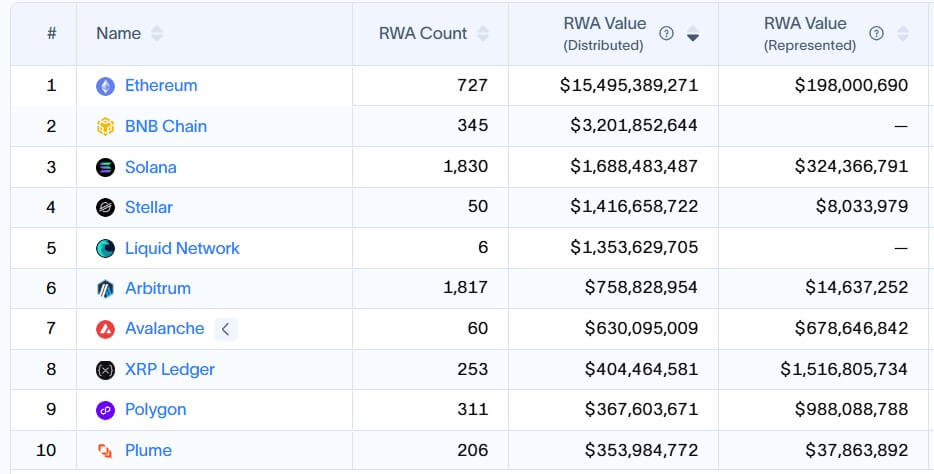

Such developments correlate closely with institutional preferences; EY and Coinbase’s survey revealed that an impressive 86% of respondents either currently utilize or express interest in utilizing stablecoins for various applications—particularly T+0 settlement. Furthermore, interest in tokenized assets surged to encompass 63% of respondents who anticipate tokenization will significantly influence trading mechanisms over the next three to five years.
Navigating Between Diminished ETF Momentum and Evolving Market Conditions
In summary, XRP occupies a unique position characterized by softening ETF momentum juxtaposed against an increasingly robust institutional framework surrounding both Ripple and XRPL. Analysis from CryptoSlate indicates that XRP has been trading around the $1.40 mark; however attempts at upward price movement appear constrained at this juncture.
Additionally, data from CryptoQuant demonstrates that Binance’s estimated leverage ratio for XRP has declined to an unprecedented low of 0.134—the lowest since early 2024—while open interest has also reset downwardly. This suggests a less congested derivatives market relative to previous periods marked by volatility-driven swings.
The trajectory of XRP’s price may hinge on whether the observed ETF slowdown is transient or indicative of a broader trend within institutional activity manifesting through trading volumes and liquidity metrics alongside secondary-market demand.