Analysis of Recent Developments in Cryptocurrency Trading Among Major Financial Institutions
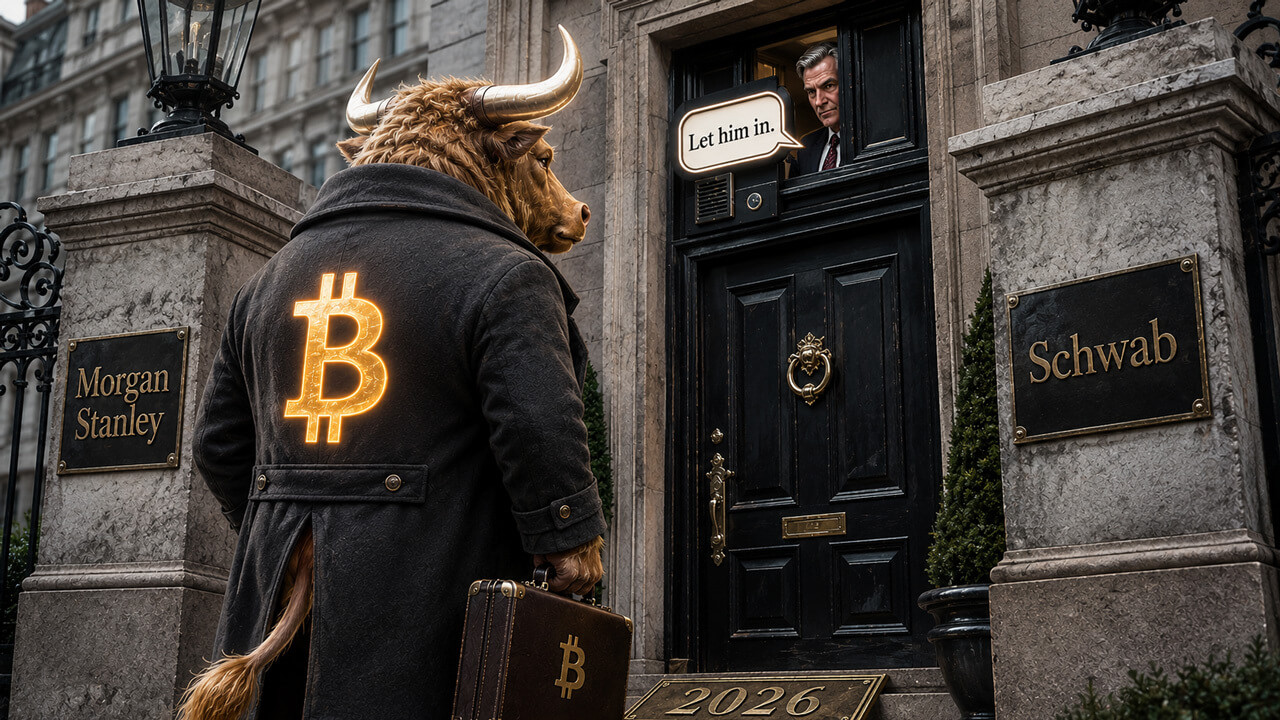
The landscape of cryptocurrency trading is witnessing a transformative shift as traditional financial institutions adapt to the evolving demands of their client bases. Notably, the cumulative net inflows of U.S.-traded spot Bitcoin Exchange-Traded Funds (ETFs) have reached approximately $59.7 billion, with BlackRock’s iShares Bitcoin Trust (IBIT) alone managing assets valued at $66.7 billion. Concurrently, prominent entities such as Morgan Stanley and Charles Schwab are actively pursuing the integration of direct cryptocurrency trading capabilities within their conventional brokerage accounts. This report elucidates the motivations behind these strategic maneuvers and the implications for the broader financial ecosystem.
Market Dynamics and Client Behavior
The impetus for Morgan Stanley and Charles Schwab’s foray into direct cryptocurrency trading can be attributed to observable client behavior indicating a burgeoning demand for such services. It is noteworthy that Charles Schwab’s clientele currently holds approximately 20% of U.S. spot crypto exchange-traded products (ETPs). This statistic underscores the concentration of demand within Schwab’s franchise, highlighting the potential revenue loss incurred when clients execute trades on alternative platforms, such as Coinbase or Robinhood.
– **Client Segmentation**:
– Schwab clients demonstrate significant engagement with existing crypto products.
– Morgan Stanley’s E*Trade platform caters to approximately 8.6 million self-directed clients, who generated an average of 1.029 million daily revenue trades in 2025, all while managing assets totaling $1.67 trillion.
The proliferation of ETFs has engendered a unique dilemma for both firms; while clients can attain Bitcoin exposure through established accounts, the execution of spot trades and retention of client relationships have predominantly migrated to competing platforms. This bifurcation creates a scenario where clients, such as those holding IBIT but engaging in spot Bitcoin transactions on Coinbase, inadvertently compartmentalize their financial activities, thereby siphoning revenue from their primary brokerage.
Strategic Timing and Market Entry
Morgan Stanley and Charles Schwab’s decision to launch direct crypto trading services is strategically timed amidst a perceived downturn in the pure-play cryptocurrency sector. Recent data from Robinhood indicates a staggering 48% year-over-year decline in app-based crypto notional volume, accompanied by a 47% drop in related revenue.
The fixed infrastructure costs associated with developing cryptocurrency products remain constant irrespective of market conditions; thus, launching during a market lull allows compliance, pricing, and service teams to refine operations before a resurgence in retail interest materializes. Historically, financial incumbents eschew confrontations with pure-play competitors at market peaks, preferring instead to act when conditions are favorable.
Regulatory developments have further facilitated this strategic entry:
– In March 2025, the Federal Deposit Insurance Corporation (FDIC) rescinded prior-approval requirements for permissible crypto activities.
– The Office of the Comptroller of the Currency (OCC) clarified that national banks could engage in transactions involving customer-custodied cryptocurrencies with appropriate risk management protocols.
– The Securities and Exchange Commission (SEC) issued interim statements addressing broker-dealer registration issues associated with certain cryptocurrency interfaces.
These regulatory shifts have collectively diminished barriers to entry, enabling firms like Morgan Stanley and Charles Schwab to advance their cryptocurrency initiatives without undue delay.
Infrastructure Development and Integration
The rollout strategy for both firms reflects a comprehensive approach to integrating cryptocurrency trading within traditional brokerage frameworks. Charles Schwab has adopted a robust institutional stack that includes:
– Custody services provided by Charles Schwab Premier Bank.
– Execution facilitated through Paxos.
– A suite of educational tools aimed at enhancing client understanding and engagement.
– A phased introduction beginning with Bitcoin and Ethereum.
This strategic framework not only positions Schwab to capture existing demand but also aligns its operational capabilities with broader institutional trends observed across the financial sector. For instance:
– Standard Chartered initiated institutional spot Bitcoin and Ethereum trading in July 2025.
– Goldman Sachs filed for its inaugural Bitcoin ETF in April 2026.
– JPMorgan began exploring institutional crypto trading opportunities as early as December 2025.
These movements indicate a systemic shift toward integrating cryptocurrency custody, execution, and client access into existing asset management infrastructures.
Outlook: Implications for Market Engagement
The potential trajectory for both Morgan Stanley and Charles Schwab hinges upon the continued recovery of ETF inflows alongside an increasing normalization of cryptocurrency as an asset class alongside equities. In May alone, Bitcoin ETFs recorded over $1.6 billion in inflows, suggesting a nascent resurgence in interest that may translate into sustained trading activity.
– **Positive Scenario**: Should ETF inflows sustain their upward momentum and brokerage clients begin perceiving cryptocurrency as an integral component of their portfolios:
– **Citi’s Twelve-Month Price Target**: $112,000
– **Bull Case**: $165,000
In this scenario, both firms stand poised to harness significant trading revenues while simultaneously deepening client relationships through enhanced service offerings.
Conversely, should legislative progress on key initiatives like the CLARITY Act stall and macroeconomic conditions remain restrictive:
– **Bear Case**:
– **Citi’s Projection**: $58,000
– **Standard Chartered Projection**: $50,000
In this less favorable scenario, cryptocurrency trading may devolve into merely a table-stakes feature—sufficient to retain existing crypto-curious clients but inadequate to drive substantial new account growth.
Conclusion
In conclusion, Morgan Stanley and Charles Schwab’s proactive strategies reflect an acute awareness of evolving client behaviors and market dynamics within the cryptocurrency landscape. By establishing direct trading capabilities ahead of anticipated demand surges, these institutions aim to capture a significant share of retail interest in cryptocurrencies before it crystallizes into mainstream adoption. The successful integration of these services will likely hinge on regulatory clarity and market conditions that favor broader engagement with digital assets.