Analysis of the European Union’s Latest Sanctions Package Against Russia: Implications for Cryptocurrency Transactions
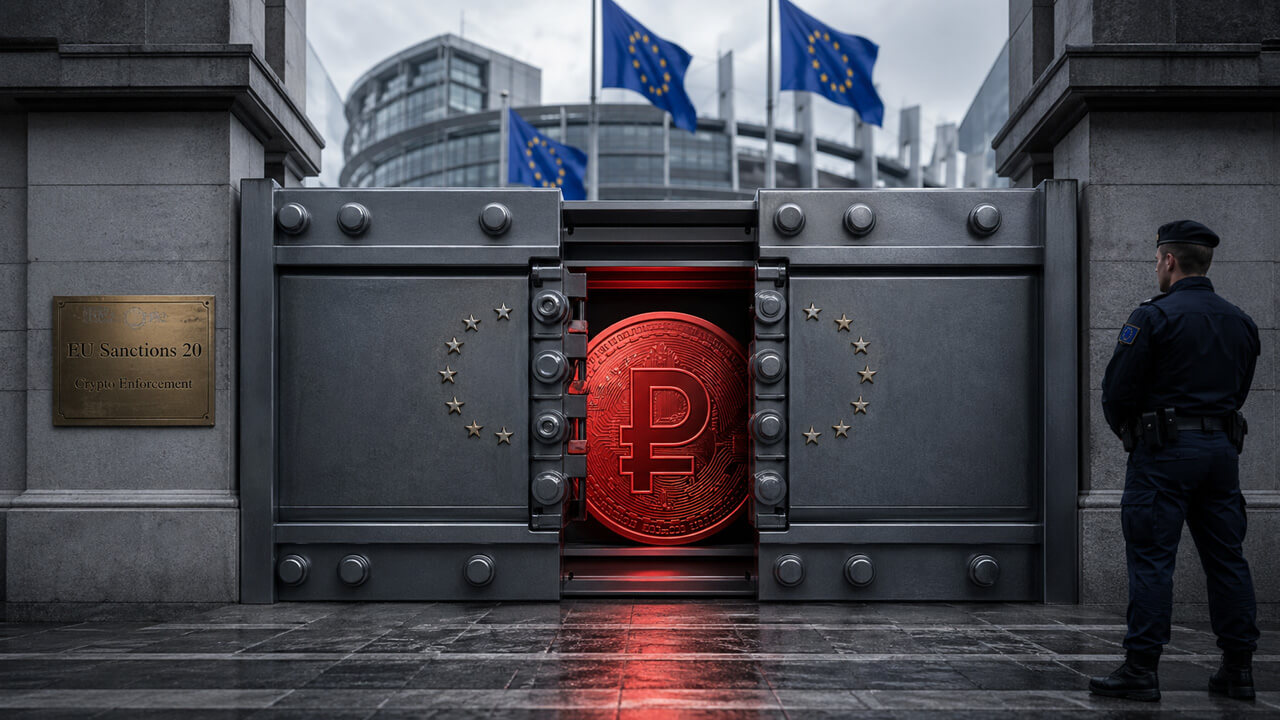
The European Union (EU) has recently implemented its twentieth sanctions package against Russia, a decisive move that further complicates the geopolitical landscape surrounding cryptocurrency. Adopted on April 23, this latest package introduces an extensive array of financial measures encompassing 120 new listings, effectively targeting various dimensions of Russia’s cryptocurrency ecosystem. Notably, it encompasses service providers, decentralized trading platforms, ruble-backed tokens, payment agents, and even extends to support for the nascent digital rouble.
Strategic Shift in Sanctioning Mechanisms
Previous iterations of sanctions predominantly focused on specific exchanges, wallets, or individual operators within the cryptocurrency space. In contrast, the EU’s recent strategy represents a paradigm shift; it targets the foundational service layer underpinning Russia-linked cryptocurrency settlements. This shift entails a broader scope that includes third-country platforms and tools capable of facilitating global monetary flows, irrespective of whether a particular exchange has been sanctioned.
The EU articulates its rationale for these new regulations as an effort to “close loopholes.” According to Council materials, Russia increasingly relies on cryptocurrency for international payments as traditional financial mechanisms become constrained by sanctions. This sanctions package stands out as the EU’s most comprehensive response in recent years, with specific restrictions on cryptocurrency transactions being among its most notable measures.
Evaluating Infrastructure-Level Risks
The primary challenge now lies in the EU’s capacity to accurately assess risks associated with cryptocurrency settlements at the infrastructure level. This necessitates a granular analysis that transcends mere identification of exchange names; it requires scrutiny of provider jurisdictions, the nature of tokens involved, the identity of settlement agents, and whether operations rely on state-backed digital currencies.
Significantly, this package enacts a blanket ban on all dealings with Russian cryptocurrency asset service providers and encompasses decentralized platforms utilized to circumvent existing sanctions. Thus, the geographical base of a provider and operational modalities have become critical considerations alongside any direct listings on sanctions lists.
Implications for Compliance and Risk Assessment
According to TRM Labs’ analysis of the new measures, this sanctions package is intrinsically linked to platform succession risks following disruptions experienced by entities such as Garantex. Their research underscores the migration from Garantex to Grinex and highlights A7A5 as a vital intermediary between these two systems. Similarly, Chainalysis corroborates this perspective from a compliance standpoint, framing the sanctions as targeted actions against categories of evasion infrastructure rather than isolated entities.
Identifying the risk associated with a given transaction is now significantly more complex. The challenge has evolved from merely screening a wallet address or an exchange name to discerning service providers operating within Russia or third-party platforms facilitating Russian liquidity. This requirement underscores a pressing need for more robust compliance frameworks capable of navigating multi-layered risks inherent in global cryptocurrency transactions.
Comprehensive Targeting Across Settlement Processes
The recent sanctions reach into five distinct components of the cryptocurrency settlement process:
| Targeted Layer | Role in Transaction Route | Compliance Implications |
|---|---|---|
| Russian crypto asset service providers | Facilitating exchange and transfer access | Counterparty screening necessitates assessment of establishment and operational nexus |
| Decentralized platforms enabling trading | Providing alternative access when centralized venues are restricted | Exposure to front-end services and platform operations becomes relevant |
| TengriCoin / Meer.kg | A third-country venue where A7A5 is actively traded | Liquidity linked to Russia may expose entities outside Russia to designation risks |
| RUBx and digital rouble support | A state-linked token along with Central Bank Digital Currency (CBDC) settlement mechanisms | Issuers and service providers face instrument-level compliance controls |
| Russian payment and netting agents | Mechanics that can obscure gross transaction flows | Monitoring must include examination of transaction routes and final destinations |
The Role of Stablecoins in Enforcement Architecture
A salient example illustrating these dynamics is A7A5. Chainalysis identifies TengriCoin (operating under Meer.kg) as a critical venue where substantial volumes of this government-backed stablecoin are transacted. The EU Council’s language regarding A7A5 reflects broader concerns about Kyrgyz entities functioning as significant conduits for Russian-linked stablecoin transactions.
This network was previously linked in U.S. sanctions reports associating Garantex, Grinex, and A7A5 under earlier enforcement pressures. The EU’s current package solidifies these route-level concerns within its own sanctions architecture.
The introduction of RUBx amplifies this framework by adding another layer focused on stablecoins. Initially conceived by Rostec as a ruble-pegged token on the Tron blockchain alongside RT-Pay, RUBx is now prohibited under EU regulations along with any support for the evolving digital rouble—a CBDC being developed by the Bank of Russia.
A Comprehensive Compliance Approach Required
This policy development signals a strategic pivot within the EU aimed at treating stablecoins, CBDC projects, and their associated service providers as integral components of a sanctions-relevant payment infrastructure. The implications extend beyond mere token ticker identification; they necessitate an understanding that any ruble-backed asset linking sanctioned businesses to liquidity implicates its issuer, trading venue, service provider, and supporting infrastructure within the broader risk landscape.
The comprehensive compliance measures necessitated by this sanctions package will likely lead to increased friction within cryptocurrency settlement processes involving Russian connections. As issuers and exchanges intensify scrutiny over any Russia-linked activities—extending beyond established entities to include potentially unlisted newcomers—the costs associated with settling such transactions are expected to rise significantly.
Moreover, there is potential for operational migration toward less transparent venues as businesses seek alternatives to circumvent these stringent regulations. The EU’s response aims not merely at individual entities but seeks to dismantle the architectural frameworks facilitating such routes while simultaneously targeting third-country financial institutions involved in these transactions.
The integration of stablecoins and digital roubles into the EU’s sanctions playbook marks a pivotal moment wherein cryptocurrency rails have been acknowledged as legitimate financial infrastructure warranting rigorous oversight. The pressing concern remains whether regulatory enforcement can adapt swiftly enough to keep pace with evolving circumvention strategies within these complex networks.