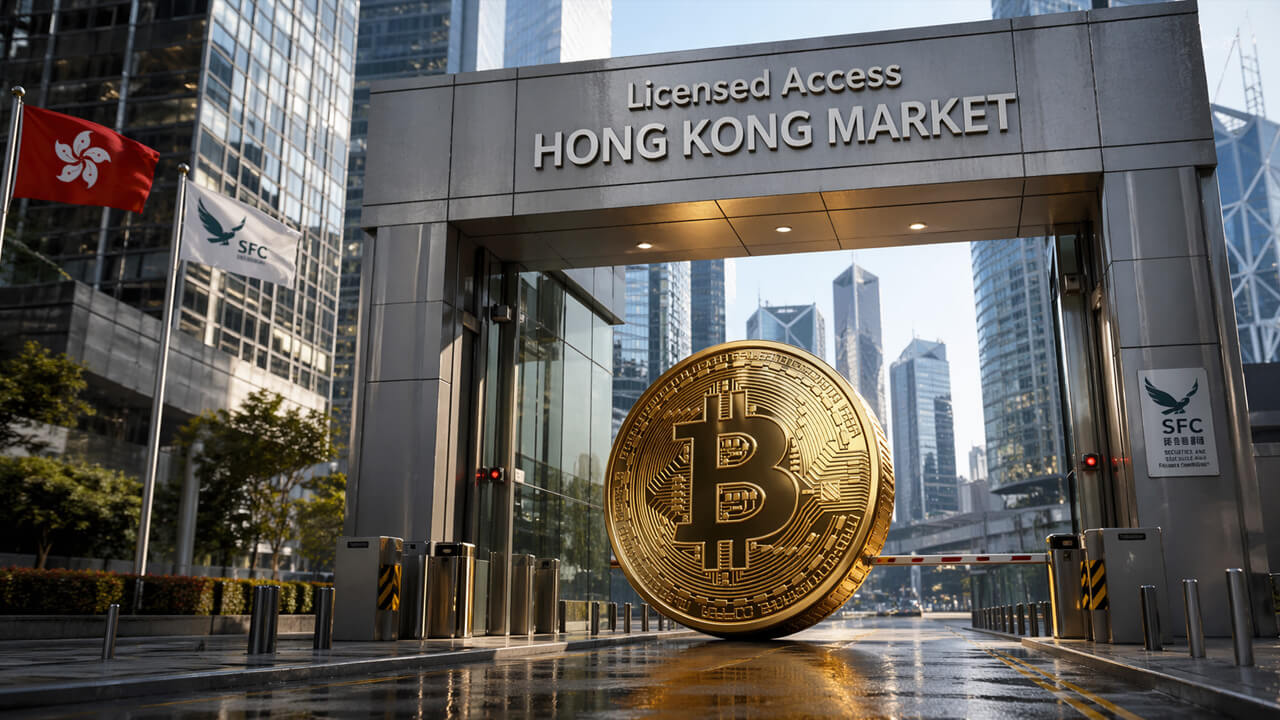
Strategic Initiative to Attract Bitcoin Capital: The Case of Hong Kong
The financial landscape is witnessing a significant shift as a Hong Kong-listed enterprise aims to attract over 10,000 Bitcoin (BTC), a target that equates to approximately $760 million at prevailing market valuations. This ambitious endeavor is not merely about the quantum of Bitcoin sought; rather, it encapsulates a comprehensive strategy aimed at establishing a regulated asset management framework that caters specifically to Asian investors.
Contextual Background: The Imperatives Behind the Strategy
Hong Kong is positioning itself as a strategic hub for substantial pools of Bitcoin capital, thereby allowing investors to operate within a familiar regulatory environment without resorting to American Exchange-Traded Funds (ETFs) or offshore trading platforms. Li Lin, the founder of HTX (previously known as Huobi), has articulated plans to transition a trading infrastructure and investment team from his family office, Avenir Group, to Bitfire Group, which is listed in Hong Kong. Bitfire is poised to launch Alpha BTC, a regulated investment strategy aimed at attracting significant Bitcoin investments.
This initiative reflects a broader trend wherein Asian capital has increasingly engaged with Bitcoin through established financial conduits. Avenir Group has emerged as one of the preeminent holders of U.S. Bitcoin ETF exposure, exemplified by its substantial $908 million position in BlackRock’s IBIT. This underscores the reality that a significant portion of Bitcoin ownership among Asian investors is facilitated through Wall Street instruments, revealing a critical gap in local market offerings.
Strategic Objectives: Bridging the Gap in Local Financial Infrastructure
The crux of Bitfire’s proposition lies in addressing the disconnect between Bitcoin as an asset and the requisite regulatory framework that institutional investors demand. The global nature of Bitcoin allows for seamless transactions; however, large-scale investors typically require structured mechanisms encompassing custody solutions, risk management protocols, audited financial statements, and compliance with legal frameworks.
This need for structure has precipitated the rise of spot Bitcoin ETFs in the United States, which provide an avenue for investors to gain exposure to Bitcoin via conventional brokerage accounts, thus integrating it into traditional financial systems. While there has been notable engagement from Hong Kong-linked capital utilizing this route—evidenced by Laurore Ltd.’s $436 million IBIT position—the predominant access remains entrenched within the U.S. market.
Conversely, Hong Kong’s initiative seeks to localize this access by establishing regulated entities that resonate with Asian investors’ preferences and regulatory necessities. This localized approach facilitates several advantages:
- Enhanced communication with Asian investors within their time zones.
- Adherence to regional regulatory frameworks that govern equity markets and structured products.
- Legal clarity regarding jurisdictional matters and regulatory oversight.
The Evolution of Hong Kong’s Regulatory Framework
Hong Kong has embarked on an extensive preparatory phase over the past two years to solidify its role in this burgeoning market. The Securities and Futures Commission (SFC) has undertaken several initiatives:
- Licensing virtual asset trading platforms.
- Expanding the scope for regulated financial products.
- Facilitating improved market liquidity by allowing licensed platforms to connect with global order books.
A noteworthy development occurred in November 2025 when the SFC announced provisions permitting locally licensed platforms to share global order books with overseas counterparts—a strategic concession designed to enhance Hong Kong’s connectivity within the global cryptocurrency landscape.
The city has also made strides in the domain of stablecoins, having enacted legislation in May 2025 that established a licensing framework for fiat-referenced issuers; this regime became operational in August 2025. Early participants in this regulated space include notable entities such as Standard Chartered and Animoca. Collectively, these developments signal Hong Kong’s ambition to create an integrated ecosystem encompassing trading venues, stablecoin issuers, asset managers, and publicly listed vehicles—all operating under a unified regulatory framework.
The Dichotomy of Global Access Versus Local Control
While Bitcoin epitomizes a borderless financial instrument, contemporary investment behavior indicates a preference for localized exposure characterized by robust regulatory oversight. Institutional participants increasingly seek assurances in terms of custody arrangements, regulatory compliance, and legal recourse, resulting in a bifurcated operational landscape: while the asset itself can traverse borders instantaneously, the institutional frameworks governing its use are bound by local regulations and market customs.
This emerging dynamic presents opportunities for geographic competition as jurisdictions vie for dominance in facilitating Bitcoin access:
- The U.S. remains dominant through regulated access via ETFs such as BlackRock’s IBIT.
- Offshore exchanges continue to cater predominantly to retail and derivatives markets.
- Hong Kong aims to capture Asian capital desiring regulated exposure without reliance on U.S. infrastructure.
The Timeliness of Hong Kong’s Strategic Pivot
This strategic pivot comes at a pivotal moment when Hong Kong is striving to reaffirm its status as a premier financial center amid rising competition from Singapore, Dubai, and various jurisdictions across Europe and North America—each developing their respective digital asset regimes. Concurrently, stringent restrictions imposed by mainland China on cryptocurrency activities render Hong Kong an essential conduit for controlled experimentation within digital finance—a role that Beijing would likely eschew if pursued at scale within its borders.
Hong Kong has already initiated various measures aimed at expanding its crypto offerings: launching spot crypto ETFs in 2024, liberalizing exchange licensing requirements, and actively pursuing stablecoin regulations—all part of an overarching strategy to cement its status as a digital asset hub.
Challenges Ahead: Navigating Regulatory Landscapes and Market Dynamics
Despite these advancements, challenges remain palpable. A target of $760 million may attract attention but pales in comparison to the vast scale of U.S. ETF markets. Furthermore, derivative-based strategies introduce specific risks relating to options trading, market volatility, and timing discrepancies. The delicate balance between Hong Kong’s crypto aspirations and Beijing’s caution regarding rapid offshore digital asset expansion must also be meticulously managed—a tension highlighted by recent reports indicating that Chinese regulators advised brokerages to suspend real-world asset tokenization efforts within Hong Kong.
The Future Trajectory: Institutional Adoption Through Localized Structures
As Bitcoin adoption evolves, it is increasingly evident that the critical challenge transcends mere accessibility; it revolves around the systemic frameworks through which institutions engage with this asset class. Should more capital flows be channeled through Hong Kong-regulated structures, they may begin responding dynamically to local policy shifts, wealth management cycles specific to Asia, liquidity conditions prevalent within regional markets, and behavioral trends among local investors.
This could ultimately lead to a paradigm shift where price discovery mechanisms become less centered on U.S.-based platforms—especially if Hong Kong’s offerings extend beyond passive investment vehicles into more sophisticated financial products such as lending facilities, derivatives markets, structured income options, and treasury management solutions.
In conclusion, while Bitcoin may retain its identity as a singular global asset class, access modalities are becoming increasingly segmented along national lines. An investor engaging with IBIT in the United States will experience starkly different operational realities compared to a Hong Kong family office opting for Alpha BTC or an offshore trader utilizing perpetual contracts. Each distinct financial system inherently influences entry barriers, liquidity dynamics, and responses during periods of regulatory scrutiny.
This context underscores why Hong Kong’s emphasis on stablecoin development is pivotal; it illustrates Asia’s ambition to establish an alternative ecosystem independent from dollar-centric crypto frameworks while transitioning from fragmented regulatory landscapes into cohesive national regimes capable of supporting holistic market structures.
A burgeoning pool of Bitcoin capital within Asia—anchored by stablecoins and supported by licensed exchanges—has the potential not only to reshape local market infrastructures but also redefine how Bitcoin operates globally if successfully implemented under rigorously defined regulatory parameters. Should this vision materialize, Asia may cultivate its distinct capital ecosystem surrounding Bitcoin characterized by unique rulesets and flow dynamics grounded in regional investor behaviors and preferences.