


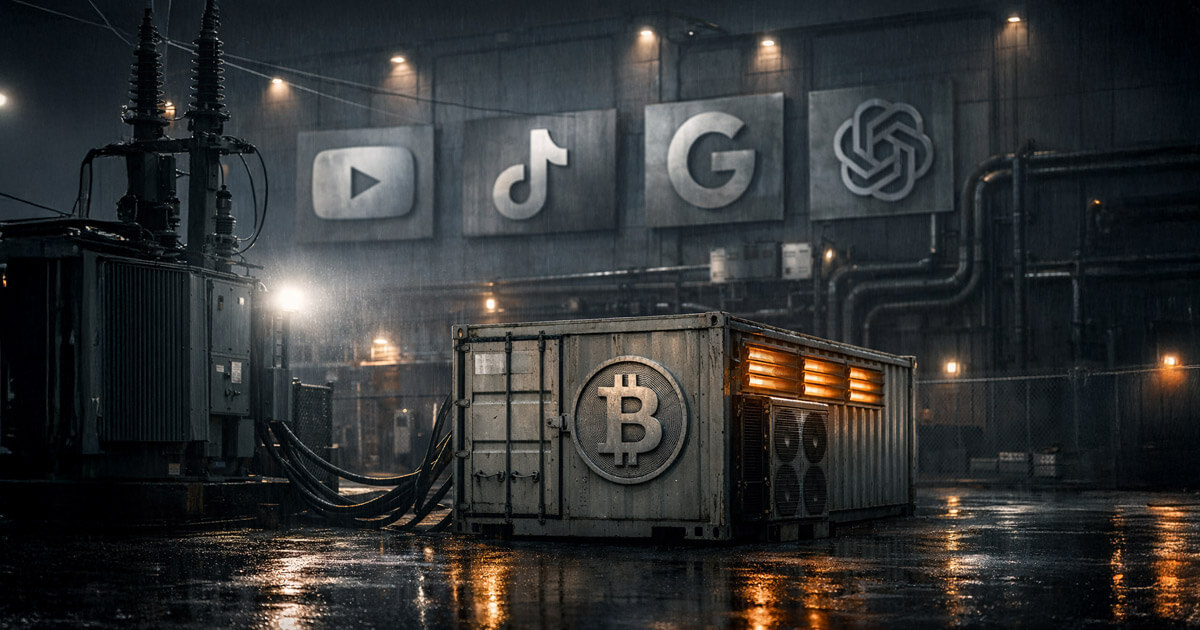
Analysis of Energy Consumption in Bitcoin Mining and Data Centers: A 2025 Perspective
In 2025, Bitcoin mining is projected to consume approximately 171 TWh of electricity, which constitutes a notable 16% of the total energy utilized by data centers globally. This figure reflects the growing prominence of Bitcoin mining as a significant player in the energy landscape, particularly in the context of digital infrastructure.
Global Data Center Energy Consumption: A Comparative Overview
Estimates regarding the total energy consumption of traditional data centers worldwide in 2025 range significantly, from 448 TWh as reported by Gartner to a broader range of 600 TWh to 1,050 TWh cited by Socomec and the International Energy Agency (IEA). This disparity highlights the variability and uncertainty inherent in projecting energy use across such a dynamic sector.
- Gartner asserts a projection of 980 TWh by 2030.
- The IEA indicates that global data center consumption may surpass 1,000 TWh this year, if not already achieved.
Moreover, AI-centric facilities are estimated to have consumed between 82 TWh and 536 TWh in 2025, accounting for approximately 11% to 40% of total data center energy usage. This wide range is attributable to both the rapid deployment of AI technologies and the inherent challenges associated with tracking precise energy consumption metrics.
Thus, traditional data centers—including those serving cloud computing, enterprise applications, streaming services, and social media—are likely to have accounted for upwards of 388 TWh in energy consumption in 2025.
| 2025 Metric | Range (TWh) | Average Used (TWh) | Notes |
|---|---|---|---|
| All Data Centers (ex BTC) | 448–1,050 | 800 | Conservative working average for analysis |
| AI-focused Data Centers (derived from total) | 88–536 | 350 | Midpoint estimate |
| Traditional / Non-AI Data Centers (derived) | 388–712 | 450 | Total minus AI (800 − 350) |
| Bitcoin Mining (Electricity Use) | 138–204 | 171 | Range spans from Cambridge estimate (~138) to Digiconomist annualized estimate (~204) |
The Projected Shift in Power Dynamics by 2030
The projections from Gartner indicate that by 2030, AI-optimized servers may account for as much as 21% of total data center power usage, escalating to an anticipated 44% share. Furthermore, these AI systems are expected to represent a staggering 64% of the incremental power demand for data centers.
- Socomec’s analysis suggests that data centers will consume approximately 536 TWh of electricity in 2025, representing around 2% of global electricity consumption. This figure could double to approximately 1,065 TWh by 2030 as demands for AI computing capabilities continue to escalate.
This analysis adopts a conservative average estimate of 1,000 TWh for all data centers in 2026. However, it is crucial to acknowledge that this figure may underestimate AI usage equivalently to Bitcoin’s annual consumption.
The lack of consensus on precise energy usage metrics underscores the complexity inherent in this domain; nevertheless, the following table provides a structured overview of projected electricity consumption across various categories for the upcoming year.
| 2026 Projection Metric | Share of Total (%) | Implied Electricity (TWh) | Notes |
|---|---|---|---|
| All Data Centers (ex BTC) | 100% | 1,000 | Projected global data center electricity footprint |
| AI Data Centers | 40% | 400 | A projected share dependent on rapid AI adoption and infrastructure expansion |
| Traditional Workloads | 60% | 600 | The remaining share after accounting for AI workloads |
| Bitcoin Mining (Context) | – | 150 | A benchmark for comparative analysis accounting for potential difficulty adjustments |
A Comparative Analysis of Energy Sources: Bitcoin Versus Traditional Data Centers
The energy mix utilized by Bitcoin mining demonstrates a noteworthy commitment to sustainability, with approximately 52.4% derived from renewable sources including hydropower (23.12%), wind (13.98%), solar (4.98%), and nuclear power contributing about 9.8%–10%. In contrast, traditional data centers exhibit an average sustainable energy utilization rate of only around 42%. In light of these developments:
- The rapid expansion of AI-driven infrastructure is anticipated to consume upwards of **400 TWh** in electricity by **2026**, reflecting an increase from just **14%** in **2024**.
This upward trajectory poses potential challenges for Bitcoin miners who may encounter competitive pressures as AI companies seek to secure firm power supplies.
The Evolution of Energy Use and Its Implications for Bitcoin Mining
The network’s difficulty reached **148.2 trillion** at the conclusion of **2025**, subsequently experiencing a slight decline at the onset of **2026** due to diminishing Bitcoin prices impacting hashrate efficiency. It is plausible that competition for low-cost electricity could result in Bitcoin’s consumption dropping to a minimum threshold of **142 TWh** by late **2026**, contingent on efficiency improvements counterbalancing hashrate growth. In scenarios where AI infrastructure outbids mining operations for energy resources, projections suggest consumption could dwindle further to between **100–140 TWh** by **2030**.
The Growth Trajectory of Data Centers and Their Energy Demands Through 2026
The escalating investment in AI infrastructure is projected to reach an astonishing **$400–450 billion** globally by **2026**, with over half earmarked specifically for advanced processors such as GPUs and TPUs. Notably:
- The Stargate Initiative spearheaded by OpenAI signifies a monumental investment commitment totaling **$500 billion**, surpassing even the inflation-adjusted expenditures associated with the Apollo space program.
This burgeoning growth extends beyond mere financial commitments; it encompasses significant advancements in computational efficiency within AI workloads. By **2026**, inference tasks are expected to command **66%** of AI computational resources—up from **33%** just three years prior—reflecting a paradigm shift towards continuous processing over one-off training events.
The Impact on Traditional Data Centers
A substantial portion of traditional data centers—including those supporting social media platforms and streaming services—is anticipated to consume around **400 TWh** in **2026**. However, available data fails to delineate specific contributions from these individual sectors within broader traditional categories. These platforms are estimated to constitute between **15–30%** of traditional workloads.
| Category | Sustainable Energy Mix (%) | Growth Rate (%) |
|---|---|---|
| AIdata Centers | 42% < td > ~40% annually < tr >< td >Traditional DataCenters < td >42%< td >~9% annually < tr >< t d >BitcoinMining < /t d >< td >52.4%< < td >Constrainedbycompetition < /t d >< tr >< t d >< strong>TotalDataCenters< /strong >< /t d >< < td >42%average< /t d > < td >< strong >2.5×from2024< /strong >
An In-Depth Look at Streaming Energy UsageThe operational footprint associated with streaming services also warrants scrutiny. For instance:
This breakdown illustrates that viewing devices account for about **72%** of emissions related to streaming activities while data transmission constitutes roughly **23%**, leaving only about **5%** attributable directly to data centers themselves. Notably:
The Role of Bitcoin Mining in Supporting Renewable IntegrationA distinctive aspect that differentiates Bitcoin mining from other digital activities is its capacity for demand response and its engagement with curtailed renewable energy sources. The flexibility inherent in Bitcoin mining operations enables them to swiftly curtail demand within seconds—a capability not typically feasible with traditional or AI-centric data centers requiring continuous power supply.
A Comparative Assessment: Why Is Bitcoin Subjected To Disproportionate Scrutiny?An observable discrepancy exists between public perceptions and actual energy consumption metrics across various digital sectors. For every terawatt-hour consumed, Bitcoin receives three to four times more critical media coverage relative to traditional data centers and twice as much compared with artificial intelligence systems. This phenomenon raises fundamental questions regarding how we contextualize energy use and environmental impacts across evolving technological landscapes. While it is imperative that all forms of digital infrastructure—including Bitcoin—are scrutinized regarding their environmental footprints, such evaluations need be proportionate and grounded in factual comparisons rather than reactive narratives driven by prevailing public sentiment.
In summary, while Bitcoin’s consumption figures warrant attention given their environmental implications, they must be contextualized within the broader narrative surrounding digital infrastructure sustainability. As we advance towards an increasingly digital future characterized by burgeoning demands for computational resources driven largely by AI technologies and traditional data center expansions, it becomes paramount that we maintain consistent evaluations across all sectors. Bitcoin’s unique capabilities afford it distinct advantages within this landscape; its role as a flexible load capable of participating in demand response programs represents an opportunity not fully recognized within existing critiques. The dialogue surrounding energy consumption must therefore extend beyond isolated metrics into holistic assessments that consider total consumption patterns, energy mixes employed across sectors, flexibility capabilities inherent within various infrastructures, and ultimately what society receives in return. If we apply rigorous standards uniformly across all technological domains—a practice essential for informed policymaking—we may find that substantial disparities exist not only between different forms of digital infrastructure but also within our collective understanding thereof. This nuanced understanding positions us better not just as consumers or critics but as stakeholders engaged in shaping our shared technological future. |
