


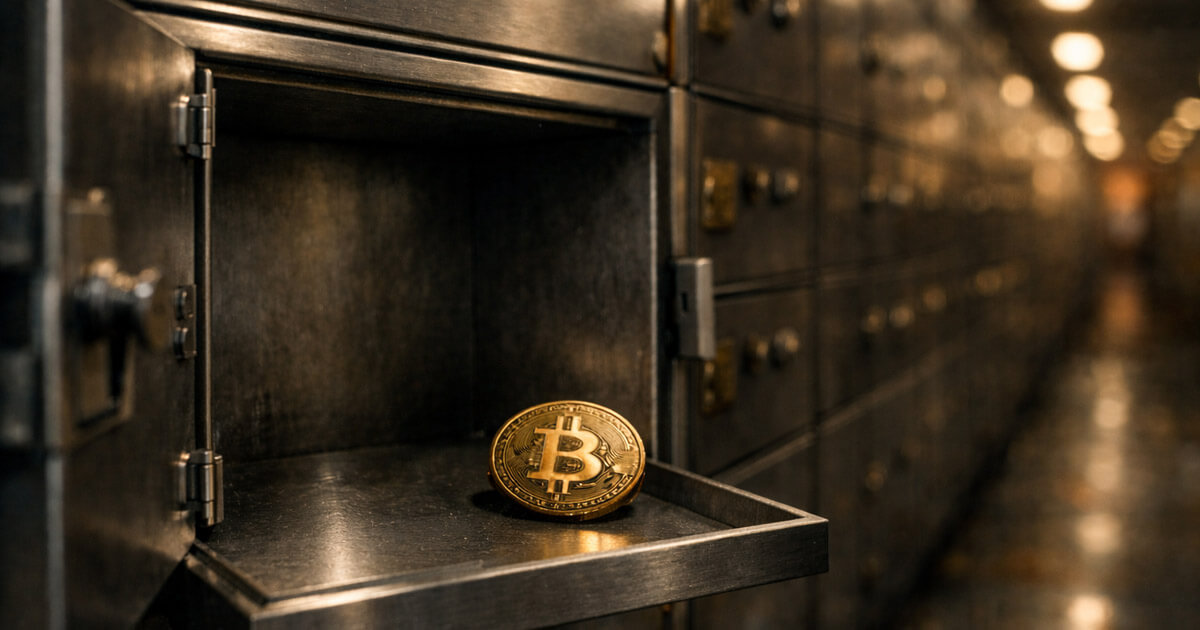
Intersection of Analog Engagement and Bitcoin Custody Dynamics
In a notable trend identified as “Analog January,” the cryptocurrency market is experiencing a significant cultural shift where investors are seeking exposure to Bitcoin while minimizing screen time. This phenomenon is increasingly gaining traction among investors who are motivated by a desire for digital minimalism, often referred to as “tech-low and slow living.” As Bitcoin re-enters a volatility regime characterized by pronounced fluctuations, the cost associated with constant monitoring becomes prohibitively high.
Cultural Reset and Market Volatility
According to a report from Livingetc, the concept of Analog January, colloquially known as “Janalog,” serves as a corrective measure against compulsive micro-checking of investments rather than an outright withdrawal from digital engagement. The article, published on January 7, 2026, cites productivity expert Emily Austen, highlighting the need for a reset in investor behaviors.
Concurrently, the cryptocurrency markets have experienced significant volatility, with recent data revealing an astonishing $874 million in liquidations within a 24-hour period. Bitcoin’s price reached an apex near $95,000 before undergoing a substantial reversal as major tokens opened at lower levels. This juxtaposition of a cultural mandate to engage less frequently with screens against the backdrop of rapid market movements is redefining custody as a lifestyle variable.
Custodial Choices and the Low-Touch Investment Paradigm
Investors currently possess various tools that facilitate reduced attention to market fluctuations, such as index funds and exchange-traded fund (ETF) wrappers. However, the majority of existing cryptocurrency interfaces continue to incentivize user engagement through price alerts, notifications, and leveraged trading options. Bitcoin stands out among widely traded assets due to its unique custodial options; it permits holders to self-custody through cold storage solutions that allow for ownership verification without necessitating an ongoing relationship with a broker or exchange. This characteristic positions Bitcoin as an “anti-screen” store-of-value asset, resembling a vault more than a conventional application.
Implications for Adoption and the Evolution of Crypto Infrastructure
The recent trends in ETF flows reflect an inverse relationship between engagement levels and custodial responsibility. In the latest data, spot Bitcoin ETFs witnessed net outflows amounting to $394.7 million, while spot Ethereum ETFs experienced modest net inflows of $4.64 million. These figures, while not directly correlating with on-chain transaction activity, underscore that the “set-and-forget” mentality can manifest through both regulated custodial wrappers and individual sovereignty via private keys.
The hardware wallet sector is positioned at the forefront of this offline custody evolution; it is scaling beyond its initial adoption phase. As per research from Mordor Intelligence, the market for hardware wallets is estimated at $0.56 billion in 2026, projected to reach $0.72 billion by year’s end and forecasted to expand to $2.58 billion by 2031, indicating a remarkable compound annual growth rate (CAGR) of 29.05% from 2026 through 2031. This trajectory suggests robust supply chains and retail infrastructures capable of accommodating demand surges triggered by market volatility or heightened security concerns.
| Metric | Figure | Timeframe |
|---|---|---|
| Liquidations | $874.01M | 24 hours |
| Spot Bitcoin ETF net flow | -$394.7M | Same window |
| Spot Ether ETF net flow | +$4.64M | Same window |
| Hardware wallet market | $0.72B | 2026 estimate |
| Hardware wallet market | $2.58B | 2031 forecast |
| Crypto stolen | $2.2B | H1 2025 |
| Thefts targeting individuals | 23% | H1 2025 |
The Security Imperative Driving Offline Custody Solutions
The Financial Times has reported a surge in demand for secure cryptocurrency devices amid escalating incidents of hacking, with Chainalysis revealing that approximately $2.2 billion was stolen in the first half of 2025 alone, 23% of which targeted individual wallets.
This alarming trend extends beyond digital breaches; crypto holders are increasingly susceptible to real-world violence aimed at circumventing even the most robust security measures in wallet technology. Incidents colloquially termed “$5 wrench attacks” involve perpetrators employing threats or coercive tactics—such as kidnapping or home invasions—to extract sensitive information like seed phrases or authorizations for irreversible on-chain transfers.
CryptoSlate has chronicled a growing incidence of these crimes throughout 2024 and 2025, emphasizing cases where victims were specifically targeted following exposure through data leaks or doxxing incidents.
Evolving Personal Security Strategies Among High-Net-Worth Investors
This rising tide of violence has prompted high-net-worth individuals to adopt more stringent personal security measures and reconsider how openly they disclose their cryptocurrency holdings due to vulnerabilities inherent in self-custody practices. Consequently, wallets featuring multiple accounts with distinct PIN codes have gained traction; this allows users to create “distress” or “honey-pot” wallets that mitigate total asset loss during physical confrontations.
The operational choice inherent in self-custody becomes increasingly apparent as individuals navigate the intersection of always-connected devices and potential phishing attacks alongside hasty transaction signing processes.
Analyzing Intent Through Exchange Balances and Market Indicators
The behavior surrounding custodial preferences can be further assessed through public indicators such as exchange balances—specifically defined by CryptoQuant’s Exchange Reserve , which tracks total coins held on exchanges and serves as an indicative measure for potential sell-side inventory shifts toward long-term storage solutions.
This analysis allows for the observation of volatility dynamics anchored not solely in immediate price action but through forward-looking metrics like the CME CF Bitcoin Volatility Index (BVX), which reflects 30-day implied volatility derived from Bitcoin options trading on CME exchanges.
The implications of volatility repricing extend beyond mere financial metrics; they influence hedging costs alongside daily transactional frictions associated with portfolio management strategies—whereby habits such as reduced screen engagement and offline storage practices may converge into observable shifts within custody paradigms.
Bitcoin’s alignment with the “Analog January” ethos provides a more seamless transition into cold storage methodologies compared to other large-cap tokens due to its established narrative as a store-of-value asset. Although Ethereum may also experience similar custodial reflexes—particularly among holders prioritizing secure transaction signing—the usage framework remains predominantly tethered to application interaction rather than pure asset preservation strategies.
XRP represents an alternative paradigm where an “anti-screen” posture gravitates towards automated processes and settlement operations rather than static vault storage solutions—even amidst broader risk-off sentiments affecting multiple tokens concurrently.
