


Market Dynamics of Bitcoin Mining Hardware: An Analytical Review
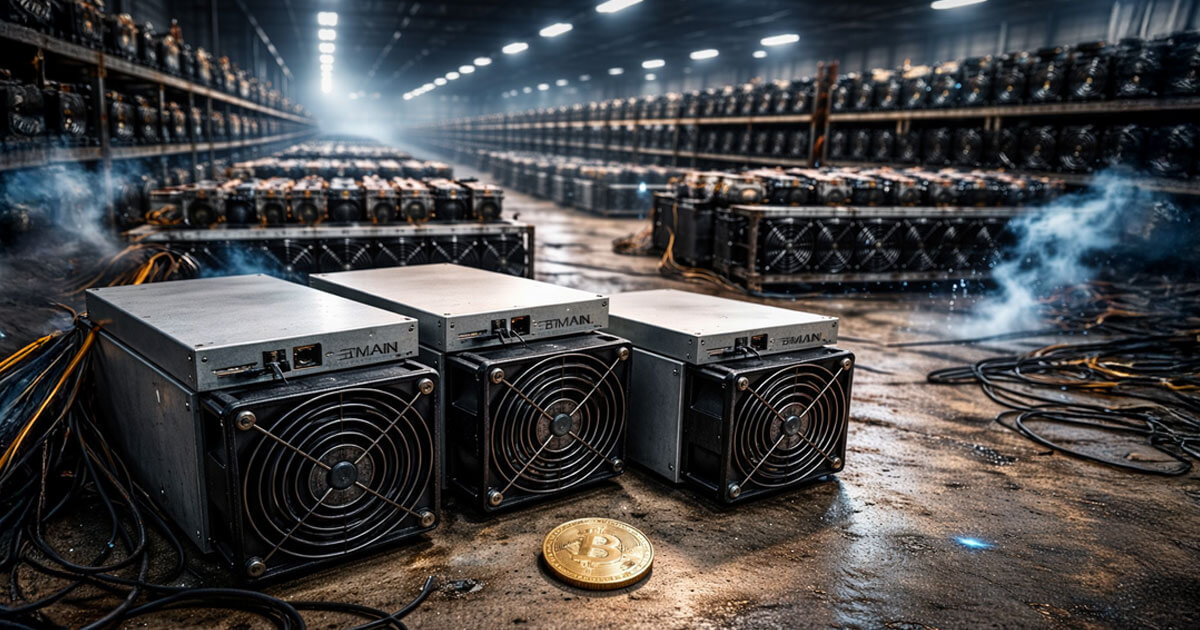
On December 23, Bitmain, a leading manufacturer of Bitcoin mining rigs, announced a significant reduction in prices for its hardware offerings. This strategic price adjustment comes in the wake of a marked decline in miner revenue per unit of hashrate, which was notably observed in November. The implications of this pricing strategy are multifaceted, reflecting broader trends within the cryptocurrency mining ecosystem.
Price Adjustments Amidst Market Conditions
The recent discounts extended to both current-generation hydro and immersion products occur during a period where the strength of Bitcoin’s market price has not correspondingly enhanced mining margins. Historically, such price strength would have precipitated hardware scarcity and rapid price escalations. However, current conditions reflect a paradigm shift in miner economics.
According to TheMinerMag, the price of a container bundle for the S19 XP+ Hydro model, which operates at approximately 19 J/TH, is now positioned near $4/TH, with shipments slated to commence in January 2026. Furthermore, internal pricing data indicates that certain S19 Hydro variants may be available at rates as low as $3/TH, while newer S21 immersion or hydro models are quoted between $7 and $8/TH prior to any applicable discounts.
In conjunction with these hardware offers, Bitmain has introduced hosting packages featuring power rates ranging from approximately 5.5 to 7.0 cents per kilowatt-hour (kWh), supplemented by an additional management fee of about 0.3 cents/kWh across various geographic locations.
| Metric | Recent Datapoint |
|---|---|
| Bitmain Promo Price (Bundle Basis) | ~$4/TH for S19 XP+ Hydro container bundle (Dec. 23 promo), shipping from Jan. 2026 |
| Quoted Range in Internal Lists | As low as ~$3/TH (some S19 Hydro), ~$7–$8/TH (some S21 hydro/immersion), before coupons |
| Hosting Rate Range in Bundled Offers | ~5.5–7.0¢/kWh + ~0.3¢ management fee |
| Hashprice (Nov. 2025 Average) | $39.82/PH/day |
| Hashprice (Nov. 22, 2025) | $35.06/PH/day (new low) |
| Network Difficulty (Nov. 2025 Monthly Average) | ~153.33T (+2.7% m/m) |
The Impact of Compressed Hashprice on Miner Economics and ASIC Demand
The prevailing price dynamics underscore a fundamental constraint: miner demand is increasingly influenced by payback calculations when hashprice remains compressed. Luxor’s analysis for November 2025 indicates that the USD hashprice averaged $39.82 per PH per day, plummeting to $35.06 on November 22—a notable decline.
The same review highlighted that transaction fees constituted only a minor portion of total rewards during this timeframe, thereby limiting financial relief for operators amidst an average network difficulty of approximately 153.33 trillion hashes.
This evolving economic landscape alters buyer behavior significantly, undermining the traditional correlation of “BTC up equals ASICs up.” Hashprice effectively represents revenue generated per unit of hashrate; Luxor elucidates it as daily income per PH before operational costs are accounted for.
For instance, at a hashprice of $40 per PH per day, gross revenue translates to about $0.040 per TH daily since one PH is equivalent to 1,000 TH. Consequently, a rig operating at 200 TH/s would yield approximately $8 per day at this rate.
If we consider an energy consumption rate of around 19 J/TH, the power draw for such a rig would approximate 3.8 kW (19 J/TH multiplied by 200 TH/s), resulting in an energy consumption of about 91.2 kWh daily. With an average energy cost estimate of $0.06/kWh—situated within the hosting price range cited by TheMinerMag—the associated energy expenditure would be approximately $5.47 per day.
This calculation leaves miners with a net margin of roughly $2.53 per day prior to accounting for facility fees, maintenance costs, downtime, pool fees, and potential curtailment impacts. At a hardware acquisition cost of $4/TH, the total investment for a 200 TH rig amounts to about $800, thereby establishing a simple payback period near 316 days under these margin conditions.
The implications regarding pricing strategies become evident: when potential purchasers anticipate nearly a year of payback prior to incorporating routine operational frictions into their models, the market clearing price for mining rigs becomes intricately linked to internal rate of return (IRR) thresholds rather than mere scarcity narratives.
A Supply-Side Shift: Market Dynamics and Competitive Pressures
The current cycle contrasts sharply with earlier periods characterized by protracted lead times and fragmented distribution channels that exacerbated supply shortages and facilitated rapid inventory repricing during demand surges.
This contemporary market landscape exhibits traits akin to an industrial sector where manufacturers adeptly manage inventory turnover amidst intensifying competition from secondary markets and diverse product tiers.
TheMinerMag has articulated that the extensive nature of Bitmain’s recent price reductions stems from weakened economic conditions coupled with heightened competitive pressures rather than being merely a promotional endeavor.
The disparities relative to previous market manias remain pronounced when examining historical comparisons in pricing metrics ($/TH). For instance, hardware operating within the range of 25–38 J/TH transacted at approximately $105/TH in November 2021; however, by March 2024, this figure had diminished to around $12/TH despite Bitcoin achieving an all-time price high during that interval.
This comparison lacks perfect alignment across generations and form factors; nonetheless, it effectively illustrates the directional shift in “hashrate purchasing power” that miners must navigate when network hashrate and difficulty levels adjust more rapidly than income derived from transaction fees.
Furthermore, Bitmain’s bundling strategy—which integrates hosting services with machine sales—highlights the evolving nature of scarcity within the market.
This bundling approach transitions the sales proposition from isolated capital expenditure considerations to a comprehensive operational framework encompassing power procurement, deployment logistics, and ongoing operations management.
In an environment where acquiring efficient megawatts at predictable prices poses significant challenges, access to reliable power sources emerges as a critical constraint in facilitating mining operations.
Diverse Revenue Streams: Mining Infrastructure and AI Integration
The allocation of capital beyond conventional Bitcoin mining activities represents another pivotal element influencing marginal demand for ASIC expansion opportunities.
Recent trends indicate that public-market narratives increasingly favor miners who strategically position their data center capabilities towards artificial intelligence (AI) applications and high-performance computing rather than exclusively maximizing hashrate outputs regardless of cost implications.
A substantial number of miners have either initiated or are currently evaluating strategies that leverage AI-related data centers as a means to diversify their revenue streams further.
The heightened investor interest surrounding substantial transactions involving AI-capable data centers has also served to elevate certain miner equities, thereby reinforcing incentives for directing incremental capital expenditures towards infrastructure capable of supporting multiple revenue avenues.
Cautious Outlook on Near-Term Mining Economics
The November review conducted by Luxor observed that forward hashprices denominated in USD for December 2025 through April 2026 experienced declines ranging from approximately 16% to 18% between November 3 and December 1; conversely, BTC-denominated forward prices exhibited an upward trajectory.
This divergence carries significant implications for operators whose expenses are denominated in USD currency units.
Despite improved conditions pertaining to BTC terms, operators remain acutely aware that their immediate budgetary constraints revolve around USD cash flow requirements—a reality underscored by persistent pressure reflected in the forward curve analysis.
The trajectory for ASIC pricing regaining its previous cyclical beta now hinges less upon fluctuations in Bitcoin’s market performance and more on sustained alterations in fee contributions alongside net hashprice adjustments post-difficulty recalibrations.
In light of the absence of a durable fee structure capable of enhancing revenue per TH over extended periods—rather than fleeting moments—potential buyers are incentivized to regard pricing metrics ($/TH) primarily as instruments for assessing payback viability.
This evolving perspective may compel original equipment manufacturers towards strategies emphasizing lower entry costs and reduced delivery risks alongside comprehensive bundled operational support mechanisms.
The forthcoming January 2026 shipping window for Bitmain’s discounted bundles will serve as a crucial litmus test regarding market commitment towards expansion initiatives predicated upon sub-$10/TH pricing amidst prevailing hashprices oscillating between $35 and $50 per PH/day.
