


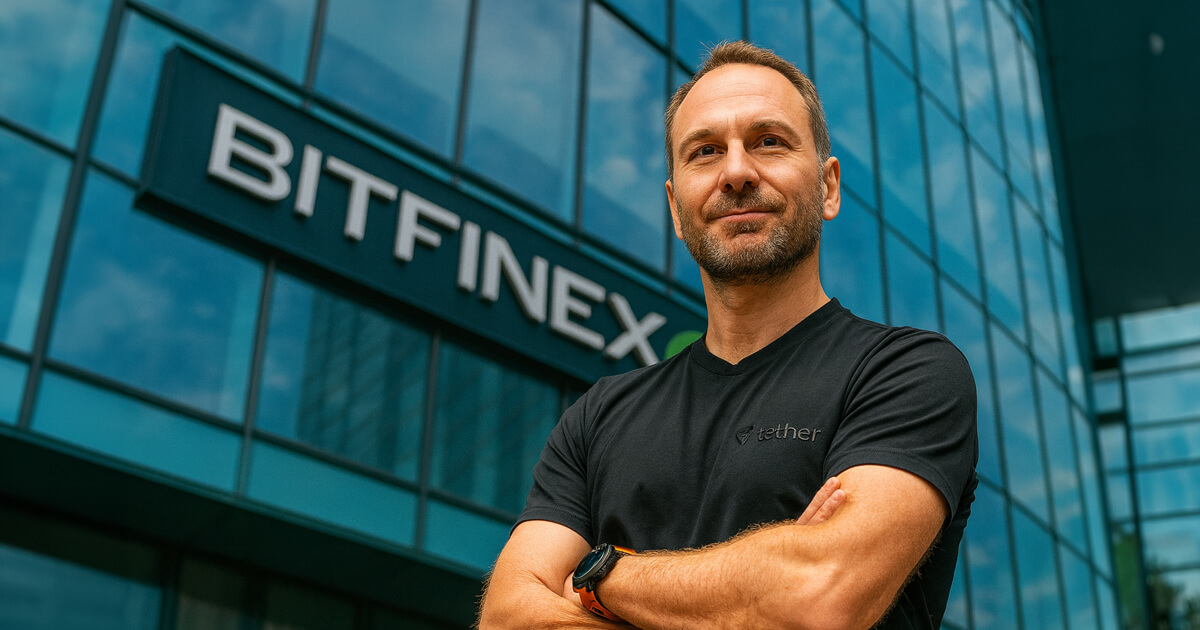
Market Dynamics in the Cryptocurrency Sector: Insights from Paolo Ardoino
The cryptocurrency market exhibits a unique volatility that often resembles a rapid descent rather than a measured decline, akin to an individual slipping on the first step of a staircase devoid of supportive handrails. This volatility is primarily attributed to the intricate interplay of perpetual contracts, options trading, and the limited availability of risk management instruments during tumultuous periods. In an exclusive discourse with *CryptoSlate*, Paolo Ardoino, Chief Technology Officer at Bitfinex, elucidated the essential components that constitute these metaphorical handrails: credit mechanisms, clearing processes, margin requirements, and the development of products tailored for professional traders navigating adverse market conditions.
The Imperative of Enhanced Hedging Mechanisms
Ardoino posits that the current shortcomings in hedging strategies can be conceptualized as a distribution challenge rather than merely a philosophical debate about market mechanics. He asserts:
> “If we make sophisticated tools more accessible and connected, institutions can operate with greater efficiency.”
In the context of cryptocurrency trading, options are ostensibly intended to serve as protective seatbelts during periods of extreme volatility; however, their practical utility has largely been superficial. Significant liquidity fluctuations surrounding expiration dates and strategic maneuvers by major players are common, yet when market downturns occur, spreads typically widen, and liquidity evaporates as participants hastily exit their positions.
The ensuing downward spiral is well-documented: limited protection leads to indiscriminate risk mitigation strategies, exacerbating market declines and further constraining available protective instruments. According to Ardoino, rectifying this situation necessitates equipping institutional trading desks with familiar and effective tools integrated into resilient infrastructure.
> “Market makers need advanced tools to hedge and manage risk, and they will gravitate toward platforms that help build a more stable market,” he elaborated.
In alignment with this vision, Bitfinex has introduced innovative instruments that reflect actual risk management practices rather than simplistic directional bets. Notably, volatility perpetual contracts—designed to track anticipated fluctuations in Bitcoin (BTC) and Ethereum (ETH)—provide discerning traders with opportunities to manage not just directional exposure but also the degree of market volatility.
> “Our new offerings, like our BTC and ETH volatility perpetuals, cater specifically to advanced traders who want to hedge or trade around market turbulence,” Ardoino stated.
The CTO emphasized that during periods of market instability, the paramount concerns for sophisticated clients center on execution reliability coupled with robust risk management capabilities.
Strategic Innovations in Derivatives Trading
Bitfinex’s commitment to enhancing its derivatives business is evidenced by its recent strategic relocation of Bitfinex Derivatives to El Salvador. This move reflects an intention to leverage regulatory clarity in a jurisdiction conducive to crypto innovation. Ardoino asserts:
> “Ultimately, for this growth to take off, the market needs the backing of forward-looking jurisdictions.”
This transition seeks not only regulatory alignment but also aims to facilitate the establishment of essential institutional infrastructure in underserved regions such as Latin America.
A pivotal aspect of this infrastructure is the implementation of a “universal account” system. Traditional options frameworks often confine collateral within segregated silos—futures in one compartment, options in another—resulting in inefficiencies where traders over-collateralize due to fragmented risk assessments. The introduction of a universal account effectively consolidates these disparate assets into a singular framework whereby a comprehensive risk engine evaluates positions across an entire portfolio.
Ardoino elucidates:
> “If they can use a universal account with a risk-based margining system like portfolio margin, they are no longer forced to silo excessive collateral for every individual position.”
He contends that such innovations will enhance overall market maturity by enabling institutional participants to hedge more efficiently, thereby fostering stability throughout both institutional and retail trading environments.
Operational Efficiencies: The Role of Integration
The current landscape reveals that options participation is predominantly concentrated within a limited array of venues due to barriers related to onboarding processes and fragmented risk management solutions. Bitfinex’s integration with Thalex aims to address these challenges by streamlining access to options trading platforms without necessitating extensive onboarding procedures.
Thalex is characterized as a specialized crypto options venue centered around BTC and ETH trading, distinguished by its low-latency matching engine and portfolio-aware risk management capabilities. Through this integration, Bitfinex facilitates direct customer access to listed options while eliminating cumbersome administrative hurdles associated with multiple platforms.
> “Our partnership with Thalex means customers can use their existing accounts and verification,” Ardoino noted. The overarching goal is to reduce operational frictions so that capital can flow more freely into the market.
Although terms like “stable settlement” and “predictable risk engines” may seem like marketing jargon, they are critical components that underpin sustained market-making activities amid turbulent conditions. Ardoino emphasizes the necessity for an environment conducive to attracting reputable balance sheets:
> “Attracting truly credible balance sheets is about providing a stable, mature, and efficient trading environment.”
This foundational stability allows for the proliferation of crypto derivative products—such as those settled in stablecoins—which are vital for cultivating a well-rounded financial ecosystem.
The Implications of Streamlined Hedging Solutions
Envisioning future scenarios where enhanced hedging mechanisms are readily available transforms how entities respond during sell-offs. For instance:
– A miner seeking crash insurance can seamlessly acquire puts without encountering liquidity constraints.
– A basis desk can strategically engage with skew while optimizing inventory management without being hindered by collateral limitations.
– Market makers may maintain active quoting even amid significant price shocks due to an integrated risk assessment framework.
Although such improvements may not directly influence price trajectories, they significantly mitigate the adverse effects associated with sharp declines. The availability of insurance options at predictable prices alleviates forced selling pressures by empowering sellers with optionality rather than compulsion.
To foster habitual engagement with hedging instruments among traders requires establishing an ecosystem where convenience is paramount—a focus on functional infrastructure rather than ostentatious marketing efforts. The venues aspiring to lead this evolution will likely embody characteristics reminiscent of traditional trading utilities rather than flashy crypto platforms focused solely on hype.
Bitfinex’s strategic roadmap encompasses innovations such as volatility products, stablecoin-settled instruments, universal accounts, and proactive regulatory alignment geared towards facilitating operational efficiency.
The ultimate test lies in whether market makers will respond positively to these developments while Bitfinex consistently delivers reliable execution and adept risk management akin to essential utilities rather than speculative environments. As Ardoino reiterates:
> “Attracting truly credible balance sheets depends on providing a stable, mature, and efficient trading environment.”
Thus, if the cryptocurrency sector aspires to achieve recognition as a legitimate asset class akin to traditional finance systems, addressing these structural deficiencies is both imperative and long overdue.
