


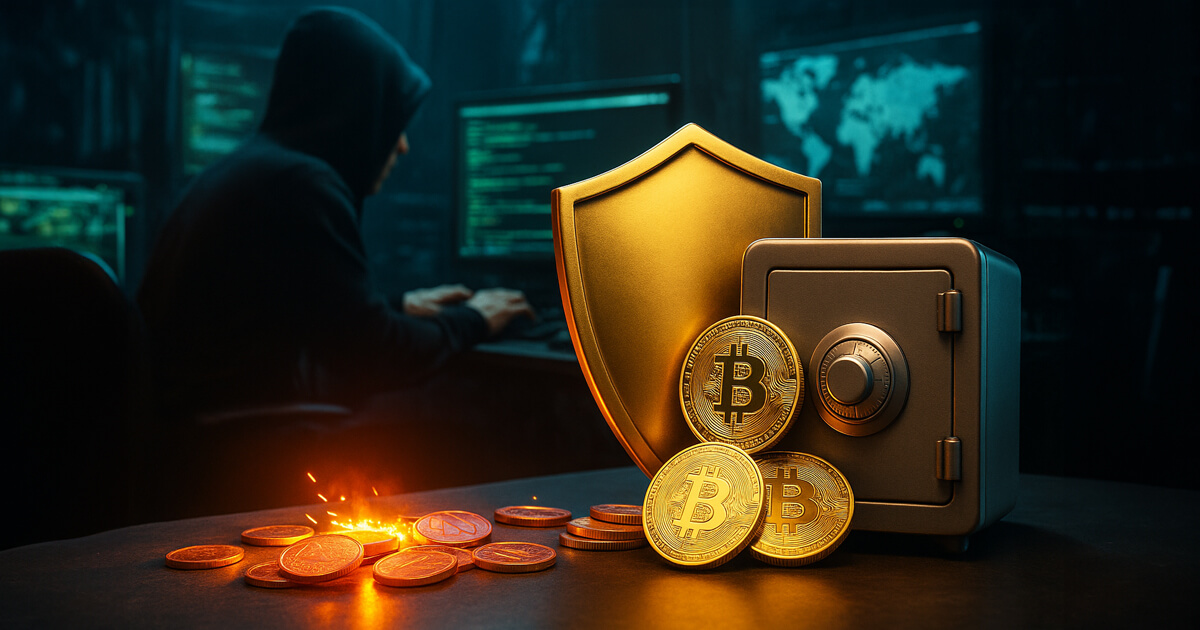
Analysis of the Hot Wallet Insurance Model in Cryptocurrency Exchanges
On November 27, 2025, Upbit, a prominent South Korean cryptocurrency exchange, reported unauthorized withdrawals amounting to approximately $36 million in Solana tokens from its hot wallet. Within hours of this significant breach, CEO Oh Kyung-seok publicly assured stakeholders that:
“The entire amount will be covered by Upbit’s holdings, with no impact on customer assets.”
This assertion echoes a similar response from Upbit six years prior when the exchange experienced a significant security breach resulting in the loss of 342,000 ETH, valued at around $50 million at that time. In both instances, customers did not incur losses as the exchange absorbed the financial impact through its reserves.
Such incidents underscore the operational framework of the hot wallet insurance model—a risk management strategy wherein cryptocurrency exchanges assume counterparty risk to safeguard user assets against platform-level breaches.
Mechanisms of the Hot Wallet Insurance Model
The hot wallet insurance model manifests in various forms:
– **Self-Insurance**: Exchanges utilize their corporate reserves to cover potential losses.
– **Dedicated Emergency Funds**: Initiatives such as Binance’s Secure Asset Fund for Users (SAFU) are established to mitigate unexpected financial impacts from security breaches.
– **Third-Party Crime Policies**: These policies provide supplemental coverage with defined limits for specified types of losses.
This model has become a standardized practice among Tier 1 centralized exchanges, effectively transforming situations that could lead to insolvency—akin to the Mt. Gox incident—into manageable operational losses that allow for rapid resumption of services.
Despite assurances that “users don’t lose,” market dynamics often react adversely. While deposits may remain intact, immediate liquidity is compromised. Security breaches can lead to frozen withdrawals, diminished order-book depth, widened spreads, and compel market makers to retract their activities, thereby exacerbating market volatility.
Case Study: Upbit’s Self-Insurance Strategy
Upbit’s approach can be characterized as an implicit self-insurance mechanism devoid of explicit policy limits. The foundational premise of this strategy rests on the exchange’s solvency and its access to liquid capital.
In both the Ethereum hack of 2019 and the Solana breach in 2025, Upbit classified the losses incurred from hot-wallet breaches as operational expenses absorbed by Dunamu, its parent corporation. The rapid response following the 2025 incident was noteworthy: at approximately 4:42 AM local time, over 54 billion won worth of various tokens were siphoned to an undisclosed address. In response, Upbit implemented immediate measures including:
– Freezing all Solana deposits and withdrawals
– Transferring remaining assets to cold storage
– Initiating collaboration with relevant projects and law enforcement agencies to freeze additional stolen assets
The company’s commitment to ensure no customer losses is substantiated by its substantial liquidity; however, it is crucial to note that such assurances lack statutory backing. There exists no external insurer to underwrite this commitment, no formal deposit insurance schemes in place, nor is there a regulatory mandate for reserve ratios.
This model operates effectively until a breach occurs that is disproportionate to the exchange’s equity, potentially straining or compromising its balance sheet.
Binance and SAFU: A Structured Internal Fund
In July 2018, Binance pioneered a structured internal fund known as the Secure Asset Fund for Users (SAFU), which allocates approximately 10% of trading fees into dedicated cold wallet addresses that are publicly accessible. Binance characterizes SAFU as a financial safety net designed for “unexpected extreme cases,” including major security breaches. As of current assessments, SAFU’s valuation hovers around $1 billion.
Following a significant breach in May 2019 where Binance lost approximately 7,000 BTC from its hot wallet, the exchange promptly paused all withdrawals and announced that affected accounts would be compensated entirely from the SAFU fund. Internal metrics indicated that only around 2% of total exchange funds were located within the compromised wallet, thereby facilitating a socialization of losses across SAFU rather than imposing them on customers.
While SAFU exemplifies an internal insurance fund—ring-fenced and pre-funded through trading fees—it remains devoid of statutory guarantees. Should a breach surpass both SAFU’s balance and Binance’s equity holdings, customers would inevitably incur losses. Nonetheless, the transparent nature and fee-derived funding mechanism enhance the credibility of Binance’s assurances compared to Upbit’s balance-sheet model.
The Hybrid Approach of Crypto.com
On January 17, 2022, Crypto.com identified unauthorized withdrawals affecting a subset of user accounts and subsequently halted all withdrawals for approximately 14 hours. Subsequent disclosures indicated that losses totaled around $34 million in various cryptocurrencies impacting 483 accounts. The exchange emphasized that “no customers experienced a loss of funds,” either by blocking unauthorized withdrawals or reimbursing users fully.
In response to this incident, Crypto.com introduced a new protection program offering coverage up to $250,000 per account against certain third-party breaches. While exchanges like Crypto.com and Coinbase maintain crime policies designed to reimburse platform-wide breaches—excluding individual user compromises—the nuances within these policies are critical. They typically cover systematic breaches involving insider theft or fraudulent transfers but do not extend protections against phishing attacks or other forms of individual credential compromise.
Coverage under these policies is inherently finite and conditional; it is often subject to named limits and exclusions which can leave customers vulnerable if incidents fall outside predefined parameters or exceed policy limits.
Third-Party Policies and Innovative Captive Structures
Coinbase has publicly disclosed its crime insurance policy which includes a $255 million limit covering its hot wallet balances; this policy is facilitated through Aon with Lloyd’s syndicates. Its design intends to cover platform-wide breaches while explicitly excluding losses resulting from individual user login compromises.
In contrast, Gemini has adopted a captive structure by launching “Nakamoto Ltd.” in Bermuda—offering $200 million in coverage specifically for Gemini Custody services—thus augmenting what traditional commercial markets provide.
Emerging regulated exchanges now frequently market “100% hot wallet insurance” as a competitive advantage; for instance, HashKey Global asserts comprehensive insurance coverage with 90% of user assets maintained in cold storage.
The spectrum of recovery mechanisms ranges from implicit promises underpinned solely by retained earnings to ring-fenced internal funds and formalized insurance contracts featuring defined limits and exclusions.
Industry projections suggest that the market for cryptocurrency exchange hot wallet insurance will expand substantially—from an estimated valuation of $1.4 billion in 2024 to approximately $12 billion by 2033—as exchanges strive for more structured loss mitigation strategies amid increasing regulatory scrutiny.
Market Reactions Post-Breach: An Inevitable Cycle
Even when users are rendered whole post-breach incidents, market sentiment remains affected significantly. The February 2025 hack on Bybit serves as an illustrative example; following the incident where $1.5 billion was compromised, Bitcoin market depth plummeted dramatically from normative levels down to roughly $100,000 immediately thereafter before recovering gradually over subsequent weeks.
The widening spreads across Bitcoin and leading altcoins reflect an initial market reticence which later normalized as market makers regained confidence.
Data collected from Coinlaw in November 2025 revealed that even minor technical disruptions—such as KRW transfer suspensions on Upbit—correlated with substantial declines in liquidity levels and a notable decrease in Upbit’s share of global top ten volumes. This phenomenon underscores how swiftly capital can retract from an affected venue regardless of assurances regarding user asset protection.
The prevailing pattern reveals predictable consequences: frozen withdrawals engender wider spreads alongside diminished depth in order books while liquidity providers exhibit reticence until they ascertain platform stability post-breach.
Conclusion: Evaluating the Efficacy and Limitations of Hot Wallet Insurance
The implementation of hot wallet insurance significantly mitigates the risks associated with single-exchange hacks decimating customer holdings. This model effectively redistributes who incurs losses in such scenarios while expediting platforms’ capacity to resume operations post-breach efficiently.
Exchanges like Upbit, Binance, and Crypto.com have all successfully managed platform-level security breaches through their respective reserves or internal funds while avoiding prolonged insolvency proceedings reminiscent of past crises such as Mt. Gox.
However, it is imperative to recognize that such coverage remains finite and conditional—primarily applicable only to platform-wide breaches rather than individual user vulnerabilities like phishing attacks or SIM swaps—thus lacking any sovereign guarantees akin to traditional banking deposit protections.
Moreover, it fails to avert immediate market repercussions stemming from security incidents: frozen withdrawals lead to wider spreads and diminished liquidity while triggering reflexive pullbacks by market makers.
In essence, while hot wallet insurance represents a functional risk management tool within cryptocurrency exchanges—a notable improvement over prior frameworks—it does not eliminate counterparty risk entirely. For users navigating this landscape today, it signifies reduced exposure compared to historical precedents; however, inherent risks persist alongside ongoing fluctuations driven by market sentiment following security breaches.
