


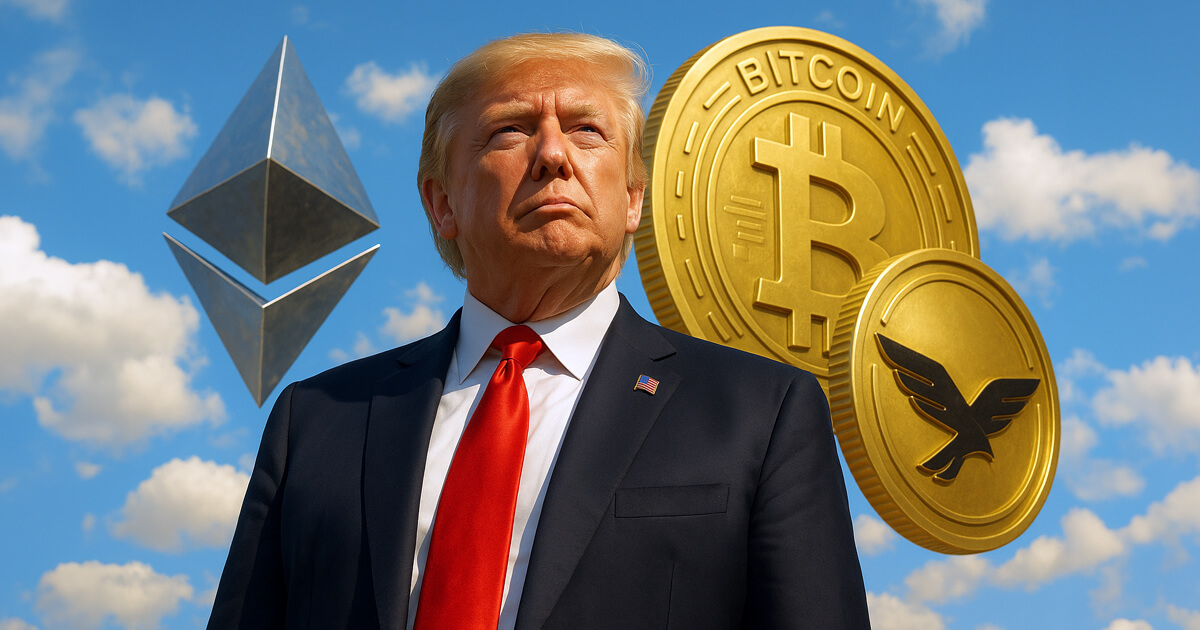
Analysis of Corruption Allegations Against President Donald Trump Regarding Cryptocurrency Ventures
The House Judiciary Committee, under the leadership of Ranking Member Jamie Raskin, has released a comprehensive staff report asserting that President Donald Trump has purportedly leveraged his presidential office to enhance his personal wealth through various cryptocurrency engagements. The report, entitled *Trump, Crypto, and a New Age of Corruption*, delineates a series of findings that implicate the administration’s policy decisions in the augmentation of the President’s financial interests, raising significant ethical and legal concerns.
Financial Implications and Allegations
The report posits that President Trump’s cryptocurrency portfolio may be valued at an astonishing $11.6 billion, with revenues from crypto asset transactions reportedly surpassing $800 million in the first half of 2025 alone. Such figures underscore the magnitude of potential financial conflicts arising from the intersection of public office and private gain.
A salient point made in the document is the structural conflict of interest engendered by Trump’s investments in World Liberty Financial (WLF) and the memecoin TRUMP. The committee’s investigation suggests that current federal ethics laws are ill-prepared to address this unprecedented scenario wherein a sitting president is financially intertwined with cryptocurrency ventures.
Capital Flow and “Shadow Lobbying” Dynamics
The report draws attention to a phenomenon described as “shadow lobbying,” wherein foreign and corporate entities allegedly utilize digital asset platforms to funnel capital into Trump-associated ventures. This dynamic raises critical questions regarding campaign finance regulations, as traditional political contributions are subject to strict caps and disclosure requirements enforced by the Federal Election Commission (FEC). In contrast, token purchases and liquidity provisions on decentralized exchanges can occur anonymously and without limit, thus circumventing established financial oversight mechanisms.
Raskin articulates a stark critique, stating, “Donald Trump has turned the Oval Office into the world’s most corrupt crypto startup operation.” This assertion is reinforced by allegations that Trump’s governance tokens allow him to benefit from price appreciation resulting from his own policy actions—a practice characterized as “self-dealing.” The report underscores systemic deficiencies within campaign finance laws, conflict-of-interest statutes, and lobbying regulations that fail to adequately address these emerging challenges.
Regulatory Policy Manipulation
The staff report meticulously catalogs alterations to federal regulatory frameworks that appear tailored to safeguard the interests of President Trump’s investors and contributors. Notably, it highlights the dissolution of the Department of Justice’s National Cryptocurrency Enforcement Team (NCET), established for prosecuting illicit activities within the digital asset landscape. The committee alleges that this dismantling directly correlates with various investigations into major cryptocurrency firms—such as Coinbase, Kraken, Ripple, and Gemini—that have historically supported Trump’s political endeavors.
Moreover, the report scrutinizes the implications of the Administration’s “crypto-strategic reserve” policy. By selecting specific cryptocurrencies for state backing—including Solana (SOL) and Ripple (XRP)—the government seemingly manipulated market dynamics to benefit particular stakeholders within Trump’s sphere of influence. Immediate price surges following these decisions suggest a troubling interdependence between regulatory actions and personal financial gain.
National Security Ramifications
Beyond domestic financial implications, the report raises urgent national security concerns regarding potential collusion between Trump’s administration and foreign entities. It details an alleged transaction involving MGX, a UAE-based investment firm, which purportedly invested billions into Binance—a platform that indirectly supports Trump’s cryptocurrency initiatives. Concurrently, negotiations between White House officials and G42 regarding access to advanced artificial intelligence technology allegedly proceeded despite cautionary objections from National Security Council (NSC) members.
The dismissal of six NSC staffers who raised alarms about potential technology diversion to China hints at a troubling prioritization of personal financial interests over national security protocols. This intersection between financial dealings and security considerations necessitates rigorous scrutiny.
Legislative Deficiencies and Calls for Reform
In conclusion, the report delineates critical legislative gaps within existing anti-bribery statutes and conflict-of-interest laws. It argues that current frameworks—such as the Foreign Agents Registration Act (FARA)—are ill-equipped to address transactions involving decentralized digital assets due to their reliance on traditional financial instruments. The committee warns that without immediate reform, the increasing prominence of pseudonymous cryptocurrencies presents new avenues for ethically compromising influence that remain technically permissible under existing laws.
Raskin’s call for prompt congressional action aims to rectify these vulnerabilities in governance structures by restoring accountability and integrity within the executive branch. As this issue unfolds, it remains imperative that both Congress and regulatory bodies engage in proactive measures to address these multifaceted challenges.
At the time of publication, no formal response had been issued by the White House concerning specific allegations tied to NSC staff dismissals or regarding methodologies applied in assessing President Trump’s cryptocurrency holdings valued at $11.6 billion as cited in this report.
