


Regulatory Framework Developments in Digital Assets: An Analytical Overview
The regulatory landscape governing digital assets in the United States has reached a critical juncture, characterized by ongoing deliberations within Congress regarding jurisdictional authority over these emergent financial instruments. In the summer of 2025, the Digital Asset Market Clarity Act successfully passed through the House of Representatives; however, the Senate has yet to take substantive action. This legislative inertia has given rise to competing drafts from two Senate committees—each purporting to establish a framework that could redefine the operational parameters of digital asset markets, spanning Bitcoin spot trading, Ethereum disclosures, and the regulatory guidelines applicable to exchanges.
Competing Legislative Drafts: A New Jurisdictional Paradigm
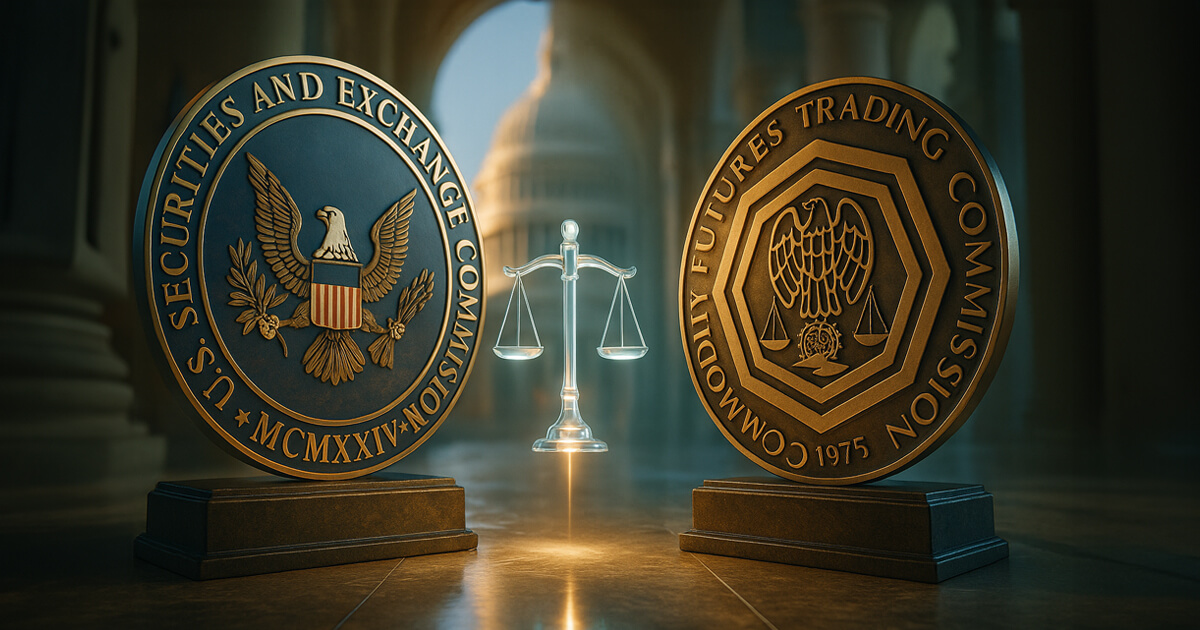
The two drafts under consideration emanate from the Senate Agriculture Committee and the Senate Banking Committee, respectively. Each proposal articulates a distinct vision for the regulatory oversight of digital assets:
– The Agriculture Committee’s draft seeks to augment the authority of the Commodity Futures Trading Commission (CFTC).
– The Banking Committee’s draft aims to expand the jurisdiction of the Securities and Exchange Commission (SEC) over specific digital assets deemed as “ancillary assets.”
The implications of these proposals are far-reaching, presenting potential transformations in custody practices, asset classification, and disclosure obligations, thereby fundamentally altering market dynamics within the U.S. digital asset ecosystem.
The Agriculture Committee Draft: Expanding CFTC Authority
The legislative initiative spearheaded by Senators John Boozman and Cory Booker delineates a roadmap whereby the CFTC would assume regulatory oversight over “digital commodities” and their corresponding spot markets. This proposal entails several key components:
– **Registration Requirements**: Exchanges, brokers, and dealers would be mandated to register with the CFTC, thereby aligning crypto market operations with established commodity trading practices.
– **Custodial Standards**: Intermediaries would be obligated to utilize qualified custodians while segregating customer assets to mitigate conflicts of interest with affiliated entities.
– **Joint Rulemaking**: The proposal allows for collaborative rulemaking between the CFTC and SEC for entities that fall under both jurisdictions, although it leaves certain issues—such as decentralized finance (DeFi)—for future discussions.
This draft builds upon the framework established by the House Clarity Act, with a particular emphasis on subjecting U.S. Bitcoin platforms to CFTC oversight. Consequently, such platforms would need to adhere to new capital adequacy standards and custody regulations while enhancing retail investor protections.
Moreover, this regulatory shift could standardize data sharing protocols across various trading venues, thereby bolstering surveillance mechanisms utilized by exchange-traded funds (ETFs). It is important to note that while Bitcoin spot exchanges would transition under CFTC governance, ETFs would remain firmly within SEC jurisdiction.
Transitioning oversight to the CFTC fundamentally alters the operational paradigm for exchanges; they would now need to prioritize transparent reporting and market surveillance over traditional investor disclosures. This evolution is likely to furnish analysts and traders with enhanced insights into market quality and liquidity metrics. Despite this expanded role for the CFTC, it is essential to understand that the SEC will maintain its supervisory authority over securities instruments and crypto futures—indicating a landscape characterized by dual regulatory oversight.
The Banking Committee Draft: Clarifying SEC Authority Over Ancillary Assets
Conversely, the Senate Banking Committee’s draft—known as the Responsible Financial Innovation Act—concentrates on digital assets that navigate the ambiguous terrains between securities and commodities. Central to this proposal is the definition of an “ancillary asset,” characterized as a “fungible digital commodity” that is distributed through a framework constituting an investment contract.
Key elements of this draft include:
– **Explicit SEC Oversight**: The SEC would be endowed with clear authority over ancillary assets, necessitating comprehensive disclosures from issuers regarding token distributions, governance structures, and associated risks.
– **Rulemaking Timeline**: The legislation stipulates a two-year period for the SEC to finalize rules delineating what constitutes an “investment contract,” alongside introducing a decentralization certification mechanism enabling projects to exit securities classification once network control diminishes below specified thresholds.
This regulatory framework presents a conditional pathway for tokens linked to “active projects” such as Ethereum. Under this model, a token may initially be classified under SEC supervision but could subsequently “graduate” from such oversight contingent upon achieving a requisite level of decentralization.
This structured approach addresses long-standing ambiguities that have pervaded industry discussions since issues stemming from earlier reports on decentralized autonomous organizations (DAOs). Furthermore, it compels the SEC to articulate a formal definition of decentralization rather than relying on arbitrary enforcement practices.
The implications of this model are significant:
– Bitcoin is poised to be classified as a digital commodity under CFTC jurisdiction.
– Tokens associated with centralized enterprises would remain subject to SEC scrutiny until they can substantiate their decentralization claims.
Centralized exchanges find themselves in a position requiring compliance with both regulatory frameworks; they must register as CFTC-regulated digital commodity exchanges while adhering to SEC regulations for listed securities. As such, U.S. platforms may face increased demands for dual registration along with heightened capital requirements and enhanced transparency in trading operations.
Conclusion: Navigating Uncertainties in Regulatory Evolution
In synthesizing both legislative drafts, one salient uncertainty persists: timing. The Banking Committee’s draft imposes explicit deadlines for rulemaking processes; conversely, significant questions remain unanswered within the Agriculture Committee’s proposal. Both drafts hinge upon future coordination efforts and public consultations before implementation can occur.
As it stands, these proposals serve as pivotal reference points for stakeholders—builders and traders alike—as they navigate an evolving regulatory environment. They offer critical insights into potential trajectories for U.S. spot venues under a CFTC-led regime while elucidating pathways for token projects aspiring to transition from securities treatment. Ultimately, while these drafts may not deliver immediate clarity as suggested by their titles, they do chart a course through the complexities of ongoing regulatory negotiations.
In an arena where classification dictates liquidity provisions, custody methodologies, and compliance obligations, understanding which agency asserts jurisdictional authority first could emerge as invaluable intelligence—potentially eclipsing any analytical signals derived from on-chain data.
