


Introduction: A Paradigm Shift in Brazil’s Energy Landscape
On February 20, 2026, Brazil’s Foreign Trade Council promulgated a technical resolution that eliminated import duties for a specific category of hardware: SHA256 Bitcoin miners with a processing power exceeding 200 terahashes per second (TH/s) and energy efficiency metrics below 20 joules per terahash (J/TH). This legislative development marks a pivotal moment in Brazil’s approach to renewable energy management and its intersection with cryptocurrency mining.
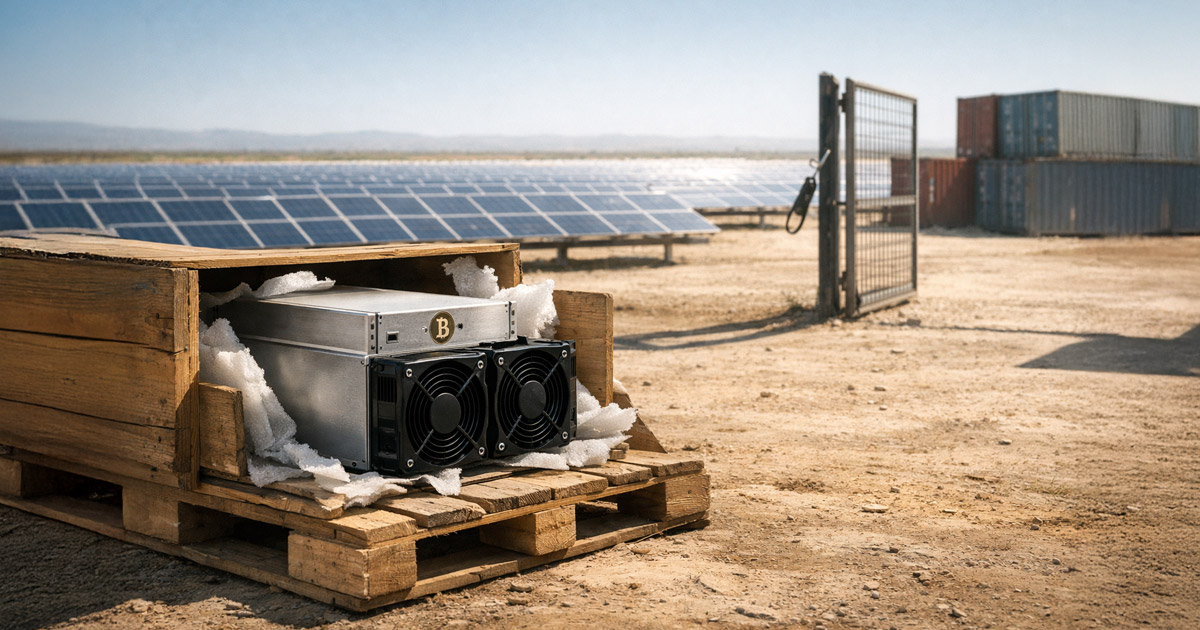
Subsequently, on February 23, French state-owned energy conglomerate Engie revealed its contemplation of integrating Bitcoin mining operations at its 895-megawatt Assu Sol plant—its largest solar facility globally—located in northeastern Brazil. The strategic intent behind this initiative is to capitalize on curtailed electricity production, thereby enhancing profitability in a landscape characterized by energy overproduction relative to grid capacity.
These two developments, occurring within a mere three-day window, converge to form a compelling narrative that has largely gone unnoticed: Brazil is establishing a novel infrastructure to address stranded renewable energy, positioning Bitcoin mining as the mechanism for unlocking this potential. This analysis will elucidate the underlying dynamics and implications of these developments.
The Dynamics of Curtailment and Its Economic Implications
Brazil’s renewable energy sector, particularly wind power, has faced significant curtailment challenges. Between October 2021 and September 2025, the wind industry alone curtailed approximately 32 terawatt-hours (TWh) of electricity, resulting in an estimated revenue loss of around R$6 billion (approximately $1.2 billion) for wind farm operators. Curtailment refers to the practice of reducing or halting electricity generation when the grid cannot accommodate the produced power due to geographical mismatches or inadequate transmission infrastructure. For renewable generators, such curtailed megawatt-hours represent an egregious loss of potential value.
As of 2024, wind and solar energy sources collectively accounted for 24% of Brazil’s total electricity generation, with this share escalating to 34% by August 2025. The Brazilian grid operator ONS (Operador Nacional do Sistema Elétrico) characterizes curtailment not merely as a temporary inefficiency but as a structural characteristic inherent to systems with high proportions of variable renewable energy (VRE). The increasing share of renewables combined with lagging transmission upgrades exacerbates the mismatch between production capacity and demand.
In this context, there exists an urgent need for local, dispatchable demand capable of absorbing otherwise wasted electrical output while providing rapid response capabilities. Bitcoin mining operations are uniquely positioned to fulfill this requirement due to their inherent flexibility and ability to modulate power consumption based on real-time grid conditions.
Engie’s Strategic Consideration
Engie’s Assu Sol plant exemplifies this dynamic; situated in a region renowned for its high solar irradiance yet constrained by transmission limitations. Engie’s public declaration regarding the potential installation of mining operations underscores a significant shift in perspective—viewing mining not merely as a speculative venture but as a viable industrial demand response mechanism aimed at optimizing generator profitability.
The Implications of the Tax Amendment for Bitcoin Miners
The resolution designated as GECEX 861, published on February 20, effectively amends Brazil’s consolidated ex-tariff list by instituting a zero percent import duty for specific information technology products related to cryptocurrency mining. The newly added Annex I delineates parameters for eligible hardware: servers designed for cryptocurrency mining utilizing the SHA256 algorithm must exhibit energy efficiency below 20 J/TH at a standard temperature of 35°C and possess processing capabilities exceeding 200 TH/s. This policy is set to remain in effect until January 31, 2028.
It is imperative to note that this exemption does not extend universally across all mining hardware categories; rather, it selectively targets high-performance Application-Specific Integrated Circuits (ASICs). Consequently, older or less efficient mining rigs are excluded from this beneficial framework. The legislative intent is clear: to facilitate access to cutting-edge technology that can effectively compete within professional mining environments.
Brazil’s import tax framework is notoriously complex and layered; import duties represent only one element of the total landed cost, which also encompasses other financial obligations such as IPI (Imposto sobre Produtos Industrializados), PIS/COFINS-Import taxes, ICMS (Imposto sobre Circulação de Mercadorias e Serviços), and various operational fees. While removing federal import duties constitutes a significant step toward lowering cost barriers for high-efficiency mining hardware, it does not wholly eliminate the comprehensive tax burden miners face.
The Economic Viability of Mining Operations
Mining profitability hinges upon three critical variables: hash price (the revenue generated per terahash per second per day), hardware efficiency metrics, and the cost of electricity. As reported by Hashrate Index on February 16, the hash price stood at approximately $34.05 per petahash per second daily. At this point in time, Bitcoin was trading near $64,000.
A typical rig qualifying under the new regulation—operating at 200 TH/s with an efficiency rating of 20 J/TH—would generate daily revenues approximating $6.81 while consuming approximately 4 kilowatts of power (equating to around 96 kilowatt-hours daily). Consequently, the break-even electricity price—excluding capital expenses and operational overhead—calculates to about $0.071 per kilowatt-hour.
When converted into Brazilian reais at an exchange rate hovering around R$5.17 per dollar on February 23, this break-even threshold corresponds to approximately R$370 per megawatt-hour. In juxtaposition with retail electricity prices averaging R$0.657 per kilowatt-hour in June 2025—a rate that substantially exceeds mining viability—this analysis highlights the necessity for miners to secure access to wholesale electricity markets or curtailment contracts that permit access to otherwise wasted megawatt-hours.
The Future Landscape: Potential Outcomes
Should Brazil’s curtailment issues persist or intensify—fueled by an ongoing expansion of renewable energy sources outstripping the growth in transmission capacity—electricity generators will encounter increasing revenue pressures. Bitcoin mining presents an appealing solution via bilateral Power Purchase Agreement (PPA) structures that obviate the requirement for new transmission infrastructure while enabling rapid scaling within days following hardware deployment.
The current ex-tariff policy remains valid until January 2028, thus providing miners with a critical two-year window in which they can secure hardware cost stability while concurrently evaluating curtailment economics. Engie’s pilot initiative serves as a harbinger that may prompt other utilities and independent power producers to explore comparable arrangements. Should multiple large-scale renewable projects announce co-location agreements within the next twelve months, Brazil could emerge as a significant destination for incremental hashrate accumulation.
The Broader Context: Beyond National Strategy
This evolution is not merely an outcome of national strategic planning; rather, it reflects an organic alignment between project-level economics influenced by market dynamics and regulatory clarity surrounding cryptocurrency activities in Brazil. The existing banking infrastructure accommodates crypto-related firms without imposing capital controls that would otherwise hinder foreign investment or repatriation of profits from mining operations.
However, there exist potential pitfalls inherent within this thesis. If transmission upgrades accelerate rapidly enough to mitigate curtailment issues effectively, the pool of stranded energy available for mining diminishes correspondingly—potentially elevating power prices beyond economically feasible thresholds for miners. Furthermore, fluctuations in Bitcoin difficulty could compress hash rates below sustainable profitability levels if market conditions shift unfavorably.
Critical Constraints Affecting Mining Viability
While the introduction of zero-percent import duties presents significant advantages for prospective miners operating within Brazil’s evolving energy landscape, it does not address existing barriers related to financing and operational constraints. The intrinsic lifespan of mining hardware is contingent upon prevailing difficulty epochs rather than durable asset longevity; therefore, securing competitive financing becomes paramount. Brazil’s capital costs are comparatively elevated relative to those observed in more established markets such as the United States or Europe; local financial institutions exhibit limited appetite for extending credit lines tailored specifically toward cryptocurrency enterprises.
Addendum operational hurdles include reliance on predictable curtailment patterns combined with contractual frameworks allowing interruptible load arrangements; unpredictability in curtailment could adversely impact uptime metrics—thereby diminishing effective hash prices when sporadic availability disrupts consistent output levels.
Conclusion: An Uncertain Yet Promising Future
Brazil’s recent policy adjustments did not arise from spontaneous strategic foresight but rather from targeted efforts aimed at mitigating pressing infrastructural challenges while simultaneously capitalizing on emergent technological opportunities presented by cryptocurrency mining operations. The fundamental question remains: can miners successfully absorb sufficient curtailed energy volumes without precipitating destabilization within existing grid systems or inciting new political risks?
If affirmative conditions prevail—with miners paying for consumed power while generators recoup previously unearned revenue—the synergy may yield incremental hashrate growth without necessitating direct subsidies from government entities. Conversely, should these conditions fail to materialize before the expiration of favorable policies in January 2028, this experiment may conclude prematurely.
The forthcoming two years present both risks and opportunities; thus far aligning factors suggest heightened optimism regarding Brazil’s emerging role within global cryptocurrency networks—a role contingent upon timely recognition by miners poised to take advantage before available options diminish.
