


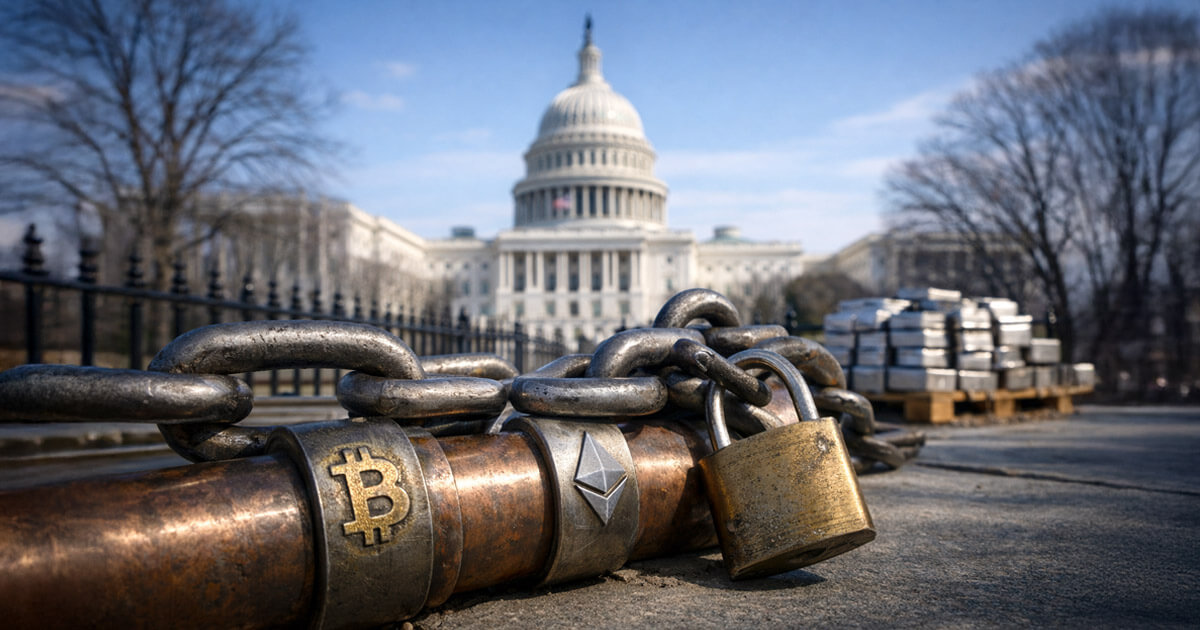
Capital Mobilization in the Political Landscape: An Analysis of Fairshake’s Financial Position
Fairshake, along with its affiliated super PACs, has disclosed an impressive financial reserve exceeding $193 million as it approaches the 2026 midterm elections. This substantial war chest encompasses $74 million raised since July from three principal contributors: Coinbase, Ripple, and a16z, contributing $25 million, $25 million, and $24 million respectively. Collectively, this network comprises Fairshake, Protect Progress (aligned with Democratic interests), and Defend American Jobs (aligned with Republican interests), establishing a bipartisan framework aimed at transcending conventional partisan cycles.
The Washington Post has previously reported that this political network has expended more than $134 million across 67 candidates in the electoral cycle spanning 2023-2024. The focus of this financial deployment has been predominantly on members serving on pivotal oversight committees, notably the Financial Services and Agriculture committees. However, it is imperative to note that financial contributions do not directly correlate to legislative outcomes in the manner that many investors might presume.
The Limitations of Super PAC Contributions
Super PACs are constrained by regulations that prohibit direct donations to candidates or coordination of messaging with their campaigns. The utilization of $193 million primarily facilitates electoral selection and message dominance within specific races that ultimately determine the architects and obstructors of cryptocurrency legislation.
The strategic focus is not merely on electing pro-crypto representatives but rather on exerting influence over critical chokepoints such as committee jurisdiction and agenda control.
Significance of Committee Power in Legislative Processes
The House Financial Services Committee, along with its digital assets subcommittee, addresses matters related to the Securities and Exchange Commission (SEC), encompassing issues such as market structure, custody protocols, intermediary functions, and deliberations surrounding stablecoins. Conversely, the House Agriculture Committee, through its digital assets and commodities subcommittee, oversees aspects pertinent to commodity regulation under the purview of the Commodity Futures Trading Commission (CFTC).
Recently, the Senate Banking Committee encountered a stall in discussions regarding a proposed crypto bill after Coinbase publicly voiced opposition to its current formulation. Simultaneously, Senate Agriculture is advancing its own market structure approach by announcing an updated digital commodities framework and scheduling a markup meeting for late January 2026.
Influence exerted by capital can significantly alter committee dynamics; even modest shifts in electoral outcomes can redefine leadership roles within these committees and determine which legislative proposals survive markup processes. Fairshake’s strategy capitalizes on independent expenditures that inundate advertising markets in a select number of competitive races. This tactic proves especially effective during primaries where lower voter turnout allows for more cost-effective narrative establishment per vote.
| Committee | Jurisdiction | Crypto Lane | Current Status Signal | Why Fairshake Cares |
|---|---|---|---|---|
| House Financial Services | Oversees securities markets + financial intermediaries | SEC-facing market structure | Markup gatekeeper — “writes the SEC lane” | Committee composition determines what gets written |
| House Agriculture | Oversees commodities markets + futures/derivatives regulation | CFTC lane | Markup gatekeeper — “writes the CFTC lane” | Even small seat shifts can change wielders of influence over CFTC framework |
| Senate Banking | Banking system, securities regulation, consumer protection | Market-structure bottleneck | Stalled/delayed after Coinbase opposition to draft | Affects ability to reshape Senate deal structures |
| Senate Agriculture | Commodities and derivatives oversight | Digital commodities framework | Markup scheduled late Jan 2026 — “alternate Senate path” | Presents an alternative route; momentum here can pressure Banking or define negotiating baselines. |
The Role of Capital in Shaping Legislative Outcomes
Persistent financial support from super PACs develops a landscape where candidates are compelled to align their positions early on—whether through staff appointments or coalition affiliations. Notably, while Fairshake may facilitate the election of favorable representatives, it does not possess control over floor votes or leadership decisions that shape final bill text. This complexity is heightened by the existing fragmentation within crypto policy among banks, exchanges, and decentralized finance (DeFi) perspectives.
Navigating the Policy Pipeline: What is Feasible?
A regulatory framework for stablecoins was recently established under President Donald Trump’s enactment of the GENIUS Act in July 2025. However, substantial work remains regarding market structure legislation as the Senate continues to serve as a bottleneck.
Fairshake’s financial reserves represent a strategic investment predicated on the belief that 2026 will be a pivotal election year concerning committee composition—a crucial determinant in whether comprehensive market structure legislation is advanced or relegated to administrative discretion.
Scenarios for Legislative Progression Over the Next 12-18 Months
The outlook for legislative progress can be categorized into three distinct scenarios framed around committee throughput rather than binary outcomes labeled as “crypto wins”:
1. **Bear Case**: Prolonged gridlock persists; Senate market structure discussions remain stalled while campaign timelines compress amid divisive crypto coalitions.
2. **Base Case**: Partial regulatory clarity emerges as one chamber advances a narrower market-structure package or reconciles around moderated common ground while federal agencies adopt clearer stances under existing leadership.
3. **Bull Case**: A comprehensive market-structure deal materializes post-election; favorable committee composition aligns incentives across chambers resulting in reconciled legislative frameworks.
The momentum generated prior to summer 2026 will be crucial for reconciliation efforts before midterms compress the legislative calendar.
The Implications of Committee Composition on Market Dynamics
The clarity provided by regulatory frameworks directly impacts risk premiums associated with capital markets. Enhanced regulatory certainty can facilitate growth in exchange listings, bolster institutional participation, and refine litigation expectations by reducing ambiguity surrounding enforcement actions. The transformative mechanism operates not merely on price elevation but rather through decreased uncertainty leading to lowered costs of capital.
The distinction between temporary regulatory arrangements and enduring statutory frameworks hinges upon congressional actions in 2026—critical for determining whether changes solidify into lasting policy or remain susceptible to subsequent reversals driven by administrative transitions.
The Fragmentation of Crypto Political Strategy
The structural integrity of Fairshake’s bipartisan framework is currently threatened by emerging factions within the crypto political landscape. An illustrative case is the establishment of a new pro-crypto super PAC launched by Winklevoss twins in August 2025 with an initial endowment of $21 million aimed explicitly at advocating for conservative pro-crypto initiatives.
This development indicates a potential shift from a unified bipartisan approach towards more segmented issue-based advocacy reflecting diverse priorities among various crypto stakeholders. The visible fractures within Senate debates concerning market structures underscore this transition—highlighted by divisions between Banking versus Agriculture jurisdictions and competing regulatory frameworks governing stablecoin rewards and DeFi oversight.
The Potential Impact of Judicial Developments
A forthcoming Supreme Court ruling could fundamentally alter the dynamics between political parties and external spenders as it reevaluates restrictions on coordinated party financing ahead of the 2026 elections. Should party committees regain enhanced coordination capabilities for expenditure strategies, it may significantly dilute Fairshake’s relative advantage in candidate selection and narrative framing.
This evolving landscape underscores how super PAC financing shapes congressional composition while simultaneously influencing which legislative measures endure markup processes. Furthermore, agency posture delineates enforcement baselines that could either fortify or dismantle regulatory assurances established during previous administrations.
Conclusion: A Critical Juncture for Cryptocurrency Legislation
The substantial financial reserves held by Fairshake signal a strategic bet on 2026 being pivotal for establishing statutory market structures governing cryptocurrency operations. While their bipartisan architecture aims to withstand political fluctuations effectively, the nascent fragmentation within crypto policy advocacy suggests a potential divergence in priorities across different factions within the industry.
The overarching question remains whether unified legislative objectives will persist long enough to translate committee dynamics into actionable statutes or whether internal divisions will compromise efforts prior to achieving legislative closure.
