


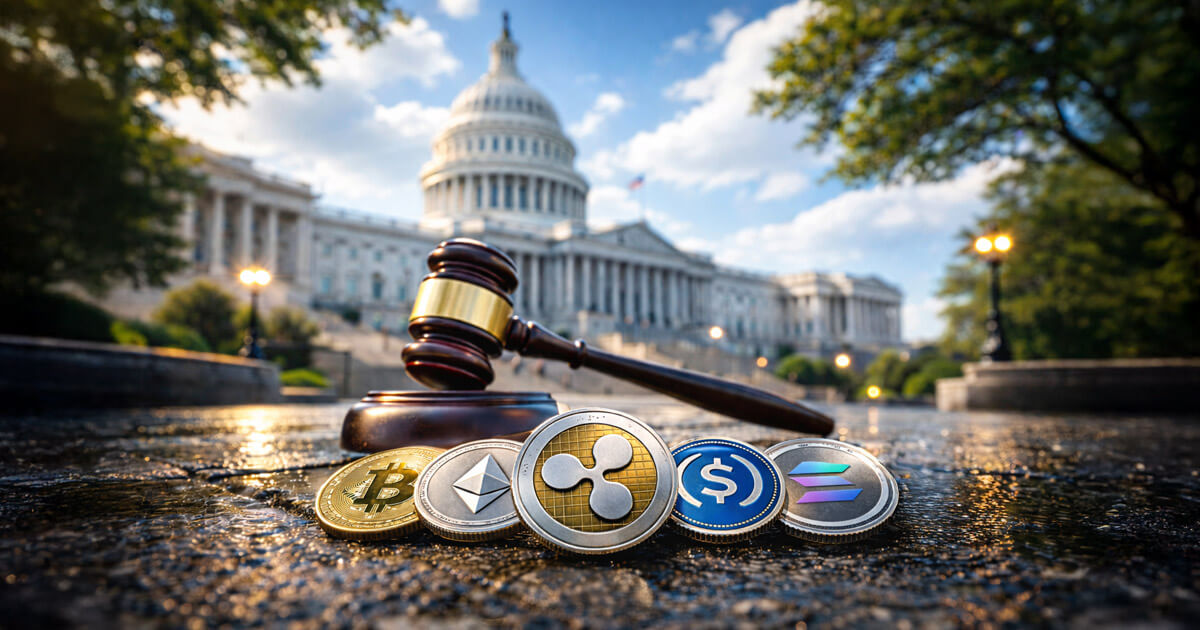
Advocacy for Federal Market Structure Legislation in the U.S. Cryptocurrency Sector
The cryptocurrency industry in the United States has initiated a concerted effort to prompt Congress to enact comprehensive federal market-structure legislation, specifically referred to as the “Digital Asset Market Clarity Act of 2025” (H.R. 3633). Proponents within the industry contend that this legislation represents a critical “missing layer” of regulatory oversight essential for fostering a conducive environment for growth and innovation.
Contextual Framework of the Legislation
The legislative landscape, while having witnessed the introduction of the “GENIUS Act,” which delineated foundational rules governing payment stablecoins, now necessitates a more comprehensive framework. The Digital Asset Market Clarity Act aspires to establish an overarching market structure that encompasses various facets, including:
– Secondary trading protocols
– Asset classification criteria
– Registration mandates for intermediaries
Without such a framework, key stakeholders argue that the U.S. market is ensnared in an inefficient and fragmented landscape characterized by disparate state-level licensing requirements and enforcement-oriented guidance.
Challenges to Legislative Consensus
However, the trajectory toward achieving legislative consensus remains beset by intricate technical challenges. Alex Thorn, Head of Research at Galaxy Research, articulated the profound divisions evident during a bipartisan meeting convened on January 6. This forum underscored a pronounced dichotomy between Republican initiatives advocating for expedited proceedings and an array of Democratic stipulations that could substantially reshape the bill’s implications concerning token issuance and software development.
Key Issues Impeding Progress on the Clarity Act
A pivotal contention point relates to the operational timelines associated with Senate deliberations. Republicans are advocating for a markup session by the Senate Banking Committee as early as January 15, aiming to solidify a legislative framework before the potential constriction of the legislative calendar later in the year. Nevertheless, Thorn’s analysis indicates significant policy gaps remain between both parties, thereby casting doubt on whether an acceptable compromise can be reached in time for passage through both chambers.
Decentralized Finance (DeFi) Regulation Disputes
A particularly contentious issue has emerged regarding the regulation of decentralized finance (DeFi). Thorn notes that Democratic legislators have introduced an array of stringent demands designed to integrate the DeFi sector into traditional financial oversight frameworks. Among their primary requests are:
– Implementation of “front-end sanctions compliance” protocols for DeFi interfaces, necessitating user verification at access points.
– Expansion of authority granted to the Treasury Department to enforce enhanced surveillance measures within this sector.
– Establishment of specific rulemaking provisions targeting “non-decentralized” DeFi entities—an innovative regulatory category that may encompass numerous projects claiming decentralization yet retaining significant centralized control.
Beyond these structural considerations, Democratic proposals also encompass a suite of enhanced investor protections. Negotiators are advocating for new regulations surrounding crypto ATMs and augmented consumer protection powers for the Federal Trade Commission (FTC). Notably, one proposed measure introduces a $200 million cap on capital raises under particular exemptions, fundamentally altering existing norms around fundraising.
Furthermore, this initiative would invert the traditional regulatory dynamic: rather than waiting for enforcement actions from regulators such as the Securities and Exchange Commission (SEC), protocols would be mandated to proactively seek confirmation that they do not constitute securities—an approach that significantly amplifies compliance burdens for nascent projects.
The Dispute Regarding Stablecoin Yield
While discussions surrounding DeFi regulation predominantly hinge on ideological and technical premises, the discourse surrounding stablecoin yield has devolved into an overt confrontation over banking revenues. The bipartisan negotiations have revealed that regulatory treatment concerning stablecoin yield—an essential revenue stream within the cryptocurrency sector—remains an unresolved structural issue requiring extensive deliberation prior to any markup progression.
U.S. banks have mounted vigorous opposition against permitting stablecoin issuers to distribute yield derived from reserve assets (e.g., Treasury bills) to holders, positing that such mechanisms would divert deposits from traditional banking institutions. Conversely, representatives from crypto firms contest this stance, characterizing it as protectionist rather than reflecting genuine prudential concerns.
Faryar Shirzad, Chief Policy Officer at Coinbase, contended that Congress effectively resolved stablecoin-related issues through the GENIUS Act and reopening discussions around yield could engender unnecessary uncertainty that jeopardizes the U.S. dollar’s position as commerce increasingly migrates on-chain. Shirzad emphasized that U.S. banks currently generate approximately $176 billion annually from their holdings at the Federal Reserve.
He further elucidated:
> “That’s $360B+ annually from payments and deposits alone (and massive unused lending capacity that the Federal Reserve pays the banks to have sit in a drawer somewhere).”
Shirzad’s assertions were echoed by Alexander Grieve, Vice President of Government Affairs at venture capital firm Paradigm. Grieve pointed out that banking lobbying entities are framing the allowance of yield-bearing stablecoins as an existential threat to their members’ survival—a characterization he disputes vehemently:
> “The most ironic thing about this entire situation is that the bank-alleged untenable status quo established by GENIUS… WILL REMAIN THE STATUS QUO IF THE BANKS BLOW UP MARKET STRUCTURE!”
Institutional Aspirations Within Cryptocurrency
For major cryptocurrency firms operating within the United States, advocacy for the Clarity Act transcends mere avoidance of litigation; it embodies a desire to unlock institutional business models currently hindered by regulatory ambiguity. Reece Merrick, a senior executive at Ripple, articulated this operational impasse succinctly:
> “The U.S. still lacks comprehensive regulatory clarity for the broader crypto ecosystem, which continues to hold back U.S.-based entities from fully thriving and innovating in this space.”
Merrick noted Ripple’s active engagement in advocating for frameworks that promote equitable competition and stimulate subsequent growth phases within the industry. This sentiment reflects Ripple’s strategic maneuvers aimed at integrating with traditional financial systems; evidence includes its acquisition of a U.S. national bank charter alongside aspirations for Federal Reserve access related to its RLUSD stablecoin reserves.
Moreover, Ripple’s recent acquisition of prime brokerage firm Hidden Road—responsible for clearing approximately $3 trillion annually across multiple clients—underscores its commitment to workflows predicated upon custody management and audit-ready operational controls—elements challenging to implement effectively without federal regulatory structures envisaged by the Clarity Act.
Coinbase CEO Brian Armstrong similarly offered optimism regarding the prospective economic ramifications of this legislation:
> “This bill will get crypto further unlocked in the U.S. with clear rules, which will benefit all businesses, protect customers, and unleash builders.”
Global Competitive Dynamics
As Senate discussions unfold regarding markup dates and sanctions language related to digital assets, proponents are increasingly framing their arguments around fiscal realities and global competitive pressures rather than solely cryptocurrency-specific rhetoric. Domestically, advocates are beginning to connect crypto market structures with overarching governmental financial health.
Research disseminated by institutions such as Brookings has established correlations between stablecoin proliferation and heightened demand for short-term Treasury securities—a relationship suggesting a non-bank buyer base for U.S. debt markets.
A 2025 study estimated that a mere 1% increase in demand for stablecoins could potentially reduce yields on short-maturity Treasury bills by approximately 1 to 2 basis points—a tangible economic channel rendering stablecoin scalability pertinent to Treasury considerations.
Internationally, delays in enacting appropriate legislation are yielding observable consequences as global competitors advance their own regulatory frameworks. For instance:
– The European Union’s Markets in Crypto-Assets (MiCA) regulation is instituting standardized licensing benchmarks while providing detailed implementation templates through its Securities and Markets Authority (ESMA).
– In Asia, financial hubs such as Hong Kong and Singapore are developing regulations tailored specifically to attract liquidity sought by U.S.-based firms.
Senator Cynthia Lummis has underscored jurisdictional arbitrage as a decisive factor motivating urgency behind legislative action:
> “For far too long, unclear rules have pushed digital asset companies offshore. Our market structure legislation changes that by establishing clear jurisdiction, strong protections, and ensuring America leads the way.”
In summary, while substantial hurdles remain before comprehensive federal regulation can be realized within the U.S. cryptocurrency landscape, stakeholders appear increasingly cognizant of both domestic imperatives and international competitive dynamics shaping this ongoing discourse.
