


The Geopolitical Implications of Nicolás Maduro’s Court Appearance
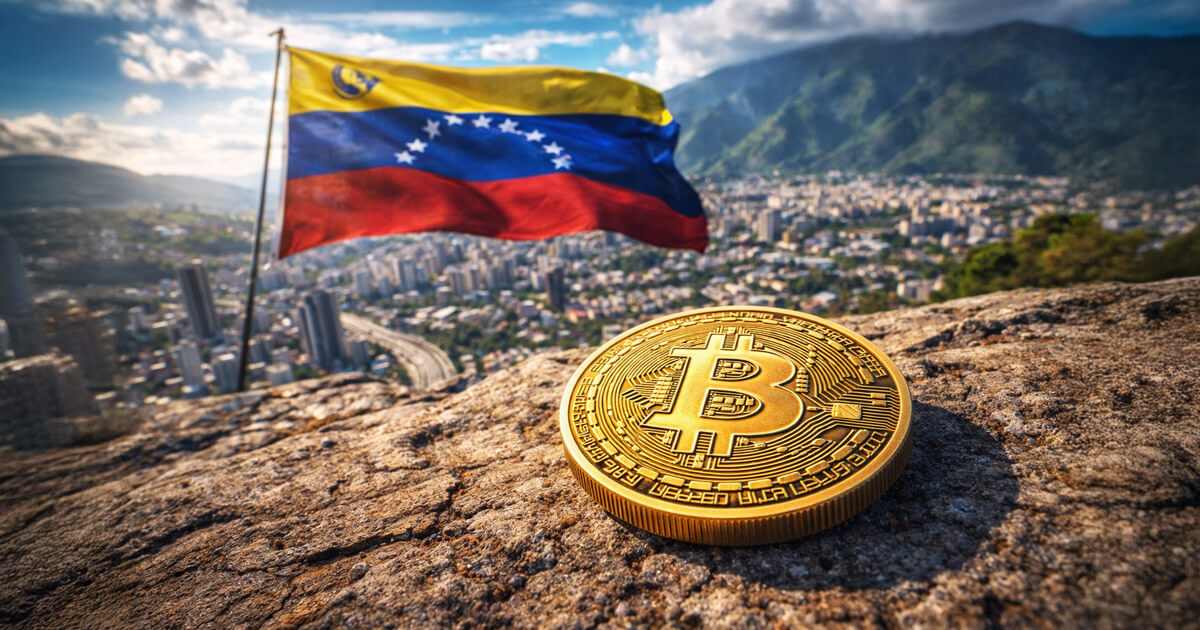
When Venezuelan President Nicolás Maduro stands trial in a federal courtroom in New York, he will not merely be facing narco-terrorism charges; he will be at the center of a geopolitical spectacle that reverberates through international relations and financial markets alike. This high-profile case is poised to have significant implications, particularly for cryptocurrency investors, as the proceedings may unveil a concealed financial stake capable of reshaping the global Bitcoin market for years to come.
Despite the Venezuelan government’s official declaration of holding a mere 240 Bitcoin—approximately valued at $22 million—this figure appears trivial in the grand scheme of global liquidity and price discovery. However, emerging reports suggest that this official stance may be misleading.
Revelations from the Whale Hunt Report
A recent report from Whale Hunt posits that the Maduro regime may have clandestinely amassed a substantial Bitcoin “shadow reserve” during the peak of U.S. sanctions. According to this analysis, Venezuela’s actual Bitcoin holdings could soar to as high as 600,000 BTC, translating into an astounding value of roughly $60 billion at current market prices. Such an accumulation would position Venezuela among the most significant stakeholders in Bitcoin, rivaling major corporate entities like MicroStrategy and surpassing the holdings of the United States itself.
If these projections prove even directionally accurate, the implications are profound: the U.S. government’s potential capture of Maduro would not only represent a diplomatic victory but could also signify the seizure of nearly 3% of Bitcoin’s circulating supply.
The Mechanisms of Accumulation
The stark contrast between Venezuela’s reported 240 Bitcoin and the rumored 600,000 can be attributed to the opaque methodologies employed by the regime to navigate economic isolation.
While international scrutiny fixated on the failed state-backed “Petro” token, analysts contend that concurrent with this endeavor, Venezuela was embarking on a significant diversification strategy into decentralized assets.
– **Gold Liquidation**: The Whale Hunt report indicates that this accumulation trajectory commenced around 2018, primarily through aggressive liquidation of gold reserves within the Orinoco Mining Arc. The regime reportedly exchanged approximately $2 billion in physical gold for Bitcoin at average prices near $5,000 per coin.
– **Oil Trade Diversion**: Furthermore, Venezuela’s oil trade served as a continuous conduit for digital asset accumulation. To circumvent traditional banking systems and evade U.S. sanctions, the state oil company frequently demanded payments in Tether (USDT). Recognizing the vulnerabilities inherent in stablecoins—particularly their susceptibility to freezing by centralized issuers—the regime purportedly “washed” these funds into Bitcoin to safeguard them against potential foreign intervention.
This dual approach reflects the government’s erratic domestic policy. While authorities enacted a ban on Bitcoin mining in May 2024 under the guise of energy stability—confiscating thousands of ASIC machines—they concurrently ceased circulation of their own Petro token. This juxtaposition suggests a calculated strategy to consolidate digital wealth into a centralized and state-controlled reserve, deliberately obscured from public view.
Should the “shadow reserve” hypothesis hold true, Venezuela could emerge as one of history’s largest Bitcoin whales, with control over these assets potentially falling within the jurisdiction of U.S. federal prosecutors.
The Potential for Market Disruption
The transfer of such a colossal fortune from a rogue state into U.S. custody introduces complex market dynamics with far-reaching implications for cryptocurrency investors.
Unlike conventional criminal seizures, the sheer magnitude of 600,000 Bitcoin presents unique challenges for regulators and poses an imminent risk of creating a “supply shock” within the market.
– **Frozen Float**: The most immediate consequence is likely to be a “frozen float.” Should U.S. authorities effectively immobilize these assets, they would enter a state of prolonged legal paralysis. Given Venezuela’s extensive external debt obligations—ranging from defaulted bondholders to corporations like ConocoPhillips that have secured arbitration awards—the creditor landscape would almost certainly precipitate immediate legal injunctions against any seized Bitcoin.
This scenario could extend litigation over several years or even decades. For investors, this effectively functions as an inadvertent bullish signal: it mechanically removes a significant block of supply from circulation by locking it within a U.S. Treasury escrow account where liquidation cannot occur.
– **Strategic Reserve Pivot**: An alternative scenario could involve a “strategic reserve pivot,” particularly under shifting political climates in Washington. Should a pro-crypto administration come to power, it might intervene to prevent liquidation and instead direct the Treasury to retain these Bitcoin assets as part of a national stockpile.
Conversely, analysts deem it unlikely that we would witness a “fire sale” akin to Germany’s liquidation of 50,000 Bitcoin in 2024 due to its potentially catastrophic impact on market prices.
Regardless of which legal trajectory unfolds, Maduro’s apprehension likely signals that these coins will remain off-limits for the foreseeable future.
Redefining Sovereign Risk in Cryptocurrency Investment
The case presented by Venezuela introduces an intriguing variable into existing investment paradigms: hidden sovereign risk. Historically, market players have assessed government holdings based on voluntary disclosures—such as those seen with El Salvador—or via public records stemming from previous seizures related to criminal activities.
However, revelations surrounding Maduro compel investors to contemplate “dark pools” of sovereign wealth. If an economically beleaguered nation under total blockade can amass $60 billion in Bitcoin reserves, it raises pertinent questions regarding similar strategies employed by other sanctioned or resource-rich states.
This situation engenders what can be termed a “sovereign overhang”—a concealed supply of Bitcoin held by non-transparent state actors that could manifest suddenly due to regime changes or geopolitical upheaval.
Additionally, Tether’s involvement in these alleged accumulation strategies amplifies secondary risks. Should the Department of Justice scrutinize transaction histories linked to Venezuelan oil trades, it might usher in intensified regulatory oversight over stablecoin issuers and their associated transactional mechanisms utilized by nation-states attempting to circumvent traditional financial systems.
As legal proceedings unfold in New York, attention within the cryptocurrency community will inevitably pivot beyond mere headlines surrounding Maduro’s capture; stakeholders will closely monitor forensic details regarding wallet identifications, confirmations related to gold-swap accumulations, and subsequent creditor legal maneuvers.
