


Settlement in Financial Markets: A Comprehensive Analysis
In the intricate landscape of financial markets, the process of settlement represents a critical yet often underappreciated component. The assumption that ownership of a stock is conferred at the moment of transaction confirmation overlooks the complexities inherent in the settlement process.
Settlement functions as the pivotal mechanism through which the exchange of cash and securities is conclusively executed, ensuring that transactions are irrevocable and devoid of discrepancies. Despite advancements in technology, financial markets continue to experience significant latency as they await the reconciliation of ledgers, the arrival of cash transfers, and the validation by intermediary entities that oversee these operations.
Tokenization has long been heralded as a potential solution to minimize this latency; however, it has yet to address a fundamental inquiry: what implications does the migration of securities onto blockchain networks have for existing market infrastructures? Specifically, how will the cash component of these transactions conform to regulatory frameworks rather than merely relying on unregulated stablecoin alternatives?
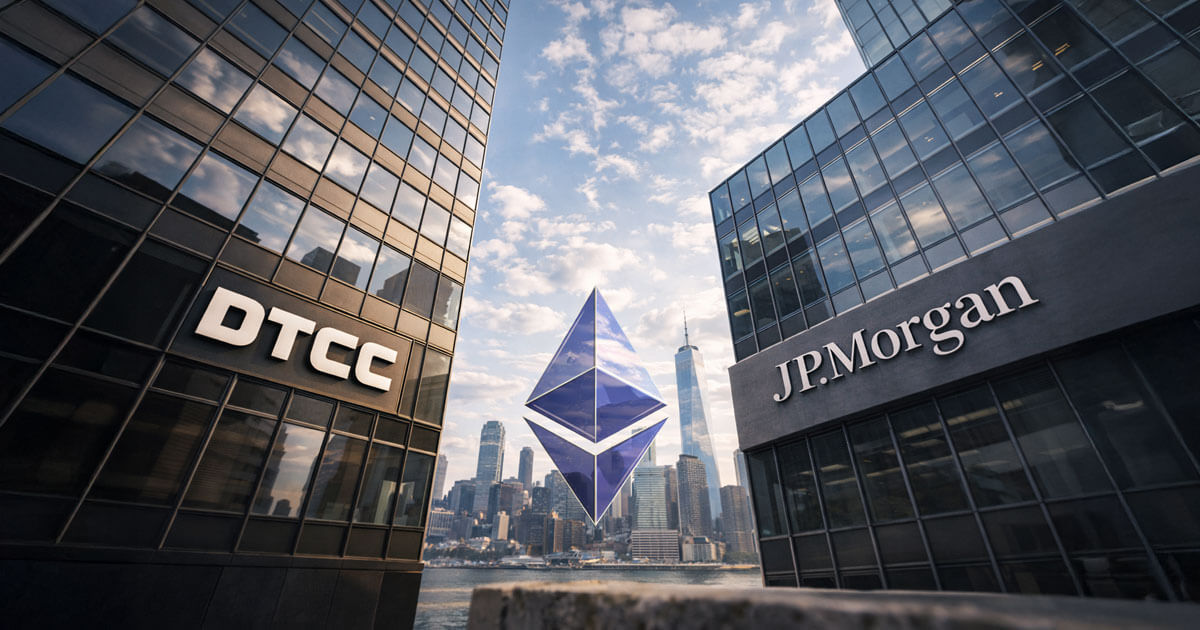
This analysis synthesizes two pivotal developments within this domain: the Securities and Exchange Commission’s (SEC) no-action letter pertaining to the Depository Trust & Clearing Corporation’s (DTCC) tokenization service and JPMorgan’s initiatives surrounding its MONY fund. Together, these elements provide a nuanced narrative that elucidates the potential for operational efficiency in settlement processes.
DTCC’s Tokenization Pilot: A Regulatory Framework for Entitlements
The DTCC serves as an essential utility within U.S. post-trade processing, with its subsidiary, The Depository Trust Company (DTC), functioning as the central securities depository for a majority of U.S. equities, exchange-traded funds (ETFs), and government securities. Understanding DTC’s role is paramount to grasping the implications of its tokenization pilot.
It is crucial to accurately interpret DTC’s objectives. The initiative does not signify a revolutionary shift in stock issuance or a wholesale adoption of cryptocurrency methodologies; rather, it seeks to maintain integrity within existing custodial frameworks while allowing for digital representation of entitlements. This initiative involves:
– Maintaining official records within DTC’s established custody systems while permitting tokenized representations to transfer between approved blockchain addresses.
– Ensuring that DTC remains the authoritative source for tracking ownership and validating transactions throughout this process.
The term “entitlement” emerges as a central theme in understanding this framework. In this context, tokens do not aspire to redefine legal securities but instead function as controlled digital manifestations of existing positions held by DTC participants. This design facilitates blockchain interoperability while preserving DTC’s oversight over participant transactions.
Moreover, DTC has implemented stringent controls to ensure compliance with regulatory mandates. Tokens are permitted to transfer solely to “Registered Wallets,” with future provisions for both public and private ledger registrations. This cautious approach underscores DTC’s commitment to operational reversibility—an essential characteristic in regulated environments where missteps necessitate rectification measures.
The selection of eligible assets for this pilot program deliberately targets highly liquid instruments such as Russell 1000 stocks, major-index ETFs, and U.S. Treasury securities. By concentrating on established assets with recognized operational protocols, DTCC minimizes systemic risk during initial implementations.
Projected timelines indicate a practical launch in the latter half of 2026, following a three-year window authorized by the SEC’s no-action letter. This timeframe allows for thorough onboarding of participants and rigorous testing of controls while instilling a sense of accountability among stakeholders.
JPMorgan’s MONY Fund: Redefining On-Chain Cash Management
Despite advancements in tokenized entitlements, true operational transformation remains elusive until cash mechanisms can mirror these innovations effectively. This is where JPMorgan’s MONY fund emerges as a pertinent development—not simply as an inventive yield vehicle but as a structured cash-management solution designed specifically for Ethereum environments without compromising regulatory integrity.
The MONY fund operates under Regulation D Rule 506(c) and is accessible exclusively to accredited investors via Morgan Money. Its investment strategy focuses on traditional U.S. Treasury securities and repurchase agreements fully secured by these instruments, offering daily dividend reinvestments while allowing subscriptions and redemptions through both cash and stablecoin channels.
This aligns MONY closely with conventional money-market funds—vehicles through which institutional investors typically allocate short-term capital for liquidity purposes—while enhancing its functionality through blockchain capabilities:
– It provides a seamless transition between traditional financial instruments and blockchain technologies.
– It offers familiar liquidity profiles associated with government-backed securities but does so in a digital format.
The introduction of MONY signifies a departure from previous attempts at on-chain cash equivalents that largely relied on stablecoins—a scenario fraught with volatility and regulatory ambiguity. By offering a solution that resonates with treasury operations accustomed to stringent compliance standards, JPMorgan positions itself at the forefront of the evolving landscape of tokenized finance.
Linking DTCC’s Pilot with JPMorgan’s MONY Fund
The intersection between DTCC’s efforts and JPMorgan’s MONY fund encapsulates the potential trajectory for financial markets leading into 2026. As DTCC develops mechanisms for tokenized entitlements facilitated by an established ledger infrastructure, JPMorgan simultaneously introduces compliant cash management solutions capable of integrating seamlessly within this ecosystem.
This convergence suggests that initial implementations may not manifest as direct retail access to tokenized equities but rather evolve through intermediary channels catering first to institutional participants who can navigate compliance frameworks effectively. The gradual rollout may encompass:
– Enhanced cash sweep products capable of operating within defined legal parameters.
– Collateral structures adaptable across permitted venues without incurring traditional operational delays.
Ultimately, while tokenization promises increased transaction speed, DTCC and JPMorgan advocate for an incremental approach that prioritizes regulatory adherence and operational control over rapid transformation. Their combined efforts suggest a foundational shift whereby the once-protracted intervals between “cash” and “security” could be redefined into more efficient processes conducive to market stability.
The successful integration of these two paradigms will not culminate in an abrupt transition towards an entirely on-chain ecosystem but may instead herald a gradual evolution wherein inefficiencies previously accepted as market norms become increasingly obsolete.
